

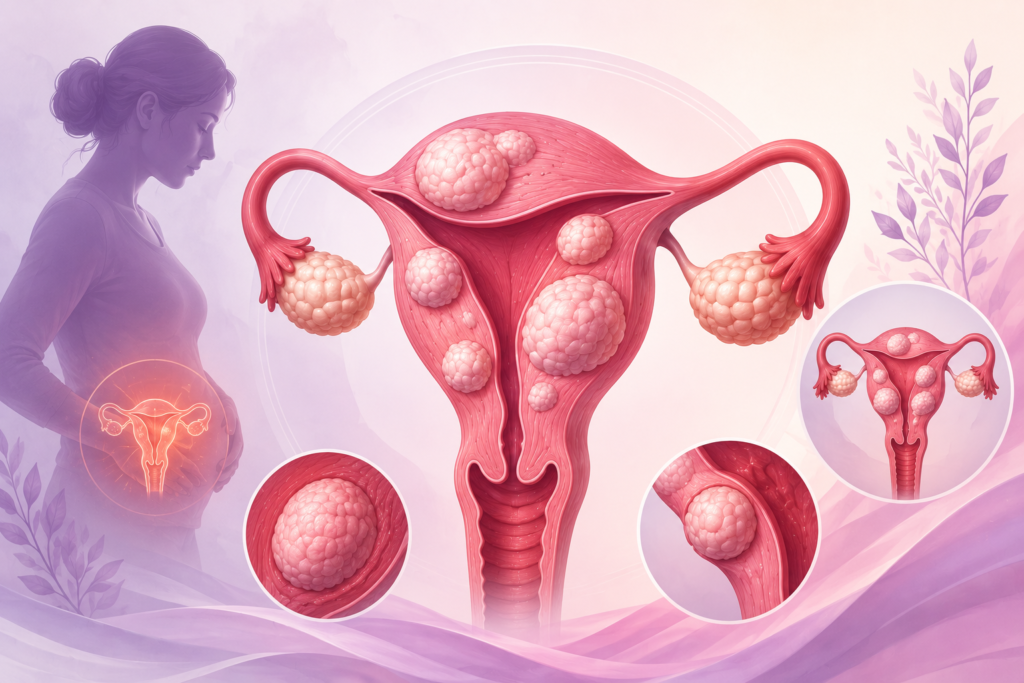
Medically Reviewed by Dr. Shradha Chakhaiyar, MBBS, MRCOG (London) — Fertility Specialist & Reproductive Surgeon, Shradha IVF & Maternity, Patna
20+ Years of Experience · www.shradhaivf.com
A “bulky uterus with fibroids” means one or more fibroids — benign muscular growths in the uterus — are large or numerous enough to make the whole uterus measure bigger than normal on ultrasound. “Bulky uterus” describes the size; “fibroid” names the specific cause. Whether it affects fertility depends far more on where the fibroid sits (especially whether it distorts the uterine cavity) than on the uterus’s overall size. Many women with this exact finding conceive naturally or with IVF, with or without treatment.
📋 What This Guide Covers
- What does bulky uterus with fibroid mean?
- What’s the difference between a bulky uterus and a fibroid?
- What types of fibroids cause a bulky uterus?
- What symptoms come with bulky uterus and fibroids?
- Can you get pregnant with a bulky uterus and fibroids?
- Does fibroid location affect IVF success?
- Can fibroids affect pregnancy once you conceive?
- How is bulky uterus with fibroids diagnosed?
- How is bulky uterus with fibroids treated?
- What lifestyle changes support uterine health?
- When should you see a doctor about this finding?
- A note from Dr. Shradha, Patna
- FAQs
What Does “Bulky Uterus with Fibroid” Mean?
Fibroids (also called leiomyomas or myomas) are benign, non-cancerous growths made of muscle and fibrous tissue that develop in or on the wall of the uterus. They’re extremely common — by the age of 50, up to around 80% of women will have developed at least one fibroid, most often between their 30s and 40s, and many never know it. They range enormously in size, from as small as a seed or pea to as large as a grapefruit or melon. When a fibroid, or several smaller ones together, is large enough, the uterus as a whole measures above the typical size range on ultrasound — and that’s when a report reads “bulky uterus with fibroid.”
In other words, this specific combined finding isn’t two separate problems. It’s a description (bulky) paired with its most likely cause (fibroid) — the report is essentially telling you both what was found and why.
What’s the Difference Between a Bulky Uterus and a Fibroid?
This trips a lot of people up, so it’s worth being precise. “Bulky uterus” is a description of overall size — it says the uterus, as a whole organ, measures larger than typical. A fibroid is a specific, distinct growth — you can usually see its edges on ultrasound, and it’s often given its own size and location on the report. A uterus can be bulky without any fibroid at all (from adenomyosis, hormonal changes, or after childbirth), and a small fibroid can exist without making the overall uterus measure as bulky. When both appear together, it generally means the fibroid — or fibroids — are the reason the whole uterus reads larger than normal.
What Types of Fibroids Cause a Bulky Uterus?
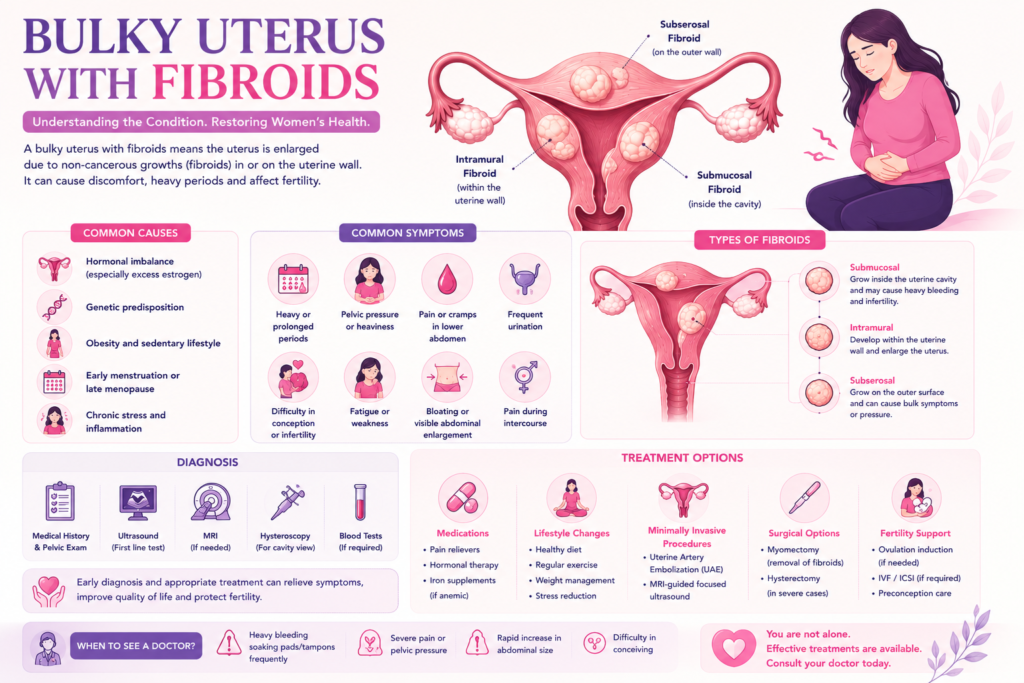
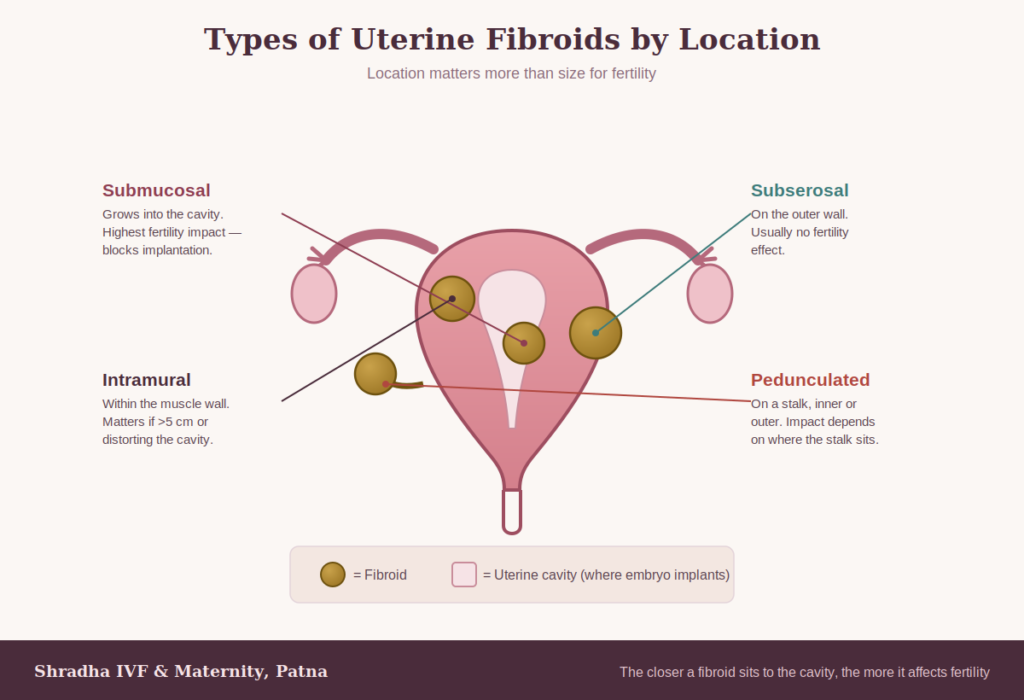
Not all fibroids behave the same way, and where a fibroid sits matters more than almost anything else on this topic — for symptoms, for treatment choice, and especially for fertility. Fibroids increase uterine size in three main ways, depending on where they grow:
| Fibroid type | Where it sits | Typical relevance |
|---|---|---|
| Intramural | Within the muscular wall of the uterus — the most common type. As it expands, it thickens the uterine wall, producing a uniformly enlarged, “bulky” appearance | Often the main driver of overall bulky size; can cause heavy bleeding and pain |
| Submucosal | Just under the uterine lining, bulging into the cavity itself | Even a small one can disturb the lining and menstrual flow — especially important for women trying to conceive, since it sits directly in the space where a pregnancy would develop |
| Subserosal | On the outer surface of the uterus, growing outward | Usually, the least likely to affect fertility; larger ones can press on nearby organs like the bladder or intestines |
Even a single medium-sized fibroid can alter the contour and balance of the uterus. When multiple fibroids are present, the uterus can become significantly enlarged — sometimes comparable in size to an early pregnancy — which is when pelvic heaviness and discomfort tend to become more noticeable.
This is the detail most general articles skip — and it’s the single most useful thing to know if you’re trying to understand your own report. (For a deeper look at fibroids and fertility generally, see our guide on fibroids and infertility; for how “bulky” is defined and measured on its own, see what does a mildly bulky uterus mean.)
What Symptoms Come with a Bulky Uterus and Fibroids?
Many women with this exact finding have no symptoms at all — it’s discovered incidentally on a routine or fertility-related scan. When symptoms do occur, they typically develop gradually, and it’s common for women to dismiss them as normal menstrual variation initially. The most frequent ones include:
- Heavy or prolonged periods — longer cycles, increased flow, or passing clots; over time, this can lead to fatigue or anaemia, and it’s one of the most common symptoms with submucosal or larger intramural fibroids
- Severe menstrual cramps — as fibroids grow within the wall or cavity, they can increase uterine contractions, making periods noticeably more painful than before
- Pelvic heaviness or pressure — often described as a constant weight or fullness in the lower abdomen, especially with large or multiple fibroids
- Frequent urination, from pressure on the bladder, or constipation, from pressure on the intestines, depending on where the fibroid presses
- Bloating or visible lower-abdominal swelling, more likely with larger or multiple fibroids
- Difficulty conceiving or recurrent miscarriage — sometimes the only sign, particularly when a fibroid interferes with the uterine cavity, even without any physical discomfort
Symptom severity tends to track with fibroid size, number, and — again — location, more than with the “bulky” label alone.
Can You Get Pregnant with a Bulky Uterus and Fibroids?
Yes, in most cases. Fibroids are common, and a great many women with this exact combined finding conceive naturally, with medical support, or through IVF — sometimes without any treatment for the fibroid at all. The honest, useful framing is this: it’s rarely the “bulky uterus” itself that matters for fertility — it’s whether a specific fibroid is interfering with the uterine cavity or blood supply to the lining. Fibroids affect fertility specifically when they:
- Distort the uterine cavity, making it difficult for an embryo to implant properly
- Block the fallopian tubes, preventing sperm from reaching the egg
- Reduce blood flow to the uterine lining, which is essential for successful implantation
- Interfere with embryo attachment, leading to failed implantation even when fertilisation occurs
Location decides which of these applies: a submucosal fibroid is far more likely to affect fertility than a subserosal one, simply because of where it sits relative to the cavity.
Does Fibroid Location Affect IVF Success?
Yes — more than size alone does, and this is where the location table above becomes genuinely practical. A submucosal fibroid, even a fairly small one, can interfere with embryo implantation because it distorts the cavity where the embryo needs to settle — this is usually the type most actively treated before an IVF cycle. An intramural fibroid matters more when it’s large or pushes into the cavity; smaller ones away from the cavity often don’t need treatment first. A subserosal fibroid is the least likely of the three to affect implantation, since it grows outward, away from where the embryo would sit.
This is also why a hysteroscopy is often recommended before an IVF cycle if there’s any doubt about the cavity shape, and why the condition of the uterine lining gets so much attention separately from fibroid size. If your first cycle failed and a fibroid was never fully evaluated, it’s worth revisiting — our guide on what to change after a failed first IVF cycle covers this in more detail.
Can Fibroids Affect Pregnancy Once You Conceive?
Fibroids don’t always affect fertility, but in certain situations, they can influence pregnancy outcomes once conception has happened. During pregnancy, fibroids may somewhat increase the chances of:
- Miscarriage, particularly in early pregnancy
- Preterm delivery
- Abnormal fetal position, which can complicate delivery
- Excessive bleeding during or after childbirth
It’s equally important to hold onto the reassuring side of this: many women with fibroids have completely normal pregnancies. The outcome depends on the fibroid’s size, number, and location, together with your overall health, which is exactly why a proper evaluation before conception, rather than after a complication, is the most useful step you can take.
How Is Bulky Uterus with Fibroids Diagnosed?
- Transvaginal or pelvic ultrasound — the first step, used to confirm overall size and to locate, size, and count any fibroids
- MRI, if needed, gives a more detailed map of fibroid location relative to the cavity, especially useful when several fibroids are present, or surgery is being planned
- Hysteroscopy — a direct look inside the uterine cavity, particularly important when a submucosal fibroid or cavity distortion is suspected and fertility is a priority
The goal, as always, is not just to confirm “bulky” and “fibroid” as two words on a report, but to understand exactly where the fibroid sits and whether it needs to be addressed before you try to conceive.
How is a Bulky Uterus with Fibroids Treated?
One useful thing to understand first: a “bulky uterus” isn’t itself a disease you cure — it’s a size, driven by an underlying cause. So the goal isn’t to “cure the bulkiness,” it’s to treat the fibroids that are causing it and to manage any symptoms. Treatment is highly individualised — it depends on your symptoms, the fibroid’s size, number, and location, and whether you’re planning a pregnancy, not on the word “bulky” itself:
- Observation and monitoring — if fibroids are small and not causing symptoms, many women live comfortably without needing immediate treatment, just periodic ultrasound follow-up
- Medication — used when heavy bleeding or pain is present, to help regulate hormones, reduce bleeding, and ease discomfort
- Hormonal therapy — can help slow fibroid growth or manage symptoms more effectively; it doesn’t eliminate fibroids, but it can control their impact
- Hysteroscopic myomectomy — removal of a submucosal fibroid through the cervix, without external incisions; often the priority when a fibroid is distorting the cavity before IVF.
- Laparoscopic or open myomectomy — removal of intramural or subserosal fibroids, depending on size, number, and location, is generally preferred for women who wish to conceive in the future since it preserves the uterus (see our laparoscopy guide)
- Advanced options in complex cases — for larger or multiple fibroids, or significant symptoms, further options are considered based on individual evaluation
With timely diagnosis and the right care, a fibroid-related bulky uterus can be effectively managed — allowing you to move forward confidently in your reproductive journey.
What Lifestyle Changes Support Uterine Health?
Medical treatment plays the central role, but your daily habits also have a meaningful effect on hormonal balance and overall uterine health, alongside whatever plan your specialist recommends:
- A balanced, nutrient-rich diet — foods rich in iron, protein, vitamins, and antioxidants support healthy tissue function and can help with symptoms like fatigue or heavy bleeding
- Maintaining a healthy body weight — excess weight can influence oestrogen levels and contribute to uterine enlargement
- Managing stress — chronic stress can disrupt hormonal balance, which may indirectly affect your cycle and uterine health; light exercise, yoga, or mindfulness can help
- Getting adequate sleep — poor sleep interferes with hormone regulation, making it harder for the body to maintain normal reproductive function
- Avoiding smoking and limiting alcohol — both can negatively affect hormonal health and fertility
These changes won’t shrink a bulky uterus on their own in every case, but they build a strong foundation for better treatment outcomes, improved fertility, and overall well-being.
When Should You See a Doctor About This Finding?
First, some reassurance: fibroids are benign, and having them does not raise your risk of uterine cancer. Most of the time, this finding is not dangerous. That said, it’s worth seeing a gynaecologist sooner rather than later if you notice:
- Periods that are suddenly much heavier, longer, or more painful than usual
- Persistent pelvic pain or pressure
- Difficulty conceiving for 6–12 months (or sooner if you’re over 35), alongside this finding
- A previous IVF cycle that failed without a clear explanation, where a fibroid wasn’t fully evaluated
A Note from Dr. Shradha, Patna
At Shradha IVF & Maternity, every fibroid finding is mapped by location and size with Dr. Shradha Chakhaiyar, MRCOG (London), before any treatment decision is made. You can also check your odds with our IVF success rate calculator. The first consultation is free.
FAQs Related to Bulky Uterus with Fibroids
Bulky Uterus with Fibroids means one or more fibroids — benign muscular growths — are large or numerous enough to make the whole uterus measure bigger than normal on ultrasound. "Bulky uterus" describes the size; "fibroid" names the specific, identifiable cause behind it.
Not exactly. "Bulky uterus" describes overall size, while a fibroid is a distinct growth. A uterus can be bulky without any fibroid (from adenomyosis or hormonal changes), and a small fibroid can exist without making the whole uterus measure as bulky. Together, they usually mean the fibroid is the cause.
Yes, you can get pregnant in most cases. Many women with this exact finding conceive naturally or with IVF, sometimes without any treatment. What matters most is whether a specific fibroid distorts the uterine cavity or blood supply to the lining — not the overall "bulky" measurement alone.
Yes, more than size alone. Submucosal fibroids (bulging into the cavity) can affect implantation even when small and are often treated first. Intramural fibroids matter more when large or cavity-distorting. Subserosal fibroids, growing outward, are the least likely to affect IVF outcomes.
Many women have no symptoms at all. When present, common ones include heavy or prolonged periods, pelvic pain or pressure, frequent urination, constipation or back pain, bloating, and difficulty conceiving — especially when a fibroid affects the uterine cavity.
Not always. Small, symptom-free fibroids away from the uterine cavity are often just monitored. Surgery (myomectomy) is usually considered for fibroids that distort the cavity, cause significant symptoms, or are being addressed before an IVF cycle.
After fibroid removal (myomectomy) or, in some cases, medication that shrinks fibroids, the uterus can return closer to its normal size. Without treatment, fibroids typically stay stable or grow slowly, though they often shrink naturally after menopause.
Report Says “Bulky Uterus with Fibroid”? Let’s Map It Out Properly.
Dr. Shradha will identify exactly where your fibroid sits, what it means for your fertility, and whether treatment is needed at all — before you try to conceive or start IVF. The first consultation is free.