

Medically Reviewed by Dr. Shradha Chakhaiyar, MBBS, DGO, MRCOG (London) — Fertility Specialist & Reproductive Surgeon, Shradha IVF & Maternity, Patna
20+ Years of Experience · www.shradhaivf.com
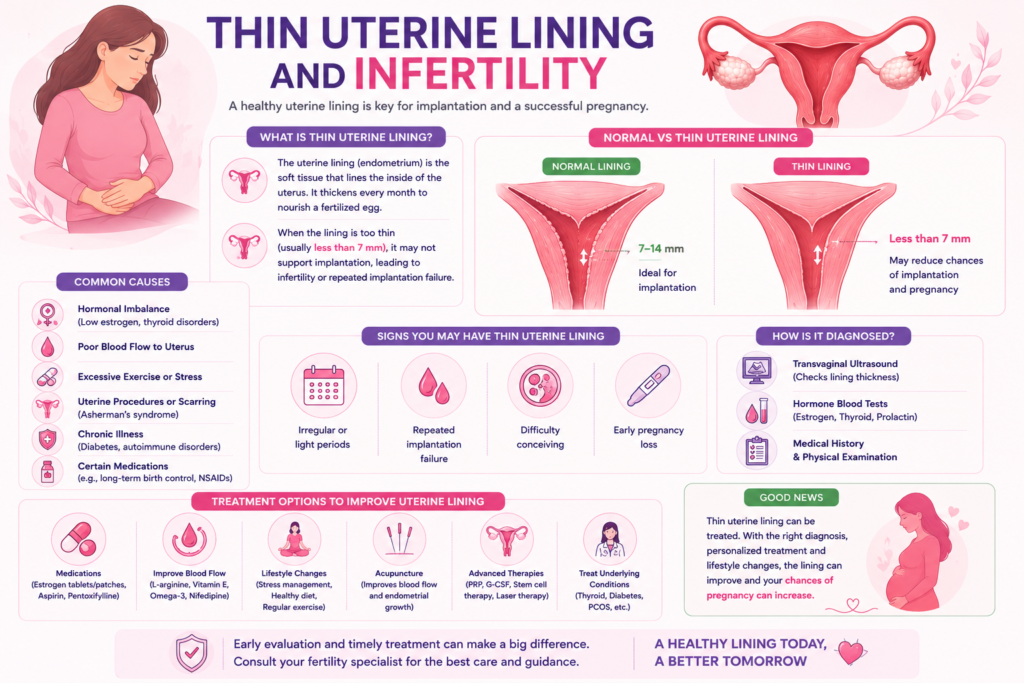
For IVF, the ideal uterine lining (endometrial) thickness is usually 7–12 mm with a “triple-line” pattern on ultrasound. Below about 6 mm, pregnancy chances drop, though conception is still possible; above ~15 mm may also lower success. A healthy lining lets the embryo implant, supplies it with blood and nutrients, and supports early pregnancy. A thin lining can often be improved with estrogen therapy, PRP, treating any scarring by hysteroscopy, and lifestyle changes — so the “soil” is ready before transfer.
📋 What This Guide Covers
- What is the uterine lining, and what does it do?
- What is the ideal endometrial thickness for IVF?
- Why does the “triple-line” pattern matter?
- Is thickness enough, or must the lining be receptive too?
- What causes a thin uterine lining?
- Can you get pregnant with a thin lining?
- How can you increase endometrial thickness?
- How well does PRP work for a thin lining?
- What if the lining is too thick?
- A note from Dr. Shradha, Patna
- FAQs
What Is the Uterine Lining and What Does It Do?
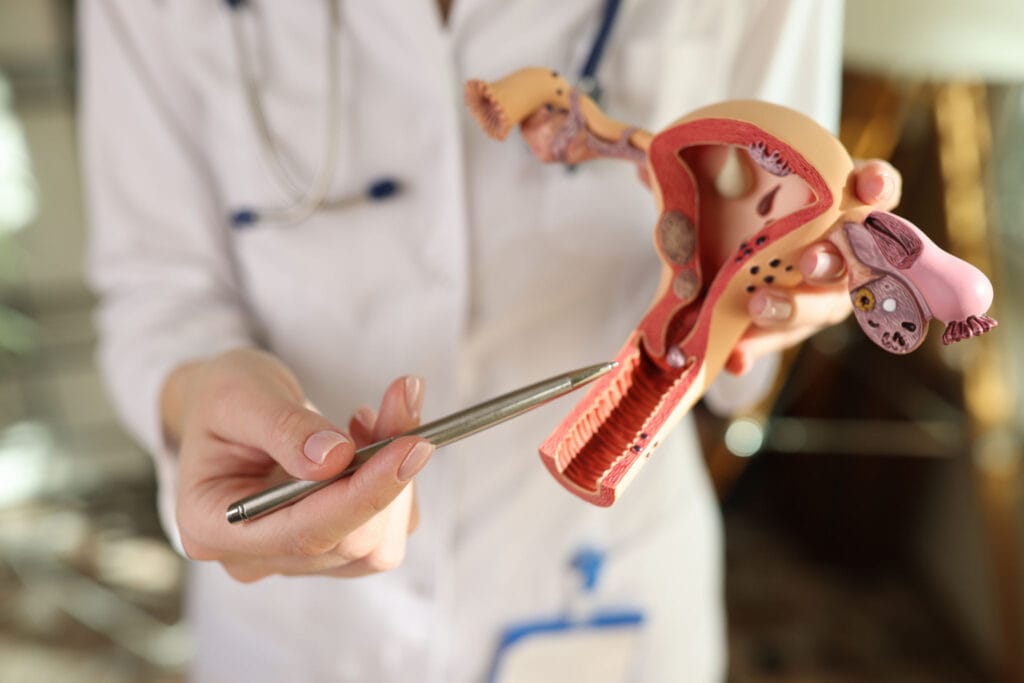
The uterine lining, or endometrium, is the delicate inner layer of the uterus that thickens each month during your menstrual cycle, preparing a welcoming place for an embryo to attach if fertilisation happens. If there’s no pregnancy, it sheds as your period, and a new cycle begins. In IVF, when an embryo created in the lab is placed into the uterus, this layer plays a decisive role in whether the pregnancy succeeds. It does three key jobs:
- Implantation: a healthy, adequately thick lining welcomes the embryo — its “homecoming” — and lets it attach securely.
- Blood supply and nutrition: the lining delivers the initial oxygen and nourishment the embryo needs to survive and grow.
- Immune balance: a well-prepared endometrium helps the mother’s body accept the embryo rather than treat it as foreign.
This is why success in IVF depends not only on the quality of the embryo, but just as much on the home it’s settling into. Even an excellent embryo can fail to implant if the lining isn’t ready — a point we explore in our guide on why a perfect-looking embryo fails.
What Is the Ideal Endometrial Thickness for IVF?
Thickness is measured easily and painlessly by ultrasound during your cycle. As a general guide:
| Lining thickness | What it usually means for IVF |
|---|---|
| 7–12 mm | The ideal range for embryo transfer — associated with the best implantation and pregnancy rates |
| Below ~6 mm | Considered thin; pregnancy chances are reduced, though conception is still possible and improvement is often achievable |
| Above ~15 mm | Unusually thick; may also be associated with lower success and sometimes warrants further evaluation |
These numbers are a guide, not an absolute rule — some women conceive with linings on either side of the “ideal” band. But in general, getting the lining into the 7–12 mm range before transfer is one of the most concrete, controllable ways to improve your odds, which is why your specialist watches it so closely.
Why Does the “Triple-Line” Pattern Matter?
Thickness isn’t the only thing your doctor looks at. On ultrasound, a well-prepared lining often shows a “triple-line” (trilaminar) pattern — three distinct layers — which signals that the endometrium has responded well to estrogen and is in a receptive, welcoming state. A good triple-line pattern alongside adequate thickness is a more reassuring picture than thickness alone. It’s one of the quiet details that separates a lining that merely looks thick enough from one that’s genuinely ready to receive an embryo.
Is Thickness Enough, or Must the Lining Be Receptive Too?
This is a crucial and under-appreciated point: a lining can be the right thickness and still not be ready. The endometrium is only receptive to an embryo during a specific, narrow window — the “window of implantation” — and if the transfer timing and the lining’s receptivity aren’t in sync, even a good embryo and a good thickness may not result in pregnancy. For some patients, particularly after repeated unexplained failures, a receptivity test (such as an ERA) can help identify the optimal timing for transfer. The lesson is simple: thickness matters, but readiness and timing matter alongside it.
What Causes a Thin Uterine Lining?
A thin endometrium — one that won’t build past roughly 6 mm despite a normal cycle — usually has an identifiable cause, and finding it is the key to fixing it:
| Cause | What’s happening |
|---|---|
| Scarring/adhesions (Asherman’s syndrome) | Scar tissue inside the uterus, often after a D&C, surgery, or infection, physically limits how much lining can grow |
| Low estrogen | Estrogen drives lining growth; low levels (from ovarian issues, breastfeeding, or perimenopause) mean a thinner lining |
| Chronic endometritis | Long-standing low-grade inflammation or infection of the lining can impair its growth and receptivity |
| Poor blood flow | Reduced blood supply to the uterus limits the oxygen and nutrients the lining needs to thicken |
| Previous procedures/medications | Repeated D&C, some fibroid surgery, or certain drugs (e.g. long clomiphene use) can thin the lining |
Identifying which of these applies is exactly what a proper work-up does — sometimes with a hysteroscopy to look directly inside the cavity for scarring, which can then be treated in the same procedure.
Can You Get Pregnant with a Thin Lining?
Yes — and this matters, because a “thin lining” result can feel like a door closing. It isn’t. While a thin endometrium does lower the odds of implantation, pregnancies have been reported even with linings as thin as around 4 mm. More importantly, a thin lining is often treatable: once the cause is found, there are several effective ways to improve thickness and receptivity before transfer. A thin lining is far more often a problem to solve than a verdict to accept.
How Can You Increase Endometrial Thickness?
The right approach depends on the cause, but the full toolkit — from first-line to advanced — looks like this:
- Estrogen therapy — the most common first step, given as tablets, patches, or gels to drive lining growth before transfer
- PRP (platelet-rich plasma) — a small amount of your own blood is processed and gently infused into the uterus; its growth factors stimulate lining regeneration and blood supply (more below, and in our PRP treatment guide)
- Hysteroscopy for scarring — if adhesions or Asherman’s syndrome are limiting growth, removing the scar tissue can restore the lining’s ability to thicken (see our hysteroscopy guide)
- Improving blood flow — measures your specialist may consider, sometimes including vasodilators, to increase circulation to the uterus
- G-CSF — a growth factor sometimes used for linings that don’t respond to estrogen
- Supplements & lifestyle — vitamin E, L-arginine, and CoQ10 are studied for blood flow; alongside good nutrition, hydration, light activity, and avoiding smoking and excess caffeine (our diet before embryo transfer guide goes further)
The point isn’t to try everything at once — it’s to match the treatment to the cause. A thin lining from scarring needs a different plan from a thin lining due to low estrogen or poor blood flow.
How Well Does PRP Work for a Thin Lining?
PRP deserves a section of its own, because for stubborn thin linings that haven’t responded to estrogen, it has become one of the most promising options — and the research is encouraging.
PRP is offered on-site at Shradha IVF & Maternity, which means a woman with a thin lining doesn’t have to travel to a metro for this option — the assessment, the PRP, and any needed hysteroscopy can all be done here in Patna.
What If the Uterine Lining Is Too Thick?
The main concern is a thin lining, but a lining measuring above roughly 15 mm is also worth a closer look. An unusually thick endometrium is sometimes linked to hormonal imbalance or, less commonly, to overgrowth of the lining (hyperplasia) that your doctor may want to evaluate — occasionally with a hysteroscopy or biopsy — before transfer. As with a thin lining, the aim is simply to understand why, and to get the lining into its ideal, receptive state.
A Note from Dr. Shradha, Patna
At Shradha IVF & Maternity, the uterine lining is assessed and optimised personally by Dr. Shradha Chakhaiyar, MRCOG (London), with on-site PRP and hysteroscopy where needed. You can also estimate your odds with our IVF success rate calculator. The first consultation is free.
FAQs Related to Uterine Lining
For embryo transfer, a uterine lining of 7–12 mm with a "triple-line" pattern on ultrasound is generally considered ideal and is linked to the best implantation and pregnancy rates. Below about 6 mm is considered thin, and above roughly 15 mm may also lower success.
Yes, it's possible, though a thin lining lowers the odds of implantation. Pregnancies have occurred with linings as thin as around 4 mm. More importantly, a thin lining is often treatable — once the cause is found, thickness and receptivity can usually be improved before transfer.
Depending on the cause, options include estrogen therapy, PRP (platelet-rich plasma), hysteroscopy to remove scar tissue, measures to improve blood flow, G-CSF, and supplements like vitamin E and L-arginine alongside good nutrition and avoiding smoking. The right treatment is matched to why the lining is thin.
Common causes of thin uterine lining include scarring inside the uterus (Asherman's syndrome, often after a D&C), low estrogen, chronic inflammation of the lining (endometritis), poor blood flow to the uterus, and some past procedures or medications. Identifying the specific cause is key to treating it effectively.
The triple-line (trilaminar) pattern is a three-layered appearance of the lining on ultrasound that indicates it has responded well to estrogen and is in a receptive state. Seen alongside adequate thickness, it's a reassuring sign the lining is ready for embryo transfer.
Research is encouraging: analyses report around 68% of women with prior thin linings reached adequate thickness after PRP, with average thickness rising from about 6.1 to 8.7 mm and improved pregnancy rates. PRP uses growth factors from your own blood to regenerate the lining, usually over two to three cycles.
Worried About a Thin Lining Before Your Transfer?
Dr. Shradha will find out why your lining is thin — scarring, hormones, or blood flow — and build a plan to get it ready, with on-site PRP and hysteroscopy right here in Patna. The first consultation is free.