

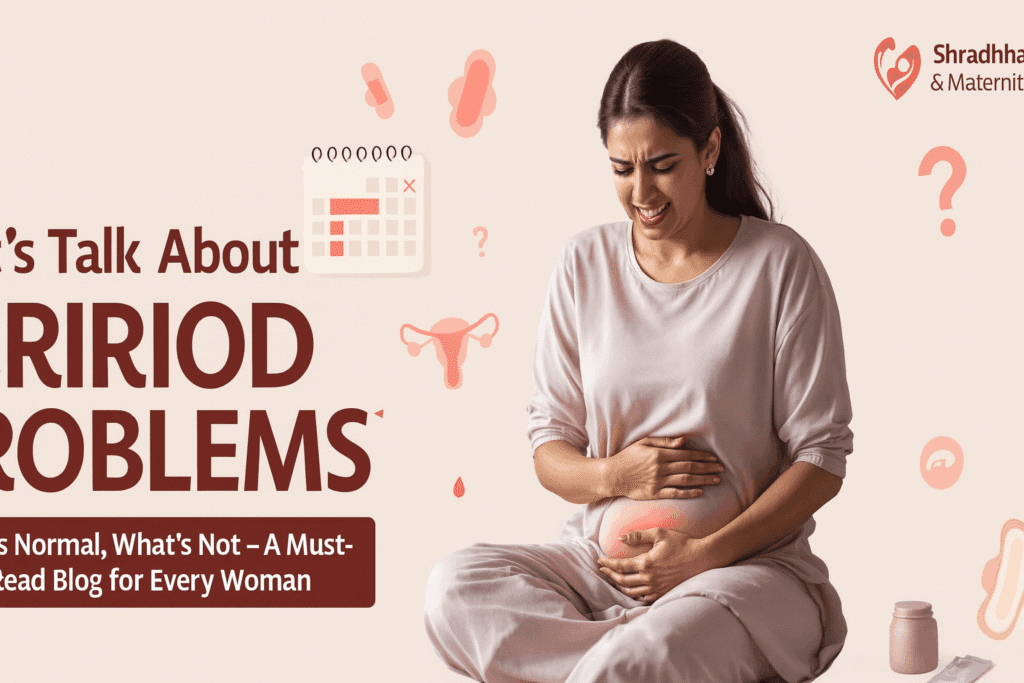
For english content to this post scroll below Hindi blog
When should women be alert about their periods and pain?
🌸 1. What is “normal” about menstruation?
Every woman’s menstrual cycle is a little different. But there are some signs that are medically considered “normal.”
🔹 Cycle length: A typical menstrual cycle lasts between 21 and 35 days.
🔹 Bleeding duration: Periods typically last 2 to 7 days.
🔹 Blood volume: On average, women lose about 30 to 35 milliliters of blood per period.
🔹 Symptoms: Mild to moderate cramping in the lower abdomen, back, or thighs is normal. Fatigue, bloating, or mild stomach upset may also occur.
📌 Keep in mind – every woman’s experience can be different. Some may experience light bleeding, while others may experience more. This variation is what defines “normal.”
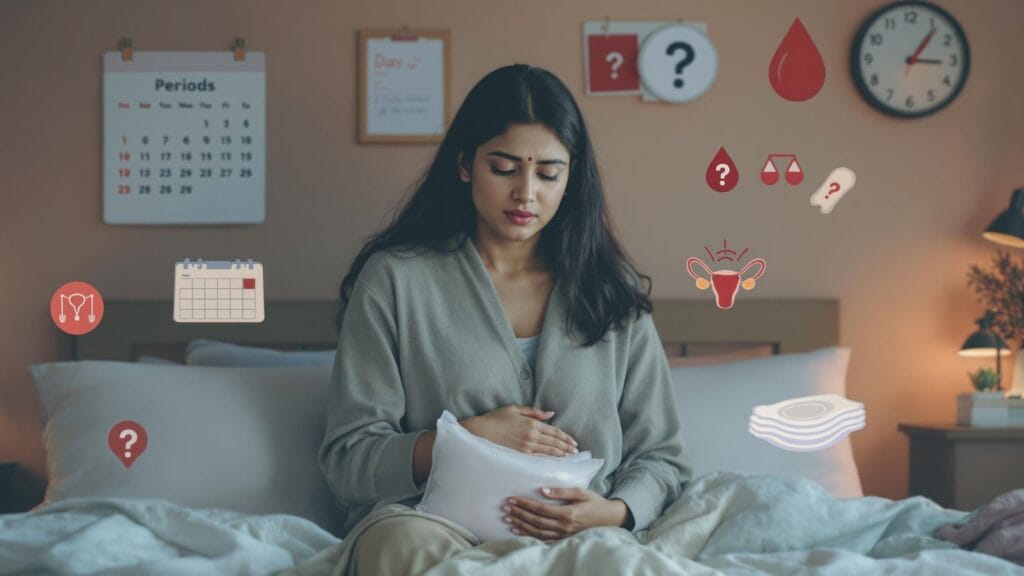
🤔 2. Why do women endure pain and accept it as normal?
In India and many other countries, menstruation is considered something to be endured.
Girls are taught from childhood that “periods are bound to hurt,” so they remain silent, even when the pain is severe.
🔹 Shame, social stigma, and a reluctance to speak up often lead women to ignore their symptoms.
🔹 Sometimes, even doctors don’t take them seriously, and women assume that this is their destiny.
🚨 3. When should you tell if your periods are “abnormal”?
There are some symptoms that are not considered normal during menstruation, but may be a sign of a deeper problem:
Signs of abnormal bleeding:
- bleeding lasts more than 7–8 days
- More than one pad or tampon gets soaked in an hour – for several hours in a row
- Very large clots (larger than 2.5 cm)
- Having to change pads every night or using double protection
- Periods coming too early (less than 21 days) or too late (more than 35 days)
- bleeding after sex or between periods
Signs of abnormal pain:
- The pain does not subside even after taking painkillers
- The pain is so severe that you can’t function or feel like vomiting
- Pain persists even after your period ends
- The pain gets worse over time
- First severe pain when you are 25 or older
- Dizziness, extreme fatigue, difficulty breathing – these could all be symptoms of anemia or other problems.
🏥 4. When is it necessary to see a doctor?
If you experience any of the following symptoms, don’t waste time – consult a gynecologist immediately:
✅ You have to change more than one pad in an hour
✅ Bleeding lasts for more than 8 days
✅ You have large blood clots
✅ Pain that doesn’t respond to medication
✅ Pain that causes vomiting, fainting, or interferes with work
✅ Bleeding between periods, after sex, or after menopause
✅ Dizziness, weakness, or shortness of breath – these could be signs of anemia
✅ If your periods suddenly stop for 60 days (other than during pregnancy or menopause)
✅ Fever or extreme discomfort with a tampon (don’t ignore Toxic Shock Syndrome)
⚖️ 5. Do caste and economic status make a difference in menstrual care?
Yes – unfortunately, not everyone receives the same care.
⚠️ Racial Inequality:
Research shows that women from Black or marginalized communities do not receive adequate pain medication for period-related problems.
Lack of communication between doctor and patient, racism and stereotypes lead to delay in diagnosis.
⚠️ Economic inequality:
Those with low income neither get cheap sanitary products nor correct information.
In rural areas or poor areas, women do not get access to clean toilets, privacy or even medical tests.
Because of this, diseases like anemia persist without treatment.
🔚 Conclusion:
Menstruation is a natural part of every woman’s life – but enduring certain symptoms as “normal” can be dangerous to your health.
It’s important to understand your body, consult a doctor if necessary, and give yourself the care you deserve.
📣 Break the silence around menstruation and prioritize your health.
Shradha IVF is here with you for all your queries and concerns.
What Is Considered “Normal” in Periods?
When Should You Pay Attention to Your Period Pain and Bleeding?
✍️ Written by: Dr. Shradha Chakhaiyar, MRCOG (London)
IVF Specialist, Shradha IVF & Maternity Hospital, Patna
🌸 1. What Is “Normal” During Periods?
Every woman experiences her menstrual cycle differently. But medically, there are some clear guidelines that help define what’s “normal.”
🔹 Cycle Length: A typical menstrual cycle occurs every 21 to 35 days.
🔹 Bleeding Duration: Periods usually last between 2 to 7 days.
🔹 Blood Loss: On average, a woman loses about 30–35 ml of blood per cycle.
🔹 Symptoms: Mild to moderate cramps in the lower abdomen, back, or thighs are normal. You might also feel tired, bloated, or have slight digestive discomfort.
📌 It’s important to remember: everyone’s period looks different. Some bleed a little more, some a little less. Symptoms may change from cycle to cycle—and that’s okay.
🤔 2. Why Do So Many Women Normalize Painful Periods?
In many cultures, including India, menstruation is often seen as something to be tolerated silently.
Girls grow up hearing “period pain is normal,” and over time, they learn not to complain—even when the pain is unbearable.
🔹 Because of shame, stigma, or lack of conversation, many women ignore severe cramps, heavy bleeding, or irregular periods.
🔹 Sadly, even some healthcare providers dismiss these concerns, making women feel like their suffering is “just part of being a woman.”
Researchers call this a “pain-related motivational deficit”—meaning repeated experiences of being ignored lead to silence and delayed care, even when symptoms are serious.
🚨 3. When Does Period Bleeding or Pain Become Abnormal?
Certain signs indicate that something may not be right and that medical attention is needed.
🚫 Signs of Abnormal Bleeding:
- Bleeding that lasts more than 7–8 days
- Needing to change pads/tampons every hour for several hours in a row
- Passing large blood clots (larger than a quarter or 2.5 cm)
- Needing double protection or changing pads at night
- Cycles shorter than 21 days or longer than 35 days
- Bleeding between periods or after sex
🚫 Signs of Abnormal Pain:
- Pain that doesn’t improve with over-the-counter medicine
- Pain so severe it disrupts daily activities or causes vomiting
- Pain that continues even after periods end
- Pain that worsens over time or starts later in life (after age 25)
- Symptoms like dizziness, extreme fatigue, or difficulty breathing—these could be signs of anemia or other complications
🏥 4. When Should You See a Doctor?
Don’t ignore these signs. Seek medical care if you experience:
✅ Heavy bleeding that soaks a pad every hour for several hours
✅ Periods lasting more than 8 days
✅ Large blood clots
✅ Pain that isn’t relieved by painkillers
✅ Nausea, vomiting, or fainting during periods
✅ Bleeding between periods, after intercourse, or after menopause
✅ Sudden loss of periods for more than 60 days (not due to pregnancy or menopause)
✅ Irregular, unpredictable periods
✅ Fever or illness when using tampons (to rule out Toxic Shock Syndrome)
⚖️ 5. How Do Race and Income Affect Menstrual Health?
Unfortunately, not everyone gets the same quality of care. Race and economic status greatly influence how menstrual problems are treated.
⚠️ Racial Disparities:
Studies show that Black and Hispanic women are less likely to receive pain relief for conditions like endometriosis.
Systemic racism, poor communication, and biased assumptions can delay diagnosis and treatment.
⚠️ Economic Disparities:
Women from low-income backgrounds often lack access to affordable menstrual products, medical tests, or safe, private bathrooms.
Rural areas suffer from poor infrastructure and healthcare shortages, making it even harder to get basic care.
This can lead to untreated conditions like anemia due to heavy bleeding.
🔚 Conclusion:
Menstruation is a natural part of a woman’s life—but not all symptoms are “normal.”
Heavy bleeding, severe pain, and irregular cycles should not be ignored. Social stigma and lack of awareness often keep women from seeking the care they need.
💡 It’s time to break the silence around menstrual health and prioritize our well-being.
At Shradha IVF, we are here to listen, support, and provide the expert care every woman deserves.
📍 For any unusual symptoms contact:
Shradha IVF & Maternity Hospital, Patna
📞 Helpline: 9334014489
🌐 www.shradhaivf.com