


Medically Reviewed by Dr. Shradha Chakhaiyar, MBBS, DGO, MRCOG (London) — IVF Specialist & Obstetrician
Shradha IVF & Maternity, Patna, Bihar · 20+ Years of Experience
No. I-Pill (emergency contraception) does not cause infertility. The World Health Organization (2010 review) and FIGO confirm that hormonal emergency contraception, including levonorgestrel (I-Pill), has no effect on future fertility. The pill leaves the body within a few days, and ovulation typically returns in the very next cycle. Frequent use can temporarily disrupt your menstrual cycle and is medically not ideal — but it does not cause permanent or long-term fertility damage.
📋 What This Guide Covers
- What I-Pill is (and what it isn’t)
- How I-Pill actually works
- Does I-Pill cause infertility? The evidence
- Emergency contraception options — compared
- I-Pill vs regular birth control pills
- Side effects you may experience
- How quickly fertility returns
- If you’re using I-Pill often — please read this
- The fertility threat I-Pill doesn’t protect against
- When to see a fertility specialist
- A note from Dr. Shradha
- FAQs
What I-Pill Is (and What It Isn’t)
I-Pill is the most familiar Indian brand of emergency contraceptive pill — but it’s one of several. The active ingredient is levonorgestrel, a synthetic form of the natural hormone progesterone. The same molecule is sold in India under several brand names — Postpone-72, Unwanted-72, Nextpil, and others — and globally as Plan B. They are all the same medication.
I-Pill is designed to be used after unprotected sex (or contraceptive failure, like a broken condom), not as a regular form of birth control. It works best when taken as soon as possible after intercourse — ideally within 72 hours, and certainly within 5 days. It is not an abortion pill — it cannot end an existing pregnancy. It is not the same as RU-486 (mifepristone), which is an entirely different medication used for medical abortion.
How I-Pill Actually Works (and What Most People Get Wrong)
Understanding the mechanism is the single most reassuring thing you can do — because once you know how I-Pill works, the worry about infertility melts away. According to the International Federation of Gynecology and Obstetrics (FIGO), levonorgestrel emergency contraception works primarily by:
- Preventing or delaying ovulation — stopping the egg from being released that month so that fertilisation can’t happen in the first place.
- Thickening cervical mucus — making it harder for sperm to swim up and reach an egg.
- Possibly affecting fallopian tube motility — though research evidence here is mixed.
What the I-Pill does not do is just as important. It does not damage the ovaries. It does not deplete the egg reserve. It does not “scar” or “weaken” the uterus. It does not accumulate in the body. The pill leaves the system within a few days. There is no lingering effect — and that’s exactly why the global evidence on long-term fertility is so reassuring.
Does I-Pill Cause Infertility? What the Evidence Actually Says
This is the heart of the article — and the answer is unusually clear in medicine. Here’s what the most authoritative bodies in the world say:
- World Health Organization (WHO): In a 2010 review (and reinforced in its current emergency contraception fact sheet), the WHO states that the use of hormonal contraception, including emergency contraceptive pills, does not affect future fertility. It also confirms that emergency contraception “cannot interrupt an established pregnancy or harm a developing embryo.”
- FIGO (International Federation of Gynecology and Obstetrics): Levonorgestrel emergency contraception works by inhibiting ovulation; it does not affect future fertility.
- Cleveland Clinic: “Emergency contraception is safe and effective. It won’t harm your chances of getting pregnant in the future or impact your fertility.”
- 2022 systematic review (Contraception journal, 33 studies): Researchers specifically searched for evidence of infertility after levonorgestrel emergency contraception exposure — and identified no studies showing increased infertility, increased need for assisted reproduction, or longer time to conception in subsequent cycles.
- Planned Parenthood: Taking emergency contraception multiple times does not change its effectiveness, and does not cause long-term side effects.
It is genuinely rare for medical evidence on a “does X cause Y?” question to be this consistent across regulatory bodies, professional societies, peer-reviewed research, and patient-facing health organisations. The short, calm, confident answer is: no, I-Pill does not cause infertility.
Emergency Contraception Options — Compared
“I-Pill” is one brand, but it’s part of a wider category. Here’s a clean comparison so you understand what you’re taking — or could take.
| Option | What It Is | Effective Within | Effectiveness |
|---|---|---|---|
| I-Pill / Postpone-72 / Unwanted-72 | Levonorgestrel 1.5mg (single dose) | 72 hours (best within 24h) | 75–89% if taken within 72h |
| Ella (Ulipristal acetate) | Selective progesterone receptor modulator | Up to 120 hours (5 days) | ~85% — more effective than levonorgestrel, further from sex |
| Combined oral contraceptive pills (Yuzpe) | Combined ethinyl estradiol + levonorgestrel (older method) | Up to 5 days | Less effective than dedicated EC pills |
| Copper IUD (Copper-T) | Non-hormonal device inserted by a doctor | Up to 5 days after sex | >99% — most effective emergency contraception |
None of the above causes infertility. The same WHO and FIGO statements apply across all hormonal EC options. The Copper IUD, despite being a long-term contraceptive, is fully reversible — fertility returns immediately after removal.
I-Pill vs Regular Birth Control Pills
This is perhaps the most useful clarification we make to patients. Many women confuse I-Pill with regular birth control — they are not the same medication and not the same use.
| I-Pill (Emergency) | Regular Birth Control Pills (OCPs) | |
|---|---|---|
| Purpose | Emergency use after unprotected sex | Daily, ongoing pregnancy prevention |
| How taken | Once, after unprotected sex | One pill every day at the same time |
| Hormone dose | Single high dose | Smaller daily dose |
| Effectiveness | 75–89% | >99% with perfect use |
| Best for | Rare, unplanned situations | Couples who want reliable, planned contraception |
| Effect on fertility | None — fertility returns next cycle | None — fertility returns 1–3 months after stopping |
If you find yourself reaching for I-Pill more than once or twice a year, that’s a sign your contraception plan needs an upgrade — not because I-Pill is dangerous, but because regular birth control is far more effective and far easier on your body than repeated emergency use. We discuss alternatives in the section below.
Side Effects of I-Pill (What’s Normal, What’s Not)
I-Pill is generally well tolerated, but you may notice some short-term side effects. Most resolve within a day or two. The most commonly reported are:
- Nausea — most common; usually mild
- Headache or dizziness — for 1–2 days
- Breast tenderness
- Lower abdominal pain or mild cramps
- Spotting or light bleeding between periods
- Fatigue for a day or two
- A slightly earlier or slightly later period in the cycle in which you took I-Pill — generally within 7 days of expected. A period more than 7 days late warrants a pregnancy test.
- Heavier or lighter flow than usual for that cycle
These side effects are short-term and do not predict any long-term outcome on your fertility. If nausea is severe and you vomit within 2 hours of taking the pill, contact your doctor — you may need to repeat the dose.
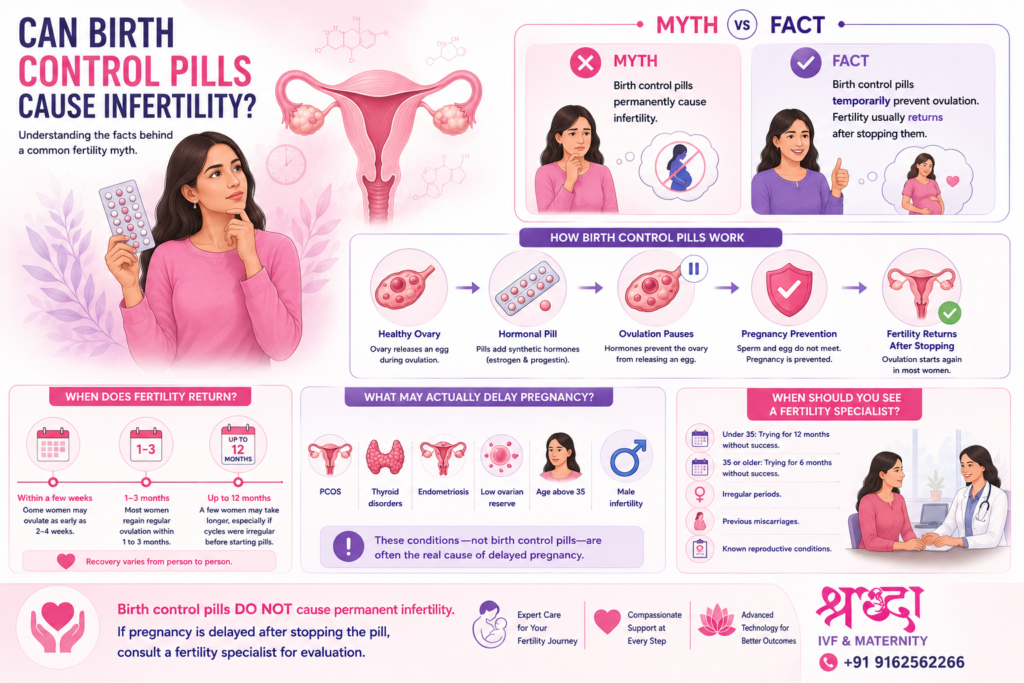
How quickly does fertility return after birth control consumption?
Here’s the simple, reassuring truth on timing: I-Pill delays ovulation only for the cycle in which it’s taken. The medication clears your body within a few days. In the next menstrual cycle, ovulation typically returns to its normal pattern, and you are as fertile as you were before. This is why women who take I-Pill and continue to have unprotected sex can become pregnant in the same cycle that follows — the contraceptive effect doesn’t carry forward. So if you’re actively trying to conceive after taking I-Pill, you do not need to “wait it out” beyond your next cycle.
If You’re Using I-Pill Often — Please Read This
This is the most honest section of this article. While I-Pill does not cause infertility — even with repeated use — that does not mean repeated use is medically ideal. There are real reasons to move to a more sustainable contraceptive plan:
- It is less effective than regular contraception. 75–89% per use vs >99% for daily OCPs or IUDs. Each I-Pill use carries real pregnancy risk.
- It can disrupt your cycle. Repeated emergency hormone exposure can lead to irregular periods, breakthrough bleeding, and unpredictable next-period timing. This isn’t permanent damage — but it makes life unpredictable.
- Side effects accumulate. Nausea, headache, and breast tenderness experienced with each use add up.
- It’s not designed for routine use. The dose is high precisely because it’s meant to be occasional.
If you’ve used I-Pill three or more times in a year, please talk to a gynaecologist about regular contraception — a low-dose daily pill, an IUD, an implant, an injection, or condoms used consistently. There are many gentle, effective options. Choosing one is not an admission of anything — it’s just better, easier health management.
The Fertility Threat I-Pill Doesn’t Protect Against
Here is the responsible part of this conversation. I-Pill prevents pregnancy — it does not prevent sexually transmitted infections (STIs). And while emergency contraception does not cause infertility, untreated STIs absolutely can.
Chlamydia, gonorrhoea, and Mycobacterium tuberculosis (yes, genital TB — meaningful in India) are leading causes of pelvic inflammatory disease (PID) and blocked fallopian tubes — one of the most common, and most preventable, causes of female infertility. Many of these infections are silent in their early stages. So if you’re using I-Pill because of an unplanned unprotected encounter, it’s worth doing a routine STI screen too. Caught early, these infections are very treatable. Caught late, they can cause lasting damage. Talk to Dr. Shradha if you’d like a confidential check.
When to See a Fertility Specialist?
👩⚕️ When to consult
- You have been trying to conceive for12 months(under 35) or6 months(35 or older) without success
- Your periods have remained irregular for several cycles after taking I-Pill — particularly if you have known PCOS or thyroid disorder
- You have a history of pelvic infection, PID, tuberculosis, or STIs and are concerned about tubal damage
- You are using emergency contraception more than 2–3 times a year and want to move to a sustainable plan
- You feel a quiet ongoing anxiety that something is wrong — please reach out, even just to be reassured
If you’ve previously used I-Pill and are now trying to conceive without success, the cause is seldom the I-Pill itself — but understanding the actual cause matters. Common, treatable causes include timing issues, PCOS, thyroid disorders, male-factor concerns, tubal blockage from past infection, and implantation issues. Our companion article on ovulating but not getting pregnant walks through all of these in detail.
A Note from Dr. Shradha, Patna
At Shradha IVF & Maternity, every consultation is personally led by Dr. Shradha. The first consultation is free and completely confidential, with no pressure to begin treatment. If you’d like to understand your fertility better, you can also try the IVF Success Rate Calculator — a quick, anonymous tool to estimate your personal chances of conceiving naturally or with IVF.
Don’t Carry This Worry Alone
If you’ve been quietly worrying that I-Pill affected your fertility — or if you’re trying to conceive and it’s not happening — a free, confidential conversation with Dr. Shradha will give you a clearer answer than any forum or video.