

Reviewed by Dr. Shradha Chakhaiyar, IVF Specialist · Shradha IVF & Maternity, Patna · Published April 2026 · 8 min read
What Is Single Embryo Transfer (SET)?
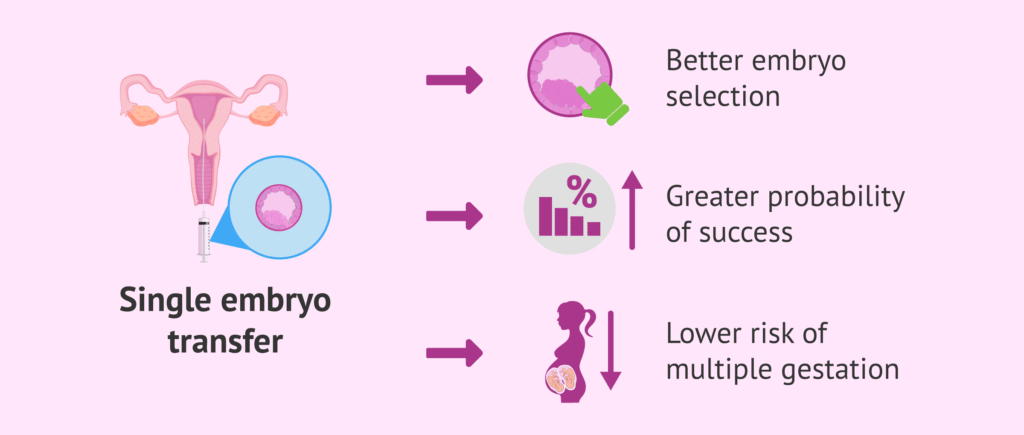
Single embryo transfer (SET) is a procedure in IVF where exactly one embryo — selected for its quality and developmental potential — is placed into the uterus. The goal is to achieve a healthy pregnancy with a single baby, while minimising the risks that come with carrying twins or triplets.
This is different from the older practice of transferring two or three embryos at once to “improve the odds.” While that approach did increase pregnancy rates, it also significantly increased the risk of multiple pregnancies — and the serious complications that come with them. Today, SET is recommended by the Indian Society for Assisted Reproduction (ISAR), the World Health Organisation (WHO), and most leading fertility societies worldwide.
How Does Single Embryo Transfer Work? A Step-by-Step Guide
SET happens at the final stage of an IVF cycle. Here is how the process works:
- Ovarian stimulation: The woman receives hormone injections over 10–14 days to stimulate the ovaries to produce multiple eggs.
- Egg retrieval: Mature eggs are collected under mild anaesthesia using a thin needle guided by ultrasound.
- Fertilisation: Eggs are fertilised with sperm in the laboratory — either by conventional IVF or ICSI (Intracytoplasmic Sperm Injection).
- Embryo culture: Fertilised eggs (embryos) are cultured in the lab for 3–6 days. At day 5 or 6, they reach the blastocyst stage — the most advanced and informative stage for embryo selection.
- Embryo grading: Embryologists assess each blastocyst for quality using established grading systems. The single best embryo is selected for transfer.
- Embryo Transfer: The selected embryo is placed into the uterus through a thin, flexible catheter. This is a quick, painless procedure usually done without anaesthesia.
- Remaining embryos: Any surplus high-quality embryos are vitrified (flash-frozen) and stored for future frozen embryo transfer (FET) cycles.
Who Is the Right Candidate for Single Embryo Transfer?
SET is not a one-size-fits-all recommendation. Your fertility specialist will evaluate several factors before advising it. SET is generally recommended if:
- You are under 38 years of age
- You have at least one high-quality blastocyst available
- This is your first or second IVF attempt
- Your uterine lining (endometrium) is thick and receptive (typically 8mm or more)
- You have no prior history of repeated implantation failure
- You have a health condition such as hypertension, diabetes, or a uterine abnormality that makes multiple pregnancy high-risk
Women over 38, those with a history of multiple failed cycles, or those with only lower-quality embryos may be advised to consider double embryo transfer (DET) after a detailed discussion with their doctor.
Single Embryo Transfer Success Rate in India
The success rate of single embryo transfer in India has improved significantly over the past decade, largely due to advances in blastocyst culture and embryo freezing technology. Here is what the current data shows:
- Women under 35: 40–45% live birth rate per cycle; 47–56% with high-quality blastocyst transfer
- Women aged 35–38: 30–40% live birth rate per cycle
- Cumulative rate (fresh + frozen cycles): up to 50–60%
- With PGT-A (genetic testing), implantation rates improve to 60–70% for chromosomally normal embryos
A 2024 large-scale review by the European Society of Human Reproduction and Embryology (ESHRE), covering data from 1.4 million children, confirmed that outcomes for SET babies are comparable in every meaningful way to naturally conceived children. Closer to home, research data from ISAR’s 2025 consensus guidelines support SET as the preferred approach for good-prognosis patients at Indian clinics.
SET vs Double Embryo Transfer (DET): Key Differences
One of the most common concerns patients raise is: “If I transfer two embryos, won’t my chances of success be higher?” The answer is nuanced — and the comparison table below explains why.
| Factor | Single Embryo Transfer (SET) | Double Embryo Transfer (DET) |
|---|---|---|
| Multiple pregnancy risk | Very low (<2%) | High (25–35%) |
| Per-cycle pregnancy rate | 40–45% | 50–60% |
| Cumulative live birth rate | Comparable over 2–3 cycles | Comparable over 1–2 cycles |
| Risk of preterm birth | Low | High (especially with twins) |
| Maternal complications | Low (similar to natural pregnancy) | Higher (gestational diabetes, preeclampsia) |
| NICU admissions | Low | High for multiples |
| Recommended for | Women <38, good embryos, first/second IVF attempt | Women >38, poor embryo quality, multiple IVF failures |
What Are the Benefits of Single Embryo Transfer?
The benefits of SET go well beyond reducing the chance of twins. They include:
- Safer pregnancy: A singleton pregnancy carries significantly lower risk of premature birth, low birth weight, gestational diabetes, pre-eclampsia, and postpartum complications.
- Healthier babies: Babies from singleton pregnancies have better developmental outcomes on average than babies from twin pregnancies.
- Preserved embryos for future use: Surplus embryos are frozen and stored, giving you another chance without going through a full cycle again — saving both time and money.
- Lower NICU costs: Twin and triplet pregnancies frequently result in premature babies requiring intensive neonatal care — which is physically, emotionally, and financially demanding.
- Equivalent long-term success: Cumulative live birth rates over multiple SET cycles match or exceed DET when frozen embryos are included.
What Is Elective Single Embryo Transfer (eSET)?
You may hear your doctor use the term elective single embryo transfer (eSET). This simply means choosing to transfer one embryo even when multiple good-quality embryos are available. It is “elective” because you technically have the option to transfer more than one — but your doctor and you together decide that one is the wisest choice.
eSET is now actively recommended by ISAR’s 2025 consensus guidelines for patients with a favourable profile, because the evidence clearly shows it maintains excellent pregnancy rates while protecting against the serious risks of multiple gestation. As medical technology — particularly AI-assisted embryo selection and time-lapse incubation — continues to advance, the gap between SET and DET success rates is narrowing further.
What are the Risks and Limitations of Single Embryo Transfer?
SET is the right choice for many patients, but it is important to understand its limitations:
- The per-cycle pregnancy rate is lower than DET. Some couples may need 2–3 cycles to achieve a successful pregnancy.
- If the SET cycle fails and no frozen embryos remain, a full stimulation cycle will be needed again.
- There is a very small (1–2%) risk of monozygotic twinning (identical twins) even with SET, because the single embryo can spontaneously split — though this is rare.
- SET may not be appropriate for women with significantly diminished ovarian reserve or those who have had multiple previous IVF failures.
Fresh vs Frozen Single Embryo Transfer: Which Is Better?
In a fresh SET cycle, the embryo is transferred in the same IVF cycle as egg retrieval. In a frozen embryo transfer (FET-SET), the embryo is frozen first and transferred in a subsequent cycle after the uterus has had time to rest and recover from stimulation.
Research consistently shows that frozen SET cycles often produce better results. This is because the uterus is not under the influence of high hormone levels from ovarian stimulation, which can reduce endometrial receptivity. With modern vitrification (rapid-freeze) technology, frozen embryos survive the thaw in over 95% of cases and show no significant difference in quality compared to fresh embryos.
A “freeze-all” approach — where all good embryos are frozen and SET is performed in a subsequent FET cycle — is increasingly being adopted as the standard of care at experienced IVF centres, including Shradha IVF.
Why Choose Shradha IVF for Single Embryo Transfer
At Shradha IVF, we understand that every couple who walks through our doors carries hope, anxiety, and a deeply personal dream of becoming parents. As a team, we have consciously embraced single embryo transfer because we believe in giving you the safest and most responsible path to parenthood. For our Patna families, this means reducing risks while nurturing the same strong chance of success.
We don’t just follow protocols—we walk this journey with you. Every decision we make is guided by care, empathy, and respect for your emotions. Your trust means everything to us, and we are committed to honouring it with honesty, warmth, and unwavering support.