


Reviewed by Dr. Shradha Chakhaiyar, MBBS, DGO, MRCOG (London), IVF Specialist
If you are reading this on Mother’s Day, or in the days around it, and you are not yet a mother — but you want to be — this letter is for you. Not in a metaphor. Not in passing. You specifically. The woman who has been trying for months or years. The woman who scrolls past every Mother’s Day post on Instagram with a tightness in her chest. The woman whose family asks “kab khushkhabri sunoge?” at every gathering. This day is for you too. Not as someone waiting in the margins of motherhood, but as someone whose love for the child you have not yet held is already, completely, the love of a mother.
📋 In This Letter
- To the Woman Reading This on Mother’s Day
- What Mother’s Day Feels Like When You’re Trying to Conceive
- You Are Already a Mother in Every Way That Matters
- Five Things You Can Do This Mother’s Day
- A Specific Note for Women in Bihar
- What I Want Every Woman Reading This to Know
- If You’re Ready to Take One Small Step
Mother’s Day Is Not Only for Mothers… It Is Also for Women Dreaming of Becoming One 💛
Have you ever thought that for some women, Mother’s Day is not only emotional… but deeply painful too?
While the world celebrates motherhood, some women silently close their phones after scrolling through Mother’s Day posts.
Some smile while holding someone else’s baby…
and cry alone later at night.
Some women live every month with one hope:
“Maybe this time…”
And then another negative pregnancy test breaks their heart again.
Today, we want to tell every woman going through infertility:
- You are not incomplete.
- You are not weak.
- And infertility is not your fault.
Many women reach a moment in their journey when they quietly begin to think: “Maybe nothing can help us anymore.” This thought often follows months or years of trying to conceive, through repeated disappointment, social pressure, and the fear of not knowing what is happening inside their own body. The truth is often very different from this fear.
Infertility is not a personal failure. It is not a reflection of a woman’s worth. It is not something to hide. It is a medical condition, and like many other conditions in medicine, it can be understood, evaluated, and managed. This guide is for every woman — and every couple — who has ever felt unsure of what comes next.
To the Woman Reading This on Mother’s Day
I am writing this letter from my clinic in Patna, after fifteen years of sitting across from women who arrive on or around Mother’s Day with red-rimmed eyes, trying to be brave, trying to ask the medical questions, trying not to break. I have watched too many of them apologise for crying. I want to begin this letter by saying what I have wanted to say to each of them: you do not have to apologise for any of it.
The pain you are feeling today is not weakness. It is not a failure. It is not, despite what social media and well-meaning aunties may suggest, evidence that you are “stressing too much” and therefore making your fertility worse. The pain is the natural response of a woman who is being asked to celebrate something she desperately wants but does not yet have. That is one of the most difficult forms of grief a human being can carry — because there is no funeral, no acknowledgement, no language for it. There is only the quiet ache of waiting.
Mother’s Day was created to honour the women who give and nurture life. That includes you. Every month you have tried. Every cycle you have tracked. Every appointment you have braved. Every prayer you have whispered. Every conversation with your partner about whether to try one more month, one more cycle, one more treatment. This is the work of motherhood. It begins long before a child is in your arms.
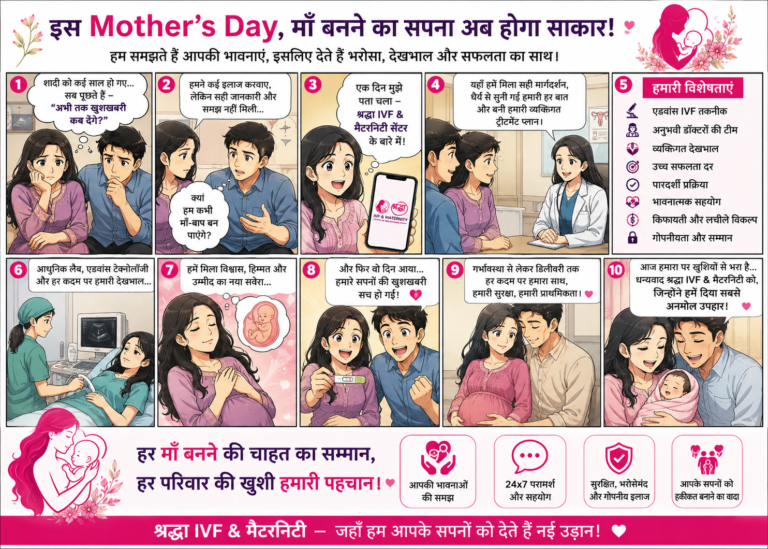
What Mother’s Day Feels Like When You’re Trying to Conceive
If you are reading this and any of the following feels familiar, please know it is universal. Women across India, across Bihar, across the world are feeling these same things this week:
The social media spiral
You open Instagram and the first three posts are mothers with babies. Then, a “Happy Mother’s Day to all the wonderful moms” message from a brand. Then a friend you went to college with, holding her newborn. You scroll, telling yourself it’s fine, you are happy for everyone — but somewhere in your chest the familiar tightness rises. You put the phone down. You pick it up again. The feed has not changed. This is not weakness. This is your heart protecting something that matters to you.
The family gathering you don’t want to attend
Maybe it’s a brunch your mother-in-law has planned. Maybe it’s a video call with cousins where everyone’s children will be on camera. Maybe it’s a simple dinner where someone will inevitably ask, gently or otherwise, “so when are you giving us good news?” You will smile. You will deflect. You will go to the bathroom for five minutes to breathe. And then you will come back and continue smiling. This labour — of being present while carrying private grief — is invisible to almost everyone around you. I see it.
The unspoken weight of being a daughter, daughter-in-law, sister
In Bihar, especially, the social construction of womanhood is still tied closely to motherhood. When you have been trying for two or three years and are not yet pregnant, you carry the weight of every conversation that didn’t happen — the comments your in-laws hold back, the suggestions from family that you should “see someone”, the well-meaning advice that takes the form of advice but feels like blame. You are being treated as a problem to be solved rather than a person who is hurting. I know this pattern. I have heard it in my clinic so many times that I sometimes finish my patients’ sentences before they do. It is not your fault. None of it is your fault.
3. You Are Already a Mother in Every Way That Matters
I want to say this directly, because I do not think it is said enough: the woman who has wanted a child and worked toward that child — through ovulation cycle tracking, through ovulation tests, through tears, through hope, through despair, through getting up the next morning and trying again — is already engaged in the work of motherhood. The biological event of birth is one moment. The decision to be a mother, sustained across months and years, is the work that defines it.
You are already a mother in the way you think about the future. You are already a mother in the way you organise your finances, your career, your home — always with the child you hope to have in mind. You are already a mother in the way you eat, the way you sleep, the way you have given up wine or coffee or rasgulla because some article said it might help. You are already a mother in the conversations you have with your partner about names you both like. The love is already complete. The body is taking time.
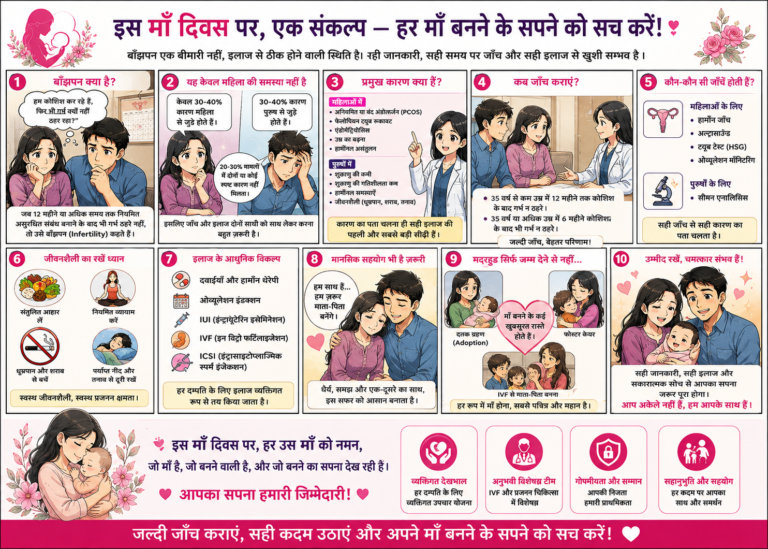
4. Five Things You Can Do This Mother’s Day
Most articles about infertility on Mother’s Day tell you what to feel. They tell you to be brave, to be hopeful, to be patient. I want to do something different. I want to give you five specific, practical things you can do this Mother’s Day — things that are actions, not moods. Choose whichever resonates. Skip the rest. There is no right way to do this day.
1. Give yourself permission to skip the gathering
If attending the family brunch will hurt you more than not attending, permit yourself to skip it. You do not need to explain it as “infertility” if you don’t want to. “I’m not feeling well today” or “I have a work commitment” is enough. Your wellbeing comes before social obligation. The aunties will recover. So will you.
2. Write a letter to your future child
Take fifteen minutes today. Find a notebook or open a document. Write a letter to the child you hope to have. Tell them what you are doing right now — the appointments, the medications, the hope, the fear. Tell them how much you already love them. Tell them that the path to them was harder than you expected but that you never stopped trying. Seal it, save it, put it away. When you do hold your child — and many of you will, with the right care — give them this letter on a future Mother’s Day. The work you are doing now will become the story of how your child came to be.
3. Have the real conversation with your partner
Most couples in fertility journeys avoid having the most important conversation: where are we, what do we want, and what is the next step we are willing to take? Today, with the emotional clarity Mother’s Day brings, sit down with your partner and talk. Not as patients, not as a couple under pressure — as two people who are trying to build a family. Decide together what the next 90 days look like. Set a date by which you will book an evaluation if you have not already. The conversation itself is medicine.
4. Book the appointment you’ve been putting off
If you have been trying to conceive for over a year (or over six months if you are 35 or older), the single most empowering thing you can do this Mother’s Day is to book an evaluation. Not commit to treatment. Not promise yourself anything. Just book the appointment. An AMH test, an antral follicle count ultrasound, a semen analysis for your partner, a thyroid panel — together these cost approximately ₹3,000–₹5,000 and give you the information that ends a year of uncertainty. Not knowing is worse than knowing, even when knowing is hard.
5. Allow yourself to grieve — and then come back to hope
One of the most important things I tell my patients is that grief and hope are not opposites. You can grieve the child you have not yet held while simultaneously believing that the child is coming. You can cry today and book the fertility consultation tomorrow. The two are part of the same emotional life. Do not let anyone — not your in-laws, not Instagram, not even yourself — tell you that you should be “more positive” or that your grief is somehow blocking your pregnancy. That is medically incorrect. Stress does not cause infertility. You are allowed to feel everything you feel.
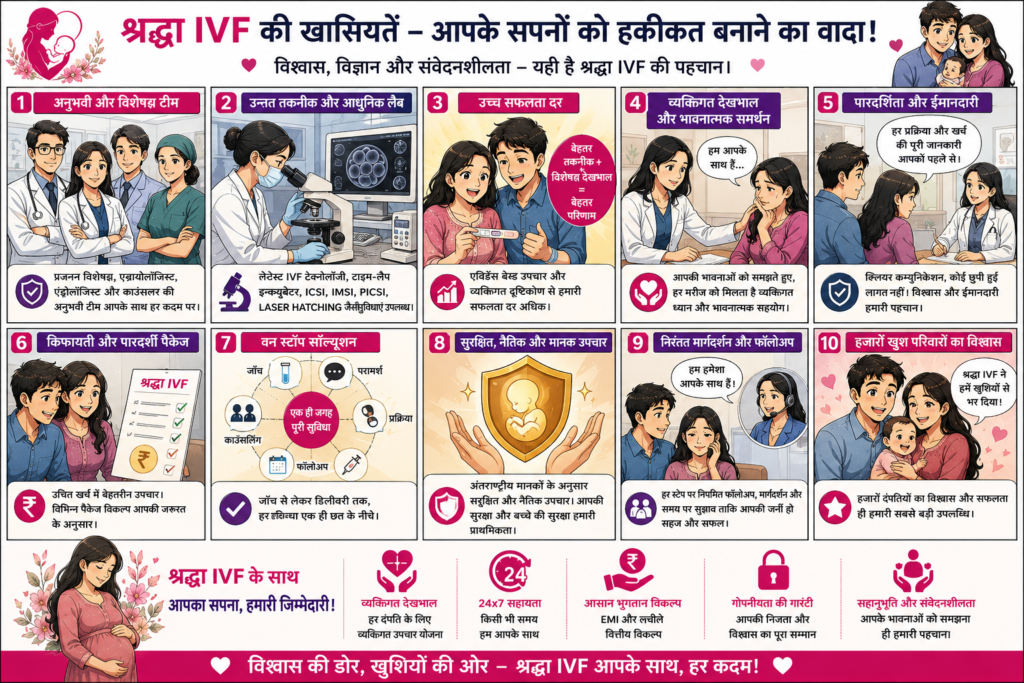
About the Doctor
A Specific Note for Women in Bihar — From My Patna Clinic
Because I practise in Patna, I want to write a section specifically for the women in Bihar reading this — because what you face here is, in some ways, distinct from what women in other parts of India face.
In Bihar, the joint family is often still the centre of life. Mother’s Day in a joint family is not a gentle Hallmark holiday — it is a high-pressure event where many generations gather and where the question of who has children, who does not, and why, sits unspoken at the centre of every conversation. I have had patients tell me they have been asked, in front of fifteen relatives, when they are “going to do something” about their childlessness. I have had patients tell me they have been compared to their younger cousin who has just had her second baby. I have had patients tell me they considered not going home for Mother’s Day because the comments would be too much.
If this is you, I want you to know three things.
First: the social pressure you are experiencing is not normal, even though it is common. It is a cultural pattern, not a universal truth. Many women across the world receive completely different responses from their families during fertility struggles. You did not do anything wrong to deserve this.
Second: in fifteen years of clinical practice in Patna, the single most consistent pattern I have observed is delay. Patients arrive at my clinic three, four, sometimes five years after the first warning signs — irregular periods, failed cycles, partner concerns. They delayed because the family told them to “give it more time.” They delayed because they were afraid of what the evaluation might find. They delayed because they assumed advanced fertility care required going to Delhi or Mumbai. It does not. The same MRCOG-trained protocols, the same embryology standards, the same options are available in Patna at Shradha IVF — at a fraction of the cost of metro clinics, and within driving distance for most of Bihar. If you have been delaying because you thought you would need to travel, please reconsider.
Third: I see you. Every woman who walks through my door carries some version of this story. You are not alone in it.
6. What I Want Every Woman Reading This to Know — From Dr. Shradha
I want to close this letter with the things I most want every woman trying to conceive to carry with her — today, and every day.
Infertility is a medical condition, not a moral failure. It affects 1 in 6 couples globally. It is not caused by stress, by working too hard, by drinking cold water, by not praying enough, or by anything else you have been told. It is a medical condition like any other. With the right evaluation and treatment, the vast majority of couples who want to be parents do become parents.
Time matters, but not in the way social pressure suggests. Time matters because biology changes. Ovarian reserve declines. Egg quality decreases. The window for some treatments narrows. What does not matter is what your in-laws think of how long you have been trying. The clock that matters is the biological clock, and it can be measured, evaluated, and acted on. The clock of family judgement should not be allowed to dictate your medical decisions.
You have more options than you think. Most women I meet have heard of IVF and assume it is their only option — and that it costs ₹5–10 lakh. Both assumptions are usually wrong. Many couples succeed with much simpler treatments — IUI as a first step, ovulation induction, lifestyle correction — before IVF is needed. And IVF, when it is the right step, is far more affordable than most assume. At Shradha IVF, our standard IVF cycle is completed within ₹1,50,000 for most couples, with EMI plans under ₹7,000 per month.
The first consultation is free, and it is information, not commitment. Many women postpone visiting a fertility specialist because they fear what they will be told. But an evaluation is not a treatment. It is a conversation. It gives you information. What you choose to do with that information is entirely yours. Some women come and learn they should keep trying naturally for six more months. Some women come and learn they have been waiting longer than they should have. Both outcomes are valuable. Both end the uncertainty.
7. If You’re Ready to Take One Small Step on Mother’s Day
If anything in this letter has reached you — if you have been waiting for a sign that it is okay to take action — I want to offer this: one small step is enough. Not a decision about IVF. Not a commitment to treatment. Just one phone call, one WhatsApp message, one consultation booking. That is all.
The first consultation at Shradha IVF & Maternity in Patna is free. It includes a conversation, a basic examination, and an honest assessment of your situation. There is no pressure. There is no judgement. There is no upselling. There is just information — which is the gift you have been waiting for, even if you didn’t know it.
Whether you book that consultation today, or next month, or never — please know that you are not alone. There are clinics, communities, and specialists who understand exactly what you are carrying. The pain of infertility is real. So is the hope. So is the science. So is the path forward.
This Mother’s Day, you are not “almost a mother”. You are not “waiting to be a mother”.
You are already her. The world will catch up.
This Mother’s Day, You Don’t Have to Wait Alone.
If you are ready to take one small step — not toward treatment, just toward information — the first consultation at Shradha IVF is free, confidential, and without obligation. Talk to Dr. Shradha. Hear an honest assessment. Decide what comes next on your own terms.
📞 +91 9162562266 · 💬 WhatsApp · 🕐 Open Mon–Sun, 8 AM–9 PM
📍 Shradha IVF & Maternity, Bhikhana Pahari, Patna 800004
If This Letter Helped, Please Share It
If you know someone — a friend, a sister, a cousin, a colleague — who might need this letter today, please share it with her. There is no greater gift you can give a woman trying to conceive than the knowledge that she is seen and that there is a path forward.
Frequently Asked Questions
Mother’s Day can feel emotionally difficult for women facing infertility. It is important to protect your emotional well-being, avoid comparisons, and allow yourself space to process your feelings. Spend time with supportive people, take a social media break if needed, and remember that your journey and emotions are valid.
Mother’s Day can trigger sadness, grief, and emotional stress for couples struggling to conceive. Seeing pregnancy announcements or celebrations may feel overwhelming. During this time, focusing on self-care, emotional support, and open communication with your partner can help make the day more manageable and emotionally balanced.
A simple and compassionate message matters most. You can say, “I’m thinking of you today,” “Your feelings are valid,” or “I know this day may be difficult for you.” Avoid giving advice or asking personal questions. Emotional support and understanding often mean more than words.