

Medically Reviewed by Dr. Shradha Chakhaiyar, MBBS, DGO, MRCOG (London) — IVF Specialist & Reproductive Surgeon
Shradha IVF & Maternity, Patna, Bihar · 20+ Years of Experience
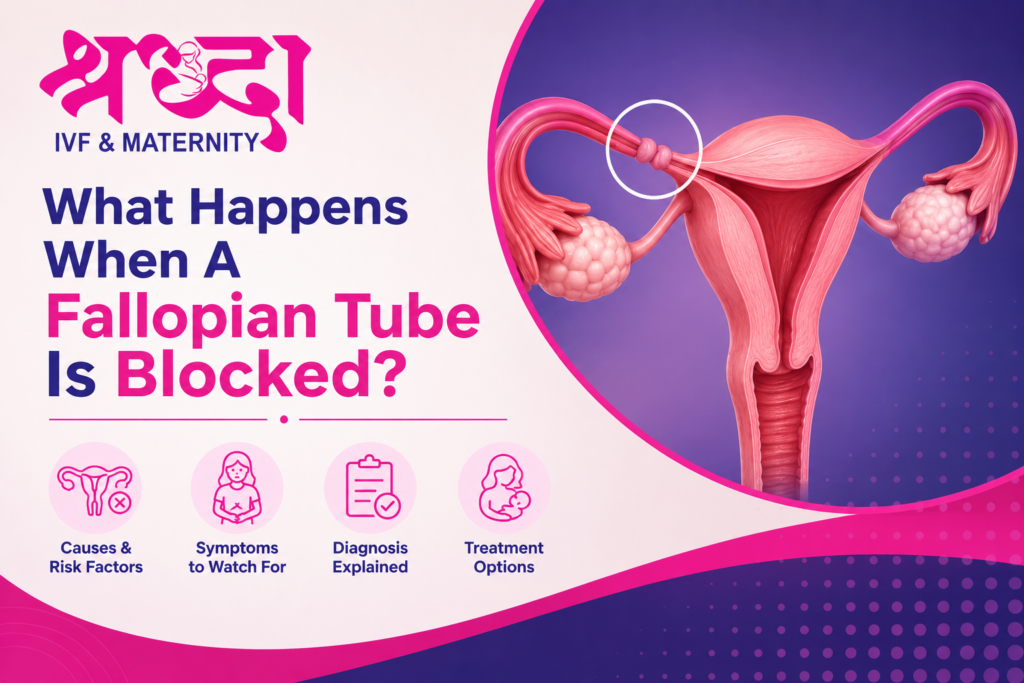
Blocked fallopian tubes occur when one or both tubes between the ovary and uterus become partially or completely obstructed, preventing the egg and sperm from meeting or stopping a fertilised egg from reaching the uterus. They cause about 25–35% of female infertility globally. Common causes include pelvic infections, untreated STIs, endometriosis, previous surgery, and (in Bihar) genital tuberculosis. Diagnosis is through HSG or laparoscopy. Treatment depends on severity — ranging from tubal cannulation and laparoscopic surgery to IVF.
📋 What This Guide Covers
- Key Takeaways
- What blocked fallopian tubes are
- The role of the fallopian tubes
- Tubal infertility vs blocked tubes
- What happens when a tube is blocked
- 5 main causes of tubal blockage
- How to know if a tube is blocked
- How blocked tubes are diagnosed
- Can blocked tubes be opened naturally?
- Treatment options — by severity
- 7 steps to getting pregnant
- How Shradha IVF helps
- FAQs
Key Takeaways
- Blocked fallopian tubes stop the egg and sperm from meeting and increase the risk of ectopic pregnancy.
- Many women have no symptoms and need targeted tests such as HSG or laparoscopy to diagnose the problem.
- Treatment options range from tubal recanalisation and surgery to IVF, depending on the type and severity of blockage.
- Hydrosalpinx (a fluid-filled, damaged tube) often requires surgical management before IVF for the best success rates.
- Early evaluation allows personalised fertility planning and meaningfully improves the chances of a healthy pregnancy.
What Are Blocked Fallopian Tubes?
Blocked fallopian tubes occur when one or both of the tubes connecting the ovary to the uterus become partially or completely obstructed. These tubes are essential for natural conception, because fertilisation usually happens inside them — not in the uterus. When blocked, sperm can’t reach the egg, or a fertilised egg can’t travel to the uterus. Common causes include pelvic infections, untreated sexually transmitted infections, endometriosis, previous abdominal surgery, and (importantly in our region) tuberculosis. Many women experience no symptoms at all until they encounter difficulty conceiving. Diagnosis is usually made through tests such as HSG or laparoscopy. Treatment options range from minor procedures to assisted reproduction, such as IVF treatment.
The role of the fallopian tubes in pregnancy
The fallopian tubes connect the ovaries to the uterus and perform three critical functions:
- Egg pick-up — After ovulation, the tube gently captures the egg from the ovary.
- Fertilisation — The sperm usually meets the egg inside the tube, not in the uterus.
- Embryo transport — The fertilised egg travels through the tube into the uterus, where implantation occurs.
What does blockage mean?
A blockage occurs when scar tissue, inflammation, or fluid prevents the egg and sperm from meeting, or stops the embryo from reaching the uterus — usually due to damage to the inner ciliated lining of the tube. There are several patterns:
- Partial blockage — Some passage remains, but transport is slow or irregular. Carries higher ectopic pregnancy risk.
- Complete blockage — No passage for egg or sperm.
- Unilateral blockage — Only one tube is blocked.
- Bilateral blockage — Both tubes are blocked.
Two related terms worth knowing
- Hydrosalpinx — A tube filled with inflammatory fluid due to chronic infection or inflammation. The fluid is embryotoxic — it reduces implantation rates if it refluxes into the uterus during IVF, which is why hydrosalpinx is usually surgically managed before embryo transfer.
- Tubal adhesions — Bands of scar tissue binding the tube to nearby organs, sometimes distorting the tube’s shape and movement without fully blocking it.
How Does Tubal Infertility Differ From Blocked Fallopian Tubes?
“Tubal infertility” is a broader term — it refers to any infertility caused by damage or dysfunction of the fallopian tubes. Blocked tubes are one specific form of tubal infertility. In simple terms, all blocked tubes can cause tubal infertility, but not all tubal infertility is due to complete blockage. The broader category also includes partial blockages, scarring, adhesions, and damage to the inner cilia. Even when the tubes are technically open, they may not function properly, affecting egg and embryo transport. Diagnosis and treatment principles overlap, but the specifics depend on what’s found.
What Happens When A Fallopian Tube Is Blocked?
If only one tube is open, pregnancy is still possible — though it may take longer than average. With both tubes blocked, natural conception is very unlikely. Partial blockages are particularly important to identify because they significantly increase the risk of ectopic pregnancy, where the embryo implants inside the tube instead of the uterus — a potentially life-threatening situation requiring urgent treatment.
Many women still experience completely normal periods despite blocked tubes. Pain or pelvic heaviness may occur if the tube fills with fluid (hydrosalpinx). You should seek evaluation if any of these apply:
- You are under 35 and have been trying to conceive for 12 months
- You are 35 or older and have been trying for 6 months
- You have a history of pelvic infections, tuberculosis, or pelvic surgery
- You experience severe pelvic pain or abnormal bleeding
Tubal factor infertility accounts for approximately 25–35% of female infertility worldwide. Emotionally, the diagnosis can feel devastating — but most women still have excellent treatment options, and many go on to have healthy pregnancies.
What are the Main Causes of Fallopian Tube Blockage?
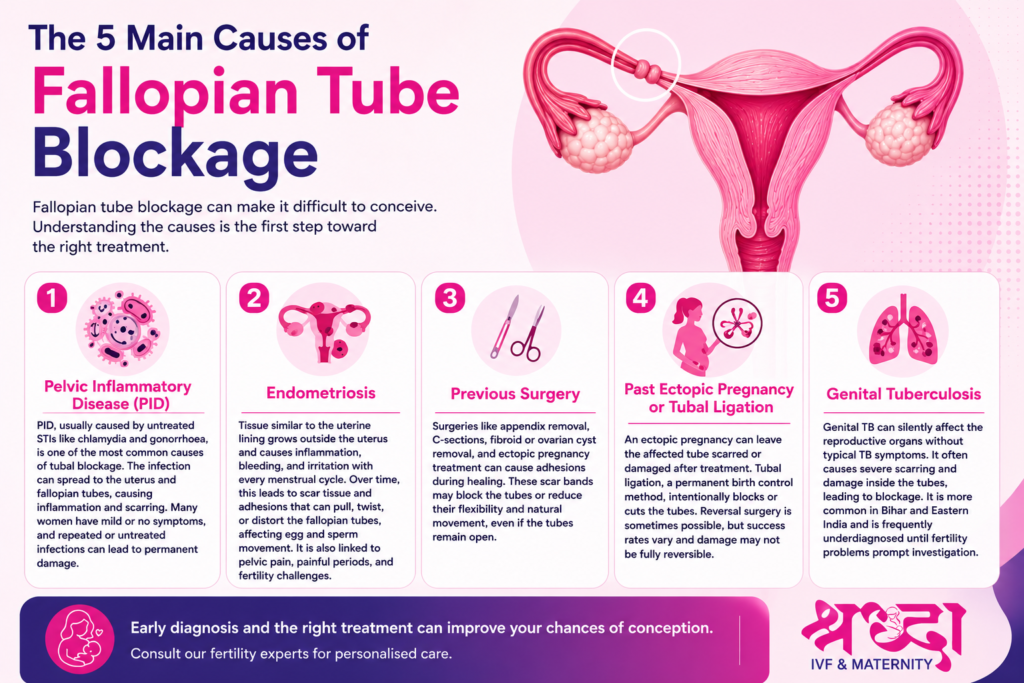
1. Pelvic Inflammatory Disease (PID)
Pelvic Inflammatory Disease is one of the most common causes of tubal blockage worldwide. It usually develops when sexually transmitted infections (STIs) — particularly chlamydia and gonorrhoea — are left untreated. The infection can travel from the vagina to the uterus and into the fallopian tubes, causing inflammation and scarring. According to the WHO and CDC, chlamydial PID is a leading cause of tubal infertility globally. Many women may not realise they have an STI because symptoms can be mild or absent, and over time repeated or untreated infections increase the risk of permanent damage.
2. Endometriosis
Endometriosis occurs when tissue similar to the uterine lining grows outside the uterus — on the ovaries, fallopian tubes, or surrounding pelvic organs. With each menstrual cycle, this misplaced tissue responds to hormones, causing inflammation, bleeding, and irritation. Over time, this repeated cycle causes scar tissue and adhesions that can pull, twist, or distort the fallopian tubes. Even when the tube isn’t fully blocked, structural distortion can affect egg and sperm movement. Endometriosis is also associated with chronic pelvic pain, painful periods, and difficulty conceiving.
3. Previous Surgery
Any abdominal or pelvic surgery can increase the risk of adhesions — scar bands that form during healing. Common procedures like appendix removal, C-sections, fibroid surgery, ovarian cyst removal, or ectopic pregnancy treatment can cause adhesions around the tubes. Even successful surgeries can trigger healing responses that bind nearby tissues; in some cases, the tubes remain open but lose their flexibility and natural movement.
4. Past Ectopic Pregnancy or Tubal Ligation
An ectopic pregnancy — where a fertilised egg implants inside the tube instead of the uterus — often leaves the affected tube permanently damaged or scarred after treatment. Similarly, tubal ligation (a permanent birth control method) intentionally blocks or cuts the tubes. Reversal surgery is sometimes possible, but success rates vary, and the original damage may not be fully reversible.
5. Genital Tuberculosis
Genital tuberculosis (TB) is a less commonly discussed but genuinely important cause of tubal blockage, especially in Bihar and Eastern India. Genital TB can silently affect the reproductive organs without causing typical TB symptoms like cough or fever, because the infection is confined to the pelvic organs. It often produces severe scarring and damage inside the tubes, leading to blockage. Because symptoms are often mild or absent, it’s frequently underdiagnosed until fertility problems prompt investigation. In our practice in Patna, genital TB is identified meaningfully more often than in metro-city clinics — so we test for it deliberately when the clinical picture fits.
How to Know If a Fallopian Tube Is Blocked
One of the biggest challenges with tubal blockage is that it often shows no clear symptoms. Many women only discover the issue after months or years of trying to conceive. Signs that warrant evaluation include:
- Difficulty getting pregnant despite regular attempts
- Chronic or occasional pelvic pain
- Pain during periods or intercourse (in some cases)
- History of pelvic infections or pelvic surgery
Symptoms alone are not reliable, however — diagnostic testing is essential to confirm.
How Blocked Fallopian Tubes Are Diagnosed
Diagnosis usually follows a stepwise approach, often as part of a wider infertility evaluation. Three tests do most of the work, each with strengths and limitations:
| Test | How It Works | Best For | Notes |
|---|---|---|---|
| HSG (Hysterosalpingography) | X-ray with dye through the cervix; dye flow confirms patency | First-line screening | Quick, outpatient. Mild cramping. Uses radiation. |
| HyCoSy / SIS | Ultrasound with saline/contrast instead of X-ray | Patients avoiding radiation | No radiation; also evaluates uterus and ovaries. |
| Laparoscopy + dye test | Direct visualisation under anaesthesia; can treat at the same time | Gold standard / complex cases | Most accurate. Can also treat adhesions and endometriosis during the same procedure. |
Most evaluations start with HSG or HyCoSy. Laparoscopy is reserved for cases where the picture is unclear, where treatment of likely adhesions or endometriosis would be valuable, or where the initial tests suggest more significant damage.
Can Blocked Fallopian Tubes Be Opened Naturally?
This is one of the most-asked questions on this topic, and the honest answer matters. Completely blocked tubes generally require medical treatment — anti-inflammatory diets, yoga, herbal supplements, or pelvic massage cannot mechanically open scarred or fully obstructed tubes. What natural approaches can help with is the underlying environment: reducing inflammation, supporting overall reproductive health, and improving general fertility for couples with mild or partial issues.
Reasonable supportive approaches include an anti-inflammatory diet (leafy greens, berries, turmeric, ginger, omega-3 foods), regular moderate exercise to support circulation, stress reduction (meditation, sleep, gentle yoga), and avoidance of smoking, alcohol, and excessive processed foods. These help — but they’re support, not cure. If both tubes are completely blocked, the evidence-based path forward is medical treatment or IVF, which bypasses the tubes entirely.
- You’ve been trying to conceive for 6–12 months without success
- You have a history of pelvic infections, STIs, or endometriosis
- You’ve had previous pelvic surgery, ectopic pregnancy, or tubal ligation
- Previous fertility treatments have failed without a clear explanation
How Blocked Fallopian Tubes Are Treated — By Severity
The right treatment depends on the cause, location, severity of blockage, the woman’s age, and other fertility factors. Here’s how we think about it clinically:
| Severity | Recommended Approach | What’s Involved |
|---|---|---|
| Active pelvic infection | Antibiotics first | Stops further damage; can’t reverse existing scarring |
| Mild / proximal blockage (near the uterus) | Tubal cannulation | Catheter guided through cervix to clear obstruction; outpatient procedure |
| Adhesions / endometriosis | Laparoscopic surgery | Minimally invasive removal of scar tissue or treatment of endometriosis |
| Hydrosalpinx | Tubal surgery (often before IVF) | Drainage, clipping, or removal of the affected tube to protect IVF success rates |
| Bilateral / severe blockage | IVF | Bypasses the tubes entirely — direct uterine transfer after IVF |
IVF deserves special mention for blocked-tube cases. Because IVF retrieves eggs directly from the ovaries, fertilises them in the lab (sometimes with ICSI), and transfers the embryo directly into the uterus, it doesn’t require the tubes to function at all. For couples with bilateral blockage or significant tubal damage, IVF success rates are often equivalent or better than for other infertility causes, because the structural problem is simply bypassed. International evidence also shows that managing hydrosalpinx surgically before IVF (drainage, clipping, or salpingectomy) can roughly double implantation and pregnancy rates per transfer compared to leaving the diseased tube in place — which is why we evaluate hydrosalpinx carefully before any IVF cycle.
How to Get Pregnant with Blocked Fallopian Tubes?
If you’re trying to conceive with diagnosed tubal blockage, a structured, medically-guided approach significantly improves your odds.
- Confirm the diagnosis early. Use HSG, HyCoSy, or laparoscopy to determine whether one or both tubes are blocked. This single piece of information shapes everything that follows.
- Understand the severity. One tube blocked → natural conception may still be possible. Both tubes blocked → IVF is usually the right path.
- Optimise ovulation and timing. Track ovulation with kits or ultrasound monitoring. If one tube is open, timing intercourse during the fertile window meaningfully improves your chances. Our companion blog on ovulating but not getting pregnant covers timing in detail.
- Adopt fertility-friendly lifestyle changes. Healthy BMI, balanced nutrition, regular exercise. Improvements compound over 2–3 months.
- Treat underlying causes. Address active infections, endometriosis, or hormonal imbalances early — they can keep damaging tubes if ignored.
- Step through the medical options. Ovulation-supporting medication, then IUI treatment in selected cases, then IVF when needed.
- Stay consistent and reduce stress. Fertility journeys are emotionally demanding. Managing stress supports hormonal balance and your ability to stay the course.
The most important insight: IVF has one of the highest success rates for blocked fallopian tubes specifically, because it doesn’t require the tubes to work at all. You can use our IVF Success Rate Calculator for a personalised, evidence-based estimate of your chances based on your age and situation.
How Shradha IVF Helps Women with Blocked Tubes?
At Shradha IVF & Maternity, Patna, every woman with suspected or confirmed tubal blockage is personally evaluated by Dr. Shradha Chakhaiyar, MRCOG (London). We offer:
- Same-day fertility evaluation with HSG, HyCoSy, ultrasound, and (where indicated) laparoscopy
- Personalised treatment escalation from tubal procedures to IVF
- Specialist hydrosalpinx management and ectopic-pregnancy risk counselling
- Advanced embryology lab and experienced fertility specialists
- Transparent cost guidance and EMI options so finance isn’t a barrier
- Affordable, bilingual care with clear follow-up guidance
All treatment protocols are aligned with national and international fertility guidelines (WHO, ESHRE, FOGSI) and tailored to each patient.
Tubal Blockage Isn’t the End of the Road
Whether the right path for you is tubal surgery, IVF, or simply a clearer evaluation — start with a free, confidential consultation with Dr. Shradha. Clarity is the first step.
Book a Free Consultation → 💬 WhatsApp UsFAQs on Blocked Fallopian Tubes
Yes, natural pregnancy is possible if one tube is open and functioning properly. However, chances depend on age, ovulation health, sperm quality, and absence of other fertility issues.
Blocked tubes often do not cause noticeable symptoms. Some women may experience pelvic pain if the blockage is due to infection, endometriosis, or hydrosalpinx.
Not always. Mild or proximal blockages may be treated with tubal cannulation. Severe scarring or hydrosalpinx may require surgery or IVF, depending on the case.
IVF is generally the most effective treatment when both tubes are completely blocked, especially if there is extensive scarring or damage.