
Intracytoplasmic Sperm Injection (ICSI) is a precision laboratory technique in which a single healthy sperm is injected directly into an egg under high-magnification microscopy — enabling fertilisation even when sperm count, motility, or morphology would otherwise prevent it. Performed within an IVF cycle by experienced embryologists at Shradha IVF & Maternity, Patna.
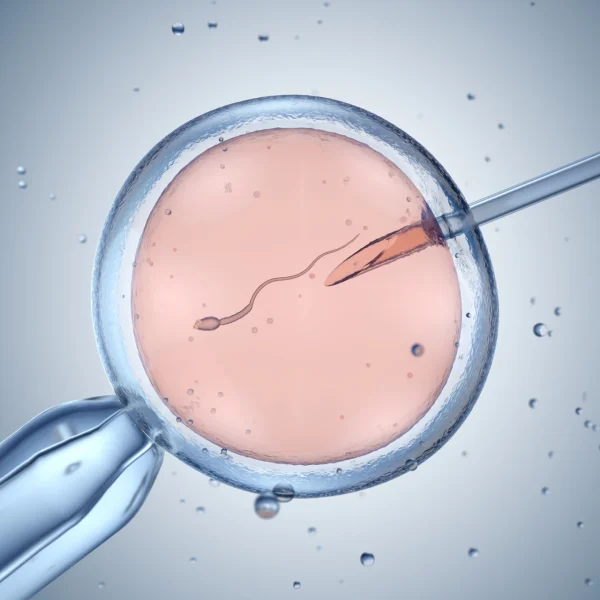
Across India, male-factor infertility contributes to nearly 40–50% of all infertility cases — and yet, in many homes across Bihar, the conversation still focuses primarily on the woman. ICSI changes both the medical and emotional reality. By making fertilisation possible with even a single healthy sperm, it removes one of the largest biological obstacles to parenthood.
ICSI is not a separate treatment — it is a fertilisation method performed inside an IVF cycle. Where conventional IVF allows sperm and egg to fertilise on their own in the lab dish, ICSI uses a microscopic glass needle to inject a carefully selected sperm directly into the centre of each mature egg. This is performed under 200x–400x magnification by a trained embryologist on a micromanipulator workstation — a precision-engineered platform designed specifically for this work.
At Shradha IVF & Maternity in Bhikhana Pahari, Patna, ICSI is offered as part of a complete IVF cycle for couples whose diagnosis genuinely requires it. We do not add ICSI to every IVF cycle by default — that is a billing decision, not a clinical one. ICSI is recommended when the underlying sperm parameters or fertilisation history make it medically necessary, and the reasoning is always explained transparently before treatment begins.
| Factor | Conventional IVF | ICSI |
|---|---|---|
|
How fertilisation happens? |
Sperm and egg are placed together in a culture dish; fertilisation happens naturally |
A single selected sperm is injected directly into each mature egg by an embryologist |
|
When it’s used? |
Normal-to-mildly-reduced sperm parameters; tubal factor infertility; unexplained infertility with no fertilisation issues |
Severe male factor infertility; previous IVF fertilisation failure; very low sperm count; surgically retrieved or frozen sperm with limited samples |
|
Fertilisation rate |
60–70% of mature eggs typically fertilise |
70–80% of injected eggs typically fertilise |
|
Cost at Shradha IVF |
₹90,000 – ₹1,00,000, all inclusive |
Included in the ₹1,50,000 package — no separate charge |
|
Lab time and skill required |
Average |
Higher — requires trained embryologist and specialised equipment |
|
Used routinely? |
Yes when indicated |
No — should only be added when there is a clinical reason |
Our clinical view: ICSI is a powerful technique, but adding it to IVF cycles where it is not needed simply increases cost without improving outcomes. Several published studies (including Cochrane reviews) have shown that ICSI offers no advantage over conventional IVF when sperm parameters are normal. We follow the diagnosis, not the package.
Read more about IVF treatment → | See full IVF cost details →
ICSI is most clinically beneficial in these specific situations
If your situation does not fall into one of these categories, we will likely recommend conventional IVF rather than ICSI — and explain why. Adding ICSI when not indicated is not in your clinical or financial interest.
A complete ICSI cycle is performed within an IVF treatment cycle and takes approximately 4–6 weeks from start to embryo transfer. Here is what happens at each step.
Both partners undergo evaluation: hormonal blood tests (AMH, FSH, LH, TSH, prolactin) and pelvic ultrasound for the female partner; detailed semen analysis covering count, motility, morphology, and viability for the male partner. Additional male evaluation — including hormonal profile and any specific tests indicated by the semen results — is performed when needed. Based on these findings, Dr. Shradha and the embryology team confirm whether ICSI is medically required and design a personalised IVF-ICSI protocol.
The female partner receives daily hormonal injections (recombinant FSH, sometimes with LH) to stimulate the ovaries to produce multiple mature eggs in a single cycle. Follicular growth and hormone levels are monitored through 4–6 ultrasound scans and serial blood tests across the stimulation period. A trigger injection is given approximately 36 hours before egg retrieval to mature the eggs for collection.
Egg retrieval is a 20–30 minute procedure performed under short sedation. A thin needle is guided through the vaginal wall under ultrasound guidance to gently aspirate the fluid from each mature follicle, retrieving the eggs. The procedure is painless under sedation and most patients return home within 2–3 hours. On the same day, the male partner provides a fresh semen sample at the clinic.
This is the central technical step that distinguishes ICSI. In our embryology lab, the retrieved eggs are stripped of their surrounding cumulus cells and assessed for maturity — only metaphase II (mature) eggs are suitable for ICSI. Under high-magnification microscopy, the embryologist selects individual sperm based on morphology and motility. Each selected sperm is immobilised, drawn into a micro-injection pipette, and then injected directly into the cytoplasm (centre) of a mature egg using a micromanipulator. The egg is held in place by a holding pipette during injection. Each egg takes approximately 30–60 seconds to inject. Fertilisation is assessed 16–18 hours later by checking for the appearance of two pronuclei — the visual confirmation of successful fertilisation.
Fertilised eggs (now embryos) are cultured in specialised incubators for 3–5 days. Their development is graded daily by the embryology team. The healthiest embryo (or two, in some cases) is selected for transfer into the uterus through a thin catheter — a painless, 5-minute outpatient procedure. Surplus good-quality embryos are vitrified (frozen) for future use. A blood test for pregnancy (beta-hCG) is performed 12–14 days after embryo transfer.
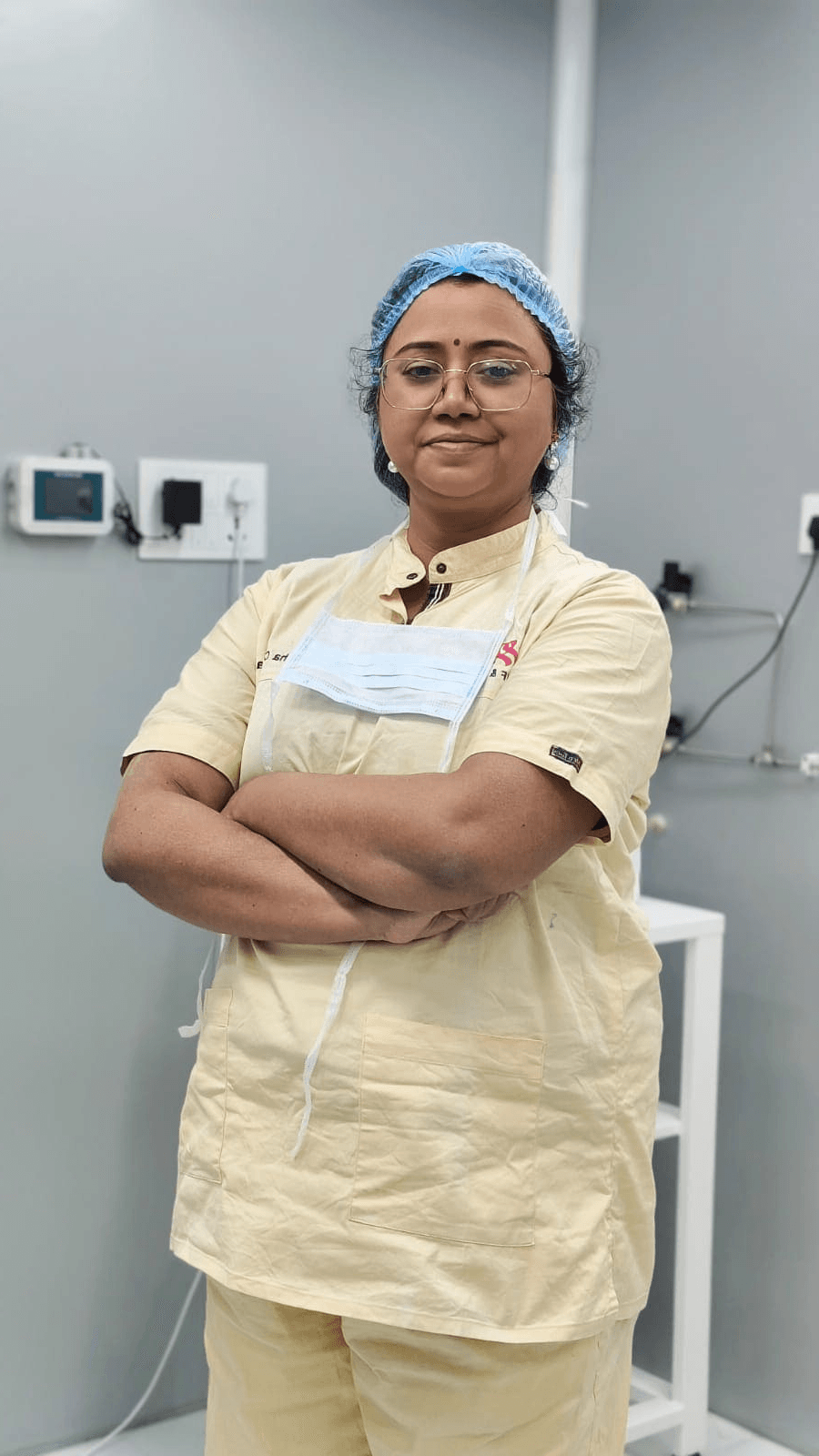

Detailed fertility assessment for both partners — including semen analysis, hormonal profile, and ultrasound — to identify the exact cause of infertility. ICSI is recommended only when clinically indicated, never as a default add-on.

ICSI requires precise micromanipulation skill that is built over hundreds of cycles. Our embryology team performs ICSI under strict laboratory protocols, with calibrated micromanipulator stations and high-magnification optical systems.
ICSI makes fertilisation possible with very low sperm count, poor motility, abnormal morphology, or limited sperm samples — situations where standard IVF would have low or no fertilisation rates.

Male-factor infertility is still poorly discussed in many Bihar households. We counsel both partners together, explain results in clear language, and remove the stigma — because shared understanding is part of treatment success.

Couples from across Bihar — Patna, Gaya, Muzaffarpur, Darbhanga, Hajipur — receive advanced ICSI treatment without travelling to Delhi or Mumbai, with continuity from the same medical team across every cycle.

ICSI is especially valuable for couples where fertilisation is the central challenge — either because of sperm parameters or previous treatment outcomes. It may be recommended for:
ICSI allows fertilisation to occur even when only a single healthy sperm is available per egg — making it a powerful option for many couples who were previously told their chances were low.
ICSI is performed within an IVF cycle. At Shradha the laboratory work it requires is part of the cycle price rather than a separate charge, so the figure below is the whole cost.
| Treatment | Cost Range |
|---|---|
|
Complete IVF cycle with ICSI — consultations, scans, medicines, retrieval, blastocyst culture and transfer |
₹1,50,000 all inclusive (₹1,35,000 booking directly) |
|
ICSI laboratory work — sperm selection, microinjection, embryologist time |
Included |
|
Surgical sperm retrieval (when required for azoospermia) |
₹15,000–₹30,000 |
|
Freezing of surplus good-quality embryos, with one year of storage |
Included |
Total IVF with ICSI at Shradha IVF: ₹1,50,000, all inclusive — ₹1,35,000 when you book directly with us. ICSI, blastocyst culture and embryo freezing are part of that price, not extras. The only additions are surgical sperm retrieval where azoospermia requires it, and investigations, which are charged at a 20% discount. If a further transfer from your stored embryos is needed later, it is ₹15,000.
A complete itemised estimate is provided in writing before treatment begins. ICSI is used only where there is a clinical reason for it. No charge is added once treatment has begun. EMI options are available — see our IVF on EMI page for monthly plan details starting under ₹7,000/month.
Trustindex verifies that the original source of the review is Google. Great hospital, and services. All doctors, staffs housekeeping all are very helpful and supportive. It's really great experience for me.Posted on GoogleTrustindex verifies that the original source of the review is Google. We had good experience with Shradha mam, she has been very supportive throughout the delivery of our baby.Posted on GoogleTrustindex verifies that the original source of the review is Google. Shradhaivf bhut acha hospital hai...mujhe yaha baby girl hue vo bhi normal se...mai bhut khush hoo...dr shradha mam bhut achchi hai...unka treatment bhut acha hai...yaha ke sabhi staff nurse bhut coperative hai....yaha ki saaf sfar sb badhiya hai mai yaha ke treatment se satisfied hoo...thank u so much mamPosted on GoogleTrustindex verifies that the original source of the review is Google. Dr Shradha mam se Ham satisfied Hain. Mai experience bhut acha rha...Shradha ivf is best hospital in Patna...Posted on GoogleTrustindex verifies that the original source of the review is Google. Shradhaivf Best hospital in patna ...mera experience bhut achcha rha..yaha mera dusra baby hua ...dr shradha mam bhut achchi doctor hai....I m fully satisfiedPosted on GoogleTrustindex verifies that the original source of the review is Google. 15 Saal shadi ko hone ka Tha pr mujhe koi baby nahi Tha...Mai kafi time se pleasant thi..mujhe shradhaivf ke bare me pta chla Mai mam se mili or shradha mam ne Mera treatment Kiya or mujhe baby conceive ho gya...15 Saal band baby conceive hona mere liyeor mere family ke bahut khushi ki baat hai...Mai shradha mam ka thank u krti hoo..jinki wajh se meri life me khushi louti hai...thank u so much shradha mam

ICSI (Intracytoplasmic Sperm Injection) is an advanced IVF fertility technique where a single healthy sperm is directly injected into the egg to facilitate fertilisation, often used when sperm quality or count is low, unlike standard IVF where fertilisation happens naturally in the lab.
ICSI is performed within an IVF cycle, so the price covers both. At Shradha IVF & Maternity a complete IVF cycle with ICSI is ₹1,50,000, all inclusive — ₹1,35,000 when you book directly with us. ICSI, blastocyst culture and the freezing of surplus embryos with one year of storage are included, not charged as extras. Surgical sperm retrieval, where azoospermia requires it, is ₹15,000 to ₹30,000, and investigations are charged separately at a 20% discount. A further transfer from your stored embryos is ₹15,000. A complete itemised estimate is given in writing before treatment begins.
Fertilisation rates with ICSI are typically 70–80% of mature eggs injected — higher than the 60–70% seen in conventional IVF for couples with sperm-related issues. However, fertilisation is only one step. Overall pregnancy rate per cycle depends on the woman's age, egg quality, embryo development, and uterine factors. For couples under 35, pregnancy rates per ICSI cycle are typically 35–50%. Dr. Shradha provides personalised success-rate estimates during consultation based on your specific case.
Large international studies, including those by ESHRE and ASRM, show that ICSI babies are largely as healthy as naturally conceived babies. There is a very small absolute increase in some birth-related concerns reported in the literature, often linked to underlying male-factor infertility itself rather than to the ICSI procedure. Dr. Shradha discusses the current evidence in detail during consultation so you can make an informed decision.
A full ICSI cycle takes approximately 4–6 weeks from the start of stimulation to embryo transfer. Ovarian stimulation lasts 8–12 days, followed by egg retrieval, the ICSI procedure in the lab on the same day, embryo culture for 3–5 days, embryo transfer, and a blood pregnancy test 12–14 days after transfer.
The main risks are similar to any IVF cycle — mild ovarian stimulation side effects, the rare possibility of ovarian hyperstimulation, and the chance of multiple pregnancy if more than one embryo is transferred. ICSI itself is a well-established technique performed globally for over 30 years. All risks are explained in detail during pre-treatment counselling.
If male-factor infertility, previous IVF failure, or a specific sperm-related diagnosis has been mentioned in your case — speak directly with Dr. Shradha Chakhaiyar’s team. The first consultation is free. We will review your reports honestly and tell you whether ICSI is the right step, or whether a less complex treatment will work just as well. No package upselling. No pressure.