

Introduction
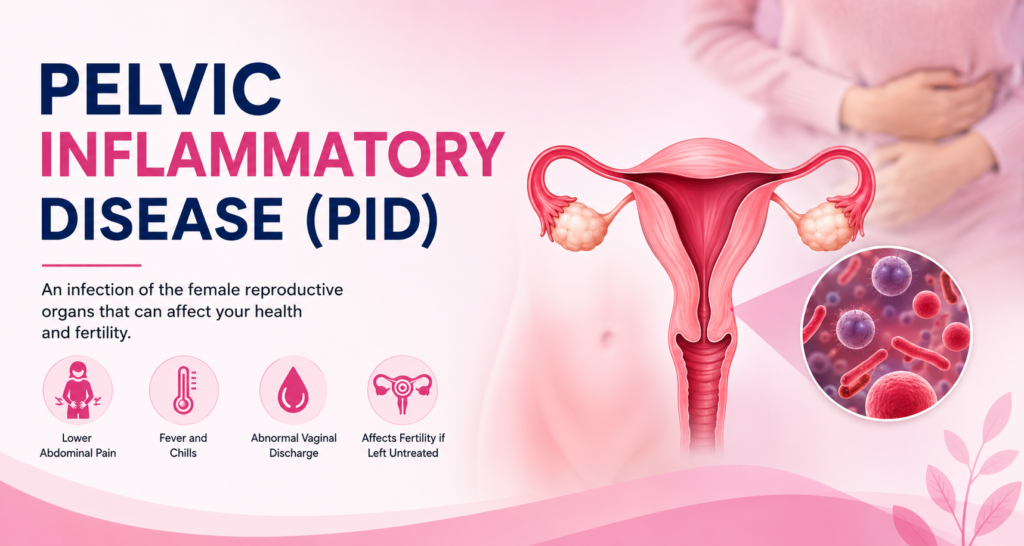
Pelvic inflammatory disease (PID) is a serious infection of the female reproductive organs that can quietly damage fertility if not treated on time. Many women ignore early symptoms because they appear mild or resemble common vaginal infections, but PID can leave permanent scarring inside the uterus and fallopian tubes. This scarring makes it harder for eggs and sperm to meet, increases the risk of ectopic pregnancy, and is a major cause of preventable female infertility.
This essential guide explains what PID is, why it happens, the symptoms you should never ignore, how doctors diagnose it, and the most effective treatments available today. You will also learn whether PID can be cured, how it impacts future pregnancy, and what steps you can take to protect your fertility.
For women in Patna and across Bihar, where access to timely gynecologic care can sometimes be delayed, this article also offers practical advice on when to see a doctor locally and how early intervention can save your reproductive health.
Summary
- PID is an infection of the reproductive organs that can scar the fallopian tubes and affect fertility.
- Early antibiotic treatment usually cures PID, but delayed care raises infertility and ectopic pregnancy risks.
- Untreated STIs such as chlamydia and gonorrhea are the most common causes.
- Diagnosis relies on symptoms, pelvic exam, swabs, and ultrasound, with follow-up in 48–72 hours.
- Safe sex, regular screening, and prompt treatment are the best prevention strategies.
What Is Pelvic Inflammatory Disease and How Does It Affect Fertility?
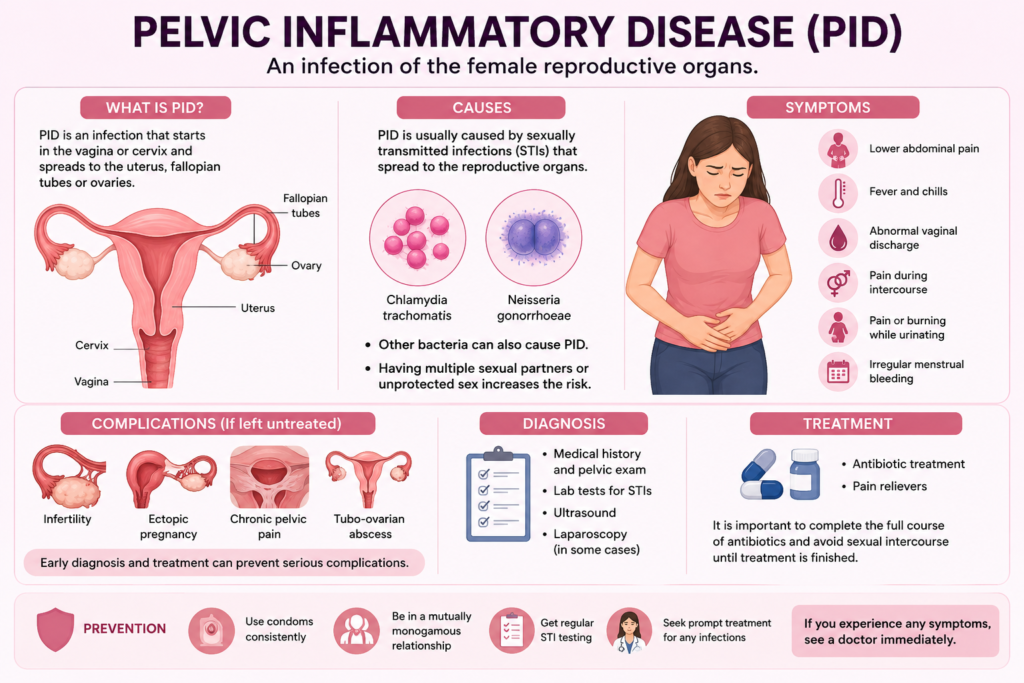
Pelvic inflammatory disease is an infection and inflammation of the uterus, fallopian tubes, ovaries, and surrounding pelvic tissues. It usually starts when bacteria from the vagina or cervix travel upward into the reproductive organs.
Once inside, the infection triggers inflammation. This process can cause:
- Swelling of the fallopian tubes
- Formation of scar tissue and adhesions
- Partial or complete tubal blockage
These changes make it difficult for the egg to move from the ovary to the uterus. Even if conception occurs, a damaged tube increases the risk of ectopic pregnancy, a life-threatening condition where the pregnancy implants outside the uterus.
A single episode of PID can reduce fertility. Repeated or severe episodes raise the risk dramatically. The good news is that early diagnosis and treatment can stop the infection before permanent damage occurs, preserving your ability to conceive.
It is also important to remember that infertility has many causes besides PID, including age-related egg decline, ovulation disorders, endometriosis, thyroid disease, and male-factor infertility. However, PID remains one of the most preventable causes of infertility.
What Causes Pelvic Inflammatory Disease and Who Is at Risk?
PID is most commonly caused by sexually transmitted infections, especially:
- Chlamydia trachomatis
- Neisseria gonorrhoeae (gonorrhea)
In many cases, it is a mixed infection involving anaerobic bacteria that normally live in the vagina.
You are at higher risk of PID if you:
- Have a new or multiple sexual partners
- Have unprotected sex
- Have a history of STIs or previous PID
- Have had childbirth, abortion, or uterine procedures without proper infection control
- Have an IUD inserted without prior STI screening
- Practice vaginal douching, which disrupts healthy bacteria
- Are an adolescent or young adult (the cervix is more susceptible at this age)
Understanding these risk factors helps you take proactive steps to protect yourself.
What Are the Symptoms of Pelvic Inflammatory Disease?
PID symptoms vary widely. Some women experience severe pain, while others have mild or even no symptoms.
Common signs include:
- Pelvic or lower abdominal pain
- Fever or chills
- Abnormal vaginal discharge with foul smell
- Pain during sex
- Irregular menstrual bleeding
- Bleeding after intercourse
- Painful or heavy periods
Other possible symptoms:
- Burning during urination
- Nausea or vomiting
- Lower back pain
- General weakness or fatigue
When to seek urgent care
Go to a hospital immediately if you have:
- Severe or worsening pelvic pain
- High fever
- Fainting or dizziness
- Suspected pregnancy or missed periods with pain
- Inability to keep food or fluids down
Remember, silent PID is real. If you have been exposed to an STI, get screened even if you feel fine.
How Is Pelvic Inflammatory Disease Diagnosed by Doctors?
There is no single test for PID. Doctors rely on a combination of symptoms, examination, and investigations.
Clinical examination
A pelvic exam may show:
- Cervical motion tenderness
- Uterine or adnexal (ovary/tube) tenderness
- Abnormal vaginal discharge
Laboratory tests
- NAAT swabs for chlamydia and gonorrhea
- Microscopy and cultures of vaginal discharge
- Blood tests for markers of inflammation
- Urine or blood pregnancy test to rule out ectopic pregnancy
Imaging
- Pelvic ultrasound to assess swollen tubes or abscesses
In rare or complicated cases, laparoscopy may be done to visualize the infection directly.
Doctors often start treatment immediately when PID is suspected rather than waiting for all test results, because delays can cause permanent damage.
How Is Pelvic Inflammatory Disease Treated and Can It Be Cured?
PID is treated with broad-spectrum antibiotics that cover chlamydia, gonorrhea, and anaerobic bacteria.
Key principles of treatment
- Start antibiotics as early as possible
- Take the full course exactly as prescribed
- Treat all sexual partners
- Avoid sexual intercourse until treatment is complete and symptoms have resolved
Follow-up
A review after 48–72 hours is essential to confirm improvement. Hospital admission may be needed if:
- You are pregnant
- You have severe symptoms or vomiting
- There is a pelvic abscess
- You do not improve with oral antibiotics
Early cases often resolve completely. However, scarring from delayed or recurrent PID may persist, which is why prevention and early care are so important.
If fertility is affected, options such as laparoscopy, adhesiolysis, or assisted reproduction like IVF can be considered after specialist evaluation.
What Happens If PID Is Left Untreated?
Untreated PID can create long-term consequences that extend beyond fertility.
- Chronic pelvic pain – Ongoing inflammation causes persistent lower abdominal pain even after the infection clears.
- Tubal scarring – Fallopian tubes lose their flexibility and function.
- Ectopic pregnancy – Fertilized eggs get trapped inside damaged tubes, becoming life-threatening.
- Ovarian abscess – A pus-filled infection may require hospitalization or surgery.
- Menstrual disturbances – Heavy bleeding, irregular cycles, and painful periods may develop.
These complications are preventable — but only with timely gynecological care.
PID and Pregnancy: Can You Still Conceive?
Yes, many women conceive naturally after PID, especially when treatment is started early. However, if tubal blockage is present, fertility support may be required.
At Shradha IVF, women with previous PID often undergo:
- Hysterosalpingography (HSG) – To check whether tubes are open
- Laparoscopy – To remove adhesions or assess internal damage
- IUI or IVF – If natural conception becomes difficult due to tubal disease
Each fertility plan is personalized — there is no one-size-fits-all approach.
Why Rural Bihar Faces Higher PID Risk
Women in semi-urban and rural Bihar often delay treatment because of:
- Limited awareness about sexually transmitted infections
- Hesitation to discuss reproductive health
- Self-medication from pharmacies
- Lack of nearby diagnostic facilities
This delay is one of the main reasons PID becomes chronic in this region. Shradha IVF & Maternity aims to bridge this gap by offering affordable diagnostics, bilingual counseling, and fertility-preserving care for women across Bihar.
How Can You Prevent PID and Protect Future Fertility?
- Use condoms consistently
- Limit sexual partners
- Get regular STI screening
- Avoid douching
- Complete all antibiotics
- Seek prompt medical care for pelvic symptoms
- Ask for STI testing before IUD insertion or gynecologic procedures
These simple habits can save you from years of fertility struggle.
When Should You See a Gynecologist in Patna for PID Symptoms?
If you live in Patna or anywhere in Bihar, see a gynecologist the same week for:
- Pelvic pain
- Fever
- Abnormal discharge
- Bleeding after sex
Go urgently if you are pregnant or very unwell. Many clinics in Patna provide ultrasound, STI testing, and affordable care. Ask about bilingual services so you can explain your symptoms clearly. Always return for follow-up in 2–3 days.
Emotional Impact of Pelvic Inflammatory Disease
A diagnosis of pelvic inflammatory disease is not just a medical condition — it is an emotional experience that often leaves women feeling anxious, frightened, and confused about their fertility. Many patients blame themselves or feel embarrassed discussing symptoms like abnormal discharge or painful intercourse. This emotional delay is one of the most dangerous aspects of PID because waiting silently allows the infection to damage the reproductive organs.
At Shradha IVF & Maternity, we frequently meet women who suffer pelvic pain for months, thinking it was “normal period discomfort,” only to later discover blocked tubes or chronic infection. Hearing that a natural pregnancy may become difficult is heartbreaking. However, with early testing and the right treatment pathway, many women go on to conceive — either naturally or with fertility support.
How Shradha IVF and Maternity Helps with PID
Shradha IVF and Maternity in Patna offers comprehensive care for women with PID:
- Same-day gynecologic assessment
- Pelvic exam, ultrasound, and swab testing
- Evidence-based antibiotic treatment and partner management
- Fertility-focused follow-up with tubal assessment
- Advanced solutions like laparoscopy, hysteroscopy, IUI, and IVF
- Compassionate, bilingual support for women across Bihar
Doctor’s Note – From Dr. Shradha Chakhaiyar
“PID is one of the most under-diagnosed causes of female infertility. Many women come to us only when they are unable to conceive, not realizing that a simple pelvic infection years earlier may have caused irreversible tubal damage. Early diagnosis saves fertility — never ignore pelvic pain or abnormal discharge.”
Your Next Step
Pelvic inflammatory disease is common, treatable, and preventable — but only if you act early. Recognizing symptoms, getting tested, completing treatment, and ensuring partner care can protect your fertility for the future.
If you are experiencing pelvic discomfort, unusual discharge, fever, or have a history of STIs — do not wait.
Your fertility is precious.
Your health deserves attention.
Your future family depends on timely care.
Book your consultation today at Shradha IVF & Maternity, Patna, and take the first step toward protecting your reproductive health.