

Written by Dr. Shradha Chakhaiyar, MS (OB-GYN), MRCOG (London), IVF Specialist
📋 Table of Contents
- What Is Secondary Infertility?
- How Common Is It?
- Causes in Women
- Causes Unique to Secondary Infertility
- Causes in Men
- Signs & Symptoms
- Diagnosis — Tests for Couples
- Treatment Options
- Emotional Impact
- Secondary Infertility in Bihar
- When to See a Specialist
- Frequently Asked Questions
What Is Secondary Infertility?
Secondary infertility is the inability to achieve a pregnancy or carry a pregnancy to term after previously giving birth to at least one child. The diagnosis is made when a couple has been trying for 12 months without success (6 months if the woman is 35 or older). It affects up to 11% of couples worldwide and is equally as common as primary infertility — yet receives far less attention, support, or awareness.
Secondary infertility is defined by what came before it: a successful pregnancy, a living child, the experience of having conceived. This history creates a unique emotional backdrop — the assumption that it will happen again, the confusion when it doesn’t, and the social silence around a loss that others don’t always recognise as legitimate because “you already have one.”
From a medical perspective, secondary infertility has the same spectrum of causes as primary infertility — age, PCOS, endometriosis, male factor, tubal problems — but with one important addition: causes that specifically arise as a consequence of the first pregnancy. A C-section that left uterine scarring. A post-delivery infection that damaged the fallopian tubes. Or simply time itself — the years between pregnancies during which ovarian reserve quietly declined.
How Common Is Secondary Infertility?
Secondary infertility is far more common than most people realise — and in India, it may be becoming more prevalent as more couples delay their second pregnancy into their mid or late 30s. The ICMR estimate that 25–30% of infertile Indian couples already have at least one child making secondary infertility one of the most prevalent fertility presentations at Indian clinics — yet it remains significantly underdiagnosed because couples often wait much longer before seeking help, assuming the problem will resolve on its own.
In Bihar specifically, couples with secondary infertility are often the last to seek help — partly because of social expectations (“you should be grateful for what you have”), partly because of the assumption that their first child is proof that they are fertile, and partly because the awareness that secondary infertility requires specialist investigation is not widely communicated.
What Causes Secondary Infertility in Women?
The causes of secondary infertility overlap significantly with those of primary infertility. However, several conditions are more likely to have developed or worsened in the time since the first pregnancy — making the evaluation of a woman with secondary infertility subtly different from that of a first-time presenter.
Age and Declining Ovarian Reserve
Age is the single most common cause of secondary infertility in India today, as more couples delay their second pregnancy. A woman who conceived easily at 27 and tries again at 33 or 35 is working with a meaningfully different ovarian reserve. From the mid-30s, egg quantity and — more importantly — egg quality decline measurably. Women younger than 30 have an ongoing IVF pregnancy rate of approximately 25% per cycle; this drops to around 10% for women over 35. The inter-pregnancy interval, which often spans 3–7 years in Indian families, frequently spans the most significant decline period.
PCOS — Often Worsened or Newly Presenting
PCOS (Polycystic Ovary Syndrome) affects approximately 1 in 5 Indian women and is the most common cause of ovulation disorders. In some women, PCOS that was mild or well-managed during the first pregnancy becomes more problematic in the interval — particularly if weight gain, stress, or metabolic changes have occurred. Post-pregnancy weight retention is common in Indian women, and excess weight amplifies insulin resistance, which directly worsens PCOS-related ovulation disruption.
Endometriosis — Frequently Develops or Progresses Between Pregnancies
Endometriosis is a progressive condition — it does not stay the same. In some women, mild or undiagnosed endometriosis that did not prevent the first pregnancy has advanced in the interval, creating new adhesions, ovarian endometriomas, or tubal damage. Research suggests that pregnancy itself temporarily suppresses endometriosis, but the condition typically resumes progression after delivery. A woman who had her first child in her late 20s may find significant endometriosis when investigated for secondary infertility in her early 30s — particularly if she experiences painful periods or pelvic pain between pregnancies.
Blocked or Damaged Fallopian Tubes
Fallopian tube blockage is found in approximately 29% of women with secondary infertility — a higher rate than in the general infertile population. This is partly because the causes of tubal damage — pelvic infections, post-surgical adhesions, and endometriosis — all have time to develop or worsen between pregnancies. A woman with no tubal problems at 26 may have tubal compromise at 32 if she experienced a significant pelvic infection in the interval. [INTERNAL LINK: IVF Treatment page — IVF bypasses the fallopian tubes entirely]
Uterine Fibroids and Polyps
Uterine fibroids — non-cancerous muscle growths in or around the uterus — increase in frequency and size with age and with hormonal exposure over time. A uterus that was fibroid-free during the first pregnancy may have developed clinically significant fibroids by the second attempt. Depending on their location, fibroids can distort the uterine cavity, compress the fallopian tube openings, or interfere with implantation. Endometrial polyps — overgrowths of the uterine lining — are similarly more common in women in their 30s and are a frequent finding on investigation for secondary infertility.
Thyroid Disorders
Both hypothyroidism and hyperthyroidism can disrupt ovulation and implantation. Thyroid conditions frequently emerge or worsen in women after childbirth — postpartum thyroiditis affects up to 10% of women and sometimes doesn’t resolve fully. All women presenting with secondary infertility must have their thyroid function tested, even if previous tests were normal, because thyroid status can change significantly in the inter-pregnancy period.
Causes Unique to Secondary Infertility — What Changed After Your First Pregnancy?
This section is what distinguishes a genuine secondary infertility resource from a generic “infertility causes” article. Some causes specifically arise as consequences of the first pregnancy or delivery — and every couple with secondary infertility deserves to have these investigated specifically.
C-Section Scarring and Asherman’s Syndrome
Caesarean section delivery creates a scar in the uterine wall. In most women, this causes no fertility problems. However, in a proportion of women — particularly those who had multiple C-sections, emergency procedures, or post-operative complications — the scar can disrupt the uterine cavity. Asherman’s Syndrome (intrauterine adhesions) can develop after any uterine procedure, including C-section, D&C (dilation and curettage used for miscarriage management), or post-partum evacuation. The adhesions — scar tissue bands within the uterine cavity — prevent normal endometrial growth and block implantation.
Post-partum and post-operative infections are a significant cause of secondary infertility in Bihar, where access to timely antibiotic treatment in rural settings can be delayed. Even a single pelvic infection that is inadequately treated can cause permanent fallopian tube damage — scarring and blocking the tubes — within weeks. Many women who present with tubal-factor secondary infertility have a history of post-delivery fever or “pelvic pain” that was treated briefly but not followed up. If you had any post-delivery infection, fever, or pelvic procedure, please disclose this at your consultation — it directly guides the investigation.
Retained Products of Conception
In some cases, small amounts of placental or pregnancy tissue may remain in the uterus after delivery or miscarriage. If this is not identified and addressed promptly, it can cause chronic inflammation, infection, and eventually adhesion formation — resulting in the very intrauterine scarring that prevents successful implantation in subsequent pregnancies. This is a cause that requires a thorough obstetric history to identify.
Changes in Your Partner’s Sperm Health Between Pregnancies
Male fertility is not static. In the 3–7 years between pregnancies, a man’s sperm count, motility, and DNA integrity can change significantly — due to increasing age, new health conditions (diabetes, hypertension, varicocele), new medications, environmental exposures, lifestyle changes, or unexplained factors. A man who fathered a child with normal semen at 28 may have clinically significant sperm abnormalities at 34. A semen analysis should always be one of the first investigations in any secondary infertility evaluation — regardless of the previous successful conception.
What Causes Secondary Infertility in Men?
Male factor is responsible for or contributes to 40–50% of secondary infertility cases — yet it is the least commonly investigated first in the Indian context. Because a man fathered a child before, his fertility is often assumed to be intact. This assumption leads to significant delays in correct diagnosis.
- Declining sperm count and quality with age: Male fertility declines more slowly than female fertility, but it does decline. Men over 35–40 show measurable decreases in sperm motility and increases in sperm DNA fragmentation. The risk of chromosomal abnormalities in sperm increases with paternal age.
- New varicocele development: Varicocele (abnormal enlargement of scrotal veins) can develop or worsen over time, gradually impairing sperm production. A varicocele that was subclinical during the first conception may be clinically significant 5–7 years later.
- New medications or health conditions: Medications for hypertension, diabetes, depression, or other conditions that developed after the first child can impair sperm function. Always review the male partner’s complete medication list at the initial consultation.
- Lifestyle changes: Weight gain, increased alcohol consumption, smoking, or increased sedentary behaviour in the inter-pregnancy period all negatively affect sperm parameters. These are among the most modifiable contributing factors.
- Epididymitis or orchitis: Infections of the epididymis or testes — which can follow urinary tract infections, STIs, or even viral illnesses like mumps — can cause obstructive azoospermia or permanent damage to sperm-producing tissue.
What Are the Signs of Secondary Infertility?
Secondary infertility is often silent — there may be no obvious symptoms beyond the inability to conceive. However, the following are signs that warrant earlier investigation rather than waiting the full 12 months:
- Irregular, painful, or much heavier periods since the last pregnancy — may indicate endometriosis, fibroids, or thyroid dysfunction
- Two or more miscarriages since the first child — consult after the second loss without waiting for a third
- Persistent pelvic pain — a possible sign of endometriosis or pelvic adhesions from post-delivery infection
- Noticeably shorter menstrual cycles — may indicate declining ovarian reserve
- Absent or very scanty periods after a D&C or post-delivery procedure — may indicate Asherman’s Syndrome
- Known PCOS or thyroid condition — consult a specialist before trying, not after a year of trying
- Male partner with known health changes (new medications, significant weight gain, testicular injury) — semen analysis should be done early
How Is Secondary Infertility Diagnosed?
The evaluation for secondary infertility is largely the same as for primary infertility, but with specific additions based on the history of the first pregnancy. At Shradha IVF, both partners are evaluated simultaneously from the first appointment.
| Test | Who | What It Evaluates |
|---|---|---|
| Semen Analysis | Male (always first) | Count, motility, morphology — essential even if the man fathered a child previously |
| AMH (Anti-Müllerian Hormone) | Female | Ovarian reserve — how many eggs remain; critical given age-related decline between pregnancies |
| Day 2/3 FSH, LH & Estradiol | Female | Baseline hormonal status; elevated FSH suggests diminished reserve |
| Antral Follicle Count (AFC) | Female | Ultrasound count of resting follicles — confirms ovarian reserve |
| TSH (Thyroid) | Female | Thyroid function — particularly important given post-partum thyroid changes |
| HSG (Hysterosalpingography) | Female | Fallopian tube patency — critical given the high tubal blockage rate in secondary infertility |
| Pelvic / Transvaginal Ultrasound | Female | Fibroids, polyps, ovarian cysts, & uterine anatomy |
| Hysteroscopy | Female (if C-section history or abnormal bleeding) | Direct uterine cavity view — detects Asherman’s Syndrome, polyps, fibroids |
| Sperm DNA Fragmentation | Male (if semen analysis borderline) | Genetic integrity of sperm — standard semen analysis does not assess this |
| Diagnostic Laparoscopy | Female (if endometriosis suspected) | Gold standard for endometriosis and pelvic adhesions |
Treatment Options — From Least to Most Invasive
Treatment for secondary infertility depends entirely on the identified cause, the woman’s age, and how long the couple has been trying. The goal is always the most effective, least invasive option appropriate to the diagnosis and timeline.
Lifestyle Optimisation (For All Couples)
Before any medical intervention, a review of modifiable lifestyle factors is worthwhile — particularly if the couple has changed their lifestyle significantly since the first pregnancy. Weight management (both overweight and underweight affect fertility), stopping smoking, reducing alcohol, managing stress, and correcting nutritional deficiencies (folic acid, vitamin D, zinc) should be concurrent with, not a substitute for, medical investigation.
Medication — Hormonal and Ovulation-Stimulating Drugs
For women with ovulation disorders (PCOS, thyroid dysfunction), medication is often the first-line treatment. Letrozole or Clomiphene stimulate the ovaries to develop and release eggs. Thyroid hormone replacement or metformin for insulin resistance are prescribed for the underlying hormonal condition. These are often combined with timed intercourse or IUI for better outcomes.
Surgical Treatment
- Hysteroscopy to treat Asherman’s Syndrome — division of uterine adhesions under direct vision, restoring the uterine cavity. Often dramatically effective for women whose secondary infertility is directly caused by post-C-section or post-D&C scarring.
- Laparoscopy for endometriosis — surgical removal of endometriotic deposits and adhesions improves natural conception rates in women with Stage 1–2 endometriosis and has a role in more advanced disease before IVF.
- Myomectomy or hysteroscopic polypectomy — removal of fibroids or polyps that are distorting the uterine cavity and impairing implantation.
- Varicocelectomy — surgical repair of varicocele in men; can significantly improve sperm parameters when varicocele is the identified cause.
IUI (Intrauterine Insemination)
IUI places washed, concentrated sperm directly into the uterus at the time of ovulation, bypassing the cervix and increasing sperm density at the site of fertilisation. It is most appropriate for mild male factor, mild ovulation disorders, or unexplained secondary infertility in women under 37. Most clinics recommend 3 IUI cycles before reassessing.
IVF (In Vitro Fertilisation) — The Most Effective Treatment
IVF retrieves eggs from the ovaries, fertilises them in the embryology laboratory, and transfers the resulting embryo directly to the uterus — bypassing tubes, cervix, and most other potential barriers. IVF treatment is the recommended treatment when: tubal blockage is confirmed, the male factor is significant, 3 IUI cycles have failed, the woman is over 37, or the cause is Asherman’s Syndrome (after surgical correction).
| Woman’s Age | IVF Success Rate / Cycle | IUI Success Rate / Cycle | Recommended Approach |
|---|---|---|---|
| Under 35 | 40–50% | 15–20% | 3 IUI cycles, then IVF if unsuccessful |
| 35 – 37 | 30–35% | 10–15% | Maximum 2 IUI cycles, then IVF |
| 38 – 40 | 19–25% | 5–10% | Move directly to IVF — do not delay with IUI |
| Over 40 | 5–15% | <5% | IVF immediately; discuss donor eggs if AMH is very low |
The Emotional Impact of Secondary Infertility
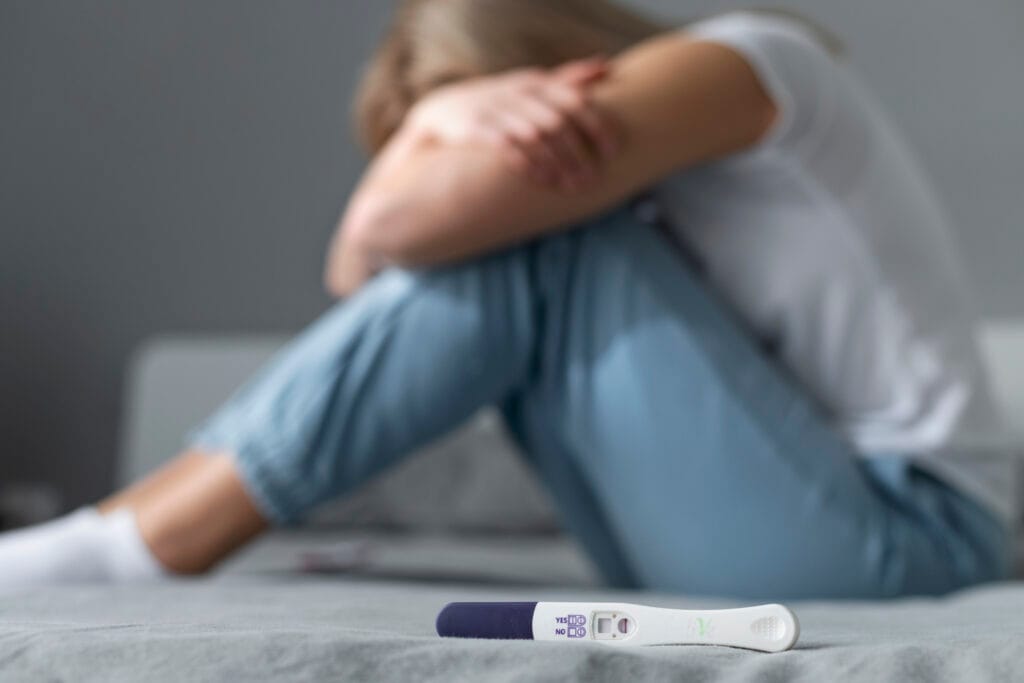
Secondary infertility carries an emotional burden that is uniquely its own — and that is frequently not recognised by friends, family, or even by some healthcare providers. The grief is real. The desire to have another child is legitimate. And the isolation of navigating this while everyone around you assumes you should be satisfied with one child is one of the hardest aspects of this diagnosis.
Common emotional experiences include:
- Guilt: “I already have one child. Am I being ungrateful?” — The answer is no. Wanting a second child is a completely legitimate desire, and the inability to have one is a recognised medical condition.
- Isolation: Friends who struggled with primary infertility may not offer the same support because “you already have one.” Friends who have never experienced infertility may trivialise the experience. The result is often profound loneliness.
- Grief mixed with parenthood: The difficulty of grieving while also raising an existing child — without being able to explain your sadness to them — is a specific emotional challenge of secondary infertility.
- Marital strain: Disagreements about how long to try, whether to pursue treatment, and which treatment to pursue are common and normal. Open communication and, where helpful, couples counselling can protect the relationship during treatment.
Secondary Infertility in Bihar — Unique Challenges and Local Context
Bihar couples facing secondary infertility encounter specific barriers that are not faced in the same way by couples in urban India:
- Social silence around wanting a second child: In Bihar, particularly in smaller towns and rural areas, the desire for a second child is often treated as a private matter — something to be hoped for, not medically investigated. Couples sometimes face discouragement from family members who tell them to “be grateful” rather than seek help.
- High C-section rates in private hospitals: Bihar’s private maternity sector has seen a significant rise in C-section deliveries, many without clear medical indication. Each uterine entry carries a small risk of adhesion formation. Couples with a C-section history in their first delivery should specifically request uterine cavity investigation (hysteroscopy) when investigating secondary infertility — not just ultrasound alone.
- Delayed post-delivery infection treatment in rural areas: Many women in rural Bihar who develop post-partum infections — fever, abdominal pain, discharge — do not receive adequate antibiotic treatment in time. Inadequately treated pelvic infections are a major preventable cause of tubal-factor secondary infertility that we see regularly in our clinic.
- Assumption that previous fertility guarantees future fertility: Across Bihar, the most common reason for delayed secondary infertility consultation is the belief that “it worked once, it will work again.” This belief costs couples critical time — especially for women over 35 whose ovarian reserve is declining with every additional month.
Shradha IVF & Maternity in Patna offers complete evaluation and treatment for secondary infertility — including hysteroscopy for Asherman’s Syndrome, laparoscopy for endometriosis, IVF, IUI, ICSI, and hormonal treatment — with transparent pricing and structured EMI payment plans. Couples across Bihar do not need to travel to Delhi or Mumbai for MRCOG-qualified fertility care.
When Should You See a Fertility Specialist for Secondary Infertility?
| Your Situation | When to Consult |
|---|---|
| Woman under 35, no known conditions or complications | After 12 months of regular unprotected intercourse without conception |
| Woman aged 35–40 | After 6 months — do not wait a full year |
| Woman over 40 | Consult immediately — ovarian reserve declines rapidly after 40 |
| Had a C-section or D&C / uterine procedure | Consult after 6 months, regardless of age — Asherman’s risk warrants early investigation |
| History of post-delivery pelvic infection or fever | Consult immediately — possible tubal damage requires HSG |
| Two or more miscarriages since the first child | Consult after the second loss — do not wait for a third |
| New or worsening painful periods since first delivery | Consult promptly — likely endometriosis development or progression |
| Absent or very light periods after any uterine procedure | Consult immediately — possible Asherman’s Syndrome |
| Male partner has new health conditions or lifestyle changes | Request semen analysis at first appointment — do not assume he is fertile because he was before |
FAQs on Secondary Infertility
Signs of secondary infertility include difficulty getting pregnant after previously having a child, irregular periods, changes in ovulation, repeated miscarriages, pelvic pain, or hormonal symptoms. In men, reduced sperm quality may also be a factor. A fertility evaluation can help identify the cause.
Yes, secondary infertility can often be treated depending on the cause. Common treatments include lifestyle changes, ovulation support, treating hormonal imbalance, surgery for reproductive issues, IUI, or IVF. Many couples successfully conceive again with proper diagnosis and timely medical care.
Yes. In some cases, C-section delivery creates a uterine scar, and in some women this leads to intrauterine adhesion formation (Asherman's Syndrome) that can prevent implantation. Women who had C-sections — particularly multiple C-sections or procedures with post-operative complications — should specifically request hysteroscopy (direct uterine examination) as part of their secondary infertility investigation. Ultrasound alone can miss small adhesions.
Secondary infertility means being unable to conceive or carry a pregnancy to term after previously giving birth naturally or with treatment. It can affect couples even after an earlier healthy pregnancy and may happen due to age, health changes, or fertility issues.
Getting pregnant the second time may be harder due to increasing age, lower egg quality, ovulation problems, weight changes, stress, thyroid issues, endometriosis, blocked tubes, or male fertility factors. Fertility can change over time, even after a previous successful pregnancy.
You Deserve to Have the Family You Imagined.
Secondary infertility is a real medical diagnosis — not a sign that you are ungrateful or that something is fundamentally wrong. At Shradha IVF & Maternity in Patna, Dr. Shradha Chakhaiyar provides every couple with a complete, compassionate evaluation — and an honest plan for what comes next.