

Medically Reviewed by Dr. Shradha Chakhaiyar, MBBS, DGO, MRCOG (London) | IVF & Fertility Specialist, Shradha IVF & Maternity, Patna
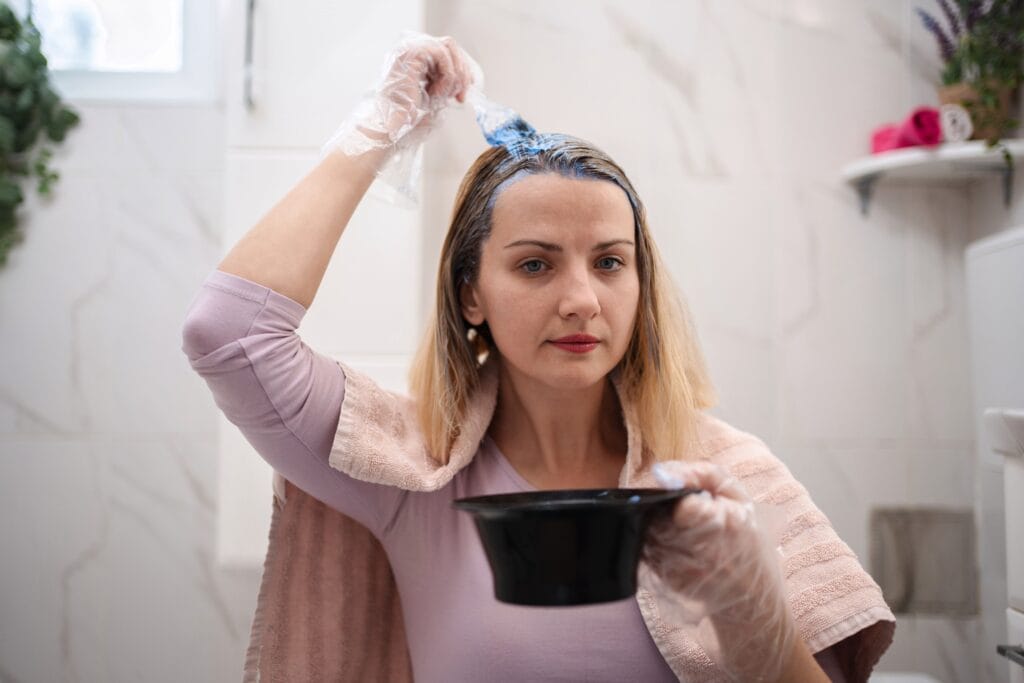
If you are preparing for IVF or an embryo transfer, even small decisions can start to feel important. One common question many women ask is whether it is safe to dye their hair during this time. While hair coloring may seem unrelated to fertility, the concern is understandable because IVF is a sensitive and carefully managed process.
Quick answeR
Yes, in most cases — and no study has shown that occasional hair colouring reduces fertility or IVF success. The amount absorbed through the scalp is minimal, particularly with highlights or balayage where the product never touches your skin. Most fertility specialists suggest being more cautious during ovarian stimulation and the two-week wait after embryo transfer, and waiting until after the first trimester if you become pregnant. If you use henna, pure natural henna is fine at any stage — but avoid “black henna”, which contains PPD.
Why Do Women Worry About Hair Dye During IVF?
IVF is a highly delicate process that involves hormonal stimulation, egg retrieval, fertilization, and embryo transfer. Each stage is critical, and many women prefer to avoid anything that might interfere with implantation or early pregnancy.
Even though hair dye is not directly linked to fertility issues, patients often want to reduce all possible risks during this period. This is not overthinking—it is a natural response when you are investing emotionally, physically, and financially in your fertility journey.

What chemicals are present in hair dye?
Hair dyes commonly contain chemicals such as:
- Ammonia
- Paraphenylenediamine (PPD)
- Parabens
- Resorcinol
Some of these substances are known as endocrine disruptors, meaning they can affect hormone activity in the body. However, in normal use, the amount absorbed through the scalp is extremely low, especially if the skin is healthy and not damaged.
Most research suggests that occasional use of hair dye does not lead to significant chemical exposure in the bloodstream. The risk may increase slightly if the scalp has cuts or irritation, or if exposure is frequent over long periods.
Can I Dye My Hair at Each Stage of IVF?
The honest answer depends on where you are in your cycle.
| Where you are | Hair colouring | Why |
|---|---|---|
| Before starting IVF | Fine | No evidence of harm. This is the ideal window — get it done before your cycle begins. |
| Between IVF cycles | Fine | You are not actively in treatment. |
| During ovarian stimulation | Prefer to wait | No proven risk, but hormone levels are being carefully controlled and many women become more sensitive to fumes. Ventilation matters more than the product itself. |
| Just before embryo transfer | Avoid | The evidence does not forbid it, but this is the stage where most doctors prefer a precaution-first approach. |
| The two-week wait after transfer | Best avoided | These are the most anxious two weeks of the cycle. Most women prefer not to add a variable they will later question. |
| First trimester, if pregnant | Wait until 12–14 weeks | Standard obstetric advice for all pregnancies, not specific to IVF. |
| Second trimester onwards | Fine | Widely considered safe. Highlights still preferred over full-scalp colour. |
Even though the risk is low, embryo transfer is a crucial stage where many doctors prefer a precaution-first approach. If there is any doubt, it is safer to postpone hair coloring for a short period.
What Does Scientific Research Say About Hair Dye and IVF?
Current scientific evidence does not show a direct link between occasional hair dye use and infertility or IVF failure. Most studies indicate that women who use hair dye occasionally do not experience reduced fertility or lower success rates in IVF.
However, there are a few important considerations:
- There is no strong evidence of harm, but also limited research specifically during IVF cycles
- Doctors recommend minimizing chemical exposure during ovarian stimulation, embryo transfer, and early pregnancy
- Women with long-term occupational exposure, such as hairdressers, may have a slightly higher risk due to repeated contact with chemicals
The key takeaway is that occasional use is unlikely to cause harm, but avoiding unnecessary exposure during critical stages is a safer approach.

Can I Dye My Hair Before Embryo Transfer?
This depends on the timing within your IVF cycle.
- Before starting IVF: Occasional hair dye use is generally safe
- During ovarian stimulation: It is better to avoid or limit use
- Just before embryo transfer: Doctors usually recommend avoiding it
After embryo transfer and early pregnancy: Best to minimize or avoid
Even though the risk is low, embryo transfer is a crucial stage where many doctors prefer a precaution-first approach. If there is any doubt, it is safer to postpone hair coloring for a short period.
What Do Doctors Recommend on Hair Colouring Before IVF?
Most fertility specialists agree on a balanced and cautious approach.
- If you dyed your hair occasionally before IVF, there is no need to worry
- During the IVF cycle, especially around embryo transfer, it is better to avoid chemical exposure
- In early pregnancy, limiting the use of hair dye is recommended
If you still wish to color your hair, consider safer options:
- Choose ammonia-free and PPD-free dyes
- Opt for herbal or pregnancy-safe products
- Use the dye in a well-ventilated area
- Always perform a patch test before application
Doctors generally emphasize minimizing exposure rather than completely restricting all activities.

Does Hair Dye Affect Hormones or Implantation?
One of the biggest concerns during IVF is whether external chemicals can interfere with hormones or embryo implantation. Hair dyes contain chemicals such as ammonia, PPD, and parabens, which are sometimes classified as endocrine disruptors. These substances can theoretically influence hormone activity in the body.
However, it is important to understand the real risk. When hair dye is used occasionally, the amount of chemical absorbed through the scalp is extremely low. Studies have not shown any direct link between hair dye use and disruption of fertility hormones or implantation failure.
From a medical standpoint, there is no proven evidence that hair dye affects embryo implantation. The concern is largely precautionary, especially because IVF involves a very sensitive hormonal environment. Doctors usually recommend minimizing unnecessary chemical exposure during this phase, not because it is dangerous, but because it is avoidable.
Does Hair Dye Affect Egg Quality?
No. Egg quality is determined primarily by your age and ovarian reserve.
Eggs mature over a roughly three-month cycle inside the ovary, where they are protected by the follicle and supplied through the bloodstream. Nothing applied to the scalp reaches them in any meaningful quantity, and no study has found a link between hair colouring and egg quality or ovarian response.
This is worth separating from the endocrine-disruptor concern above. Even if a small amount of chemical is absorbed, that is a question about hormone signalling in the short term — not about the eggs themselves, which developed months before your cycle began.
If egg quality is what you are actually worried about, the factors with real evidence behind them are age, smoking, alcohol, body weight and certain medical conditions. Our guide on how to improve egg quality covers what genuinely makes a difference.
Is It Safe to Dye Hair During Early Pregnancy After IVF?
The early weeks after embryo transfer are considered the most critical stage of pregnancy. This is when implantation occurs, and the embryo begins to develop. Because of this, most doctors recommend being extra cautious during the first trimester.
There is limited research specifically on hair dye use during early pregnancy. However, based on available data, occasional use is unlikely to cause harm. Still, as a precaution, many doctors advise avoiding hair dye, especially in the first 10–12 weeks.
The reason is simple: this is the most sensitive developmental phase, and minimizing exposure to any unnecessary chemicals is considered best practice.
If hair coloring is important to you, a safer approach is to wait until after the first trimester and choose pregnancy-safe products with fewer chemicals.

Which Hair Dyes Are Safest During IVF?
If you decide to color your hair during your IVF journey, choosing the right type of product can reduce potential risks.
Safer options include:
- Ammonia-free dyes — less harsh and lower chemical exposure
- PPD-free dyes — reduce risk of allergic reactions and toxicity
- Semi-permanent dyes — contain fewer strong chemicals than permanent dyes
- Herbal or plant-based dyes — such as pure henna without additives
- Temporary colour sprays or powders — no chemical processing at all
- Highlights or lowlights — the product never touches your scalp, which removes the absorption question entirely
- Root touch-up products with minimal chemicals
What to look for: low chemical content, labels mentioning “pregnancy-safe”, and minimal scalp absorption.
Safety tips: always perform a patch test 48 hours beforehand — hormonal changes during stimulation can alter skin sensitivity, so a product you have used for years may behave differently. Apply in a well-ventilated area, avoid peak salon hours when fumes accumulate, and do not leave dye on longer than necessary. Telling your stylist you are undergoing fertility treatment means they can choose gentler products and keep colour off the scalp without you having to explain further.
Is Henna Safe During IVF?
In India, henna is not an occasional decision. It is part of weddings, festivals and ordinary routine, and it is the question we are asked most often in the OPD. The answer is more straightforward than for chemical colour.
Pure, natural henna is safe at any stage
Natural henna is a plant-leaf paste. It coats the outside of the hair shaft rather than penetrating it, and contains no ammonia, no peroxide and no synthetic dye. There is no evidence linking it to fertility problems, implantation failure or pregnancy complications.
If you are using genuine henna — the kind that stains orange-red and takes several hours to develop — there is no fertility reason to avoid it at any point in your IVF cycle, including the two-week wait.
“Black henna” is not henna, and it is not safe
Black henna is ordinary henna adulterated with PPD (paraphenylenediamine) — the same chemical listed earlier in this article as a hair dye ingredient — added to produce a fast, jet-black stain. At the concentrations used in black henna, PPD causes severe allergic reactions, chemical burns and long-term sensitisation. Once you are sensitised to PPD, you may react to ordinary hair dyes for the rest of your life.
This is a safety concern for anyone, not only women undergoing IVF.
How to tell the difference
| Natural henna | Black henna (contains PPD) | |
|---|---|---|
| Paste colour | Green-brown | Jet black |
| Time to stain | Several hours | Under an hour |
| Final colour | Orange, deepening to red-brown | Very dark black |
| Smell | Earthy, plant-like | Chemical or petrol-like |
| Safe during IVF? | Yes | Avoid entirely |
If a cone at a wedding stall produces instant black colour, it contains PPD. Ask, and if you are unsure, do not use it.
Can Hair Treatments Like Keratin, Smoothening, or Bleaching Affect IVF?
Hair treatments such as keratin, rebonding, smoothening, or bleaching often involve stronger chemicals than regular hair dyes. These may include formaldehyde or other harsh substances that release fumes during application.
Compared to hair dye, these treatments:
- Involve longer exposure time
- Use higher concentrations of chemicals
- Increase inhalation risk
The important difference is how you are exposed. With hair dye, the theoretical concern is absorption through the scalp — which is minimal and avoidable by choosing highlights. With keratin treatments, the exposure is inhaled, which is much harder to avoid once you are in the room. Salon ventilation in India is often limited.
Because of this, most doctors recommend avoiding such treatments during IVF and early pregnancy. If you are choosing between colouring your hair and having a smoothing treatment during your cycle, the colour is the lower-concern option.
What are the Common Myths About Hair Dye and IVF?
There is a lot of misinformation around IVF and lifestyle habits. Let’s clear some common myths:
Myth 1: Hair dye can cause IVF failure
There is no scientific evidence to support this. Occasional use does not impact IVF success rates.
Myth 2: Natural dyes are always completely safe
Not all “natural” products are chemical-free. Some may still contain additives, so it is important to check labels — black henna being the clearest example.
Myth 3: One-time hair dye use is harmful
A single or occasional use is not considered risky based on current research.
Myth 4: Hair dye directly affects the uterus or embryo
Hair dye does not reach the uterus in significant amounts to impact embryo development.

What Should You Avoid During Embryo Transfer?
Embryo transfer is a critical stage in IVF, and certain lifestyle choices should be minimized to improve success rates.
Avoid:
- Smoking and alcohol — both have clear, measurable effects on fertility and IVF outcomes
- Excess caffeine
- Exposure to strong chemicals, including hair dyes and treatments
- High stress levels
- Overexertion or intense physical activity
- Significant weight fluctuation — body weight influences hormone balance and IVF success in both partners
The goal during this phase is to create a stable and healthy environment for implantation. It is also worth remembering that male factor is involved in around 40% of cases — semen analysis is the simplest test in fertility and the most commonly delayed.
Expert Tip from Fertility Specialists
Fertility experts often follow a simple principle during IVF: if something is not essential and can be avoided temporarily, it is better to skip it.
Hair dye falls into this category. While it is not proven to be harmful, avoiding it during critical stages like embryo transfer and early pregnancy is a cautious and practical approach.
That said, it is worth keeping perspective on what actually moves the needle. An untreated thyroid disorder affects ovulation, implantation and miscarriage risk, and is easily missed. Diet in the days before transfer matters more than most women realise — see diet before embryo transfer.
“I am asked about hair colour more often than about semen analysis. I understand why — when so much feels out of your control, the small decisions are the ones you can make. But I would rather a couple colour their hair and come in for the right tests than spend a year avoiding shampoo and never checking the things that matter.”
— Dr. Shradha Chakhaiyar, MBBS, DGO, MRCOG (London), Shradha IVF & Maternity, Patna
Quick Do’s and Don’ts on Hair Dye During IVF
Do:
- Choose ammonia-free or pregnancy-safe dyes
- Consult your doctor before use
- Use in a well-ventilated space
- Perform a patch test
Don’t:
- Dye hair during the embryo transfer phase
- Use harsh chemical treatments
- Ignore scalp irritation or sensitivity
- Overexpose yourself to chemical products
Emotional Well-being During IVF
IVF can be physically and emotionally demanding. Many women find that maintaining their appearance, including hair color, helps them feel more confident and in control during a stressful time.
Feeling good about yourself is important, and emotional well-being plays a role in overall health. However, it is equally important to balance this with safety during critical phases of treatment.
If hair coloring helps you feel better, discuss safe timing and options with your doctor so you can make an informed decision.
Final Verdict
Dyeing your hair before embryo transfer is a personal decision. Scientific evidence suggests that occasional use is unlikely to cause harm, especially before starting IVF. However, because IVF involves sensitive stages like embryo transfer and early implantation, most doctors recommend avoiding unnecessary chemical exposure during this time.
The safest approach is to limit or postpone hair dye use during the IVF cycle and early pregnancy. This is a temporary precaution that supports your overall goal of a healthy pregnancy.
Always consult your fertility specialist for personalized advice based on your treatment plan. If you are considering IVF treatment in Patna, Dr. Shradha Chakhaiyar will talk you through every stage before you commit to anything.
FAQs on Hair Coloring and IVF
Can I get my hair colored before embryo transfer?
Yes, occasional hair coloring before starting IVF is generally considered safe. However, it’s best to avoid dyeing your hair close to embryo transfer or during the IVF cycle to minimize any unnecessary chemical exposure.
What should I avoid before embryo transfer?
Avoid smoking, alcohol, excess caffeine, stress, and exposure to strong chemicals. It’s also advised to limit heavy exercise and follow your doctor’s guidelines to create the best environment for successful implantation.
Is it okay to dye your hair before surgery?
In most cases, dyeing your hair before surgery is safe if done occasionally. However, avoid it right before the procedure, especially if it may irritate the scalp or involve strong chemical exposure.
Can I highlight my hair during IVF?
Highlighting is generally safer than full hair dye since it avoids direct scalp contact. Still, doctors recommend avoiding any chemical treatments during IVF, especially around embryo transfer, to reduce potential risks.
Is henna safe during IVF?
Pure natural henna is safe at any stage. It coats the hair rather than penetrating it and contains no ammonia or peroxide. Avoid “black henna”, which is adulterated with PPD and can cause severe skin reactions.
Does hair dye affect egg quality?
No. Egg quality is determined mainly by age and ovarian reserve. Eggs develop over roughly three months inside the ovary, protected by the follicle and bloodstream, and occasional scalp application of hair colour does not reach them.
Does hair dye affect fertility?
There is no conclusive evidence that occasional hair colouring reduces fertility in women or men. The stronger data concerns hairdressers with daily occupational exposure, not clients colouring their hair every few months.
How soon can I colour my hair after embryo transfer?
Most specialists suggest waiting until after your pregnancy test, about two weeks. This is precaution rather than evidence-based restriction. If the test is positive, standard advice is to wait until after the first trimester.
Can I dye my hair during the two week wait?
It is best avoided, though not because evidence forbids it. Those two weeks are the most anxious part of the cycle, and most women prefer not to introduce a variable they will later question if the result is negative.
Can my husband dye his hair during IVF?
Yes. There is no evidence that hair colouring affects sperm count, motility or morphology. Sperm production takes about 74 days, and the factors that genuinely affect it are heat, smoking, alcohol, certain medications and body weight.