
Excessive screen time disrupts hormones, sleep, and fertility. Learn how blue light, stress, and digital habits affect fertility and IVF.
How Blue Light and Poor Sleep Impact Your Chances of Parenthood
[Scroll below to read article in english]
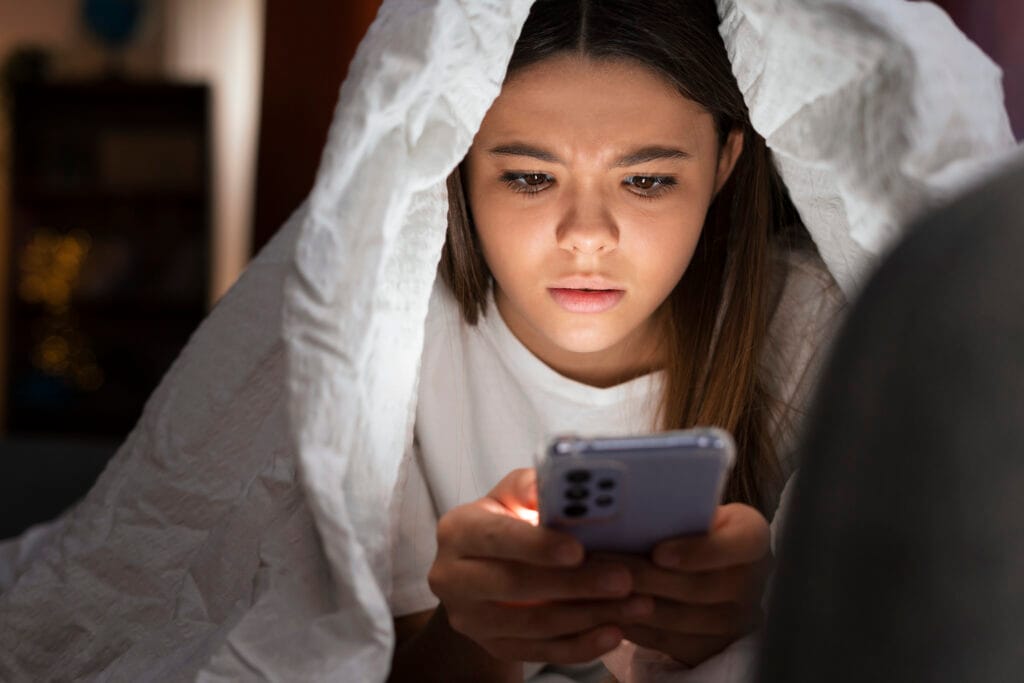
👉 “‘Just one more video’ every night could cost you your dreams. This habit can rob you not only of sleep but also of your dreams of motherhood and fatherhood.”
🌐 Digital Dilemma
Screens have become a part of our lives these days. But new research suggests that blue light, lack of sleep, and digital overstimulation may be slowly impacting your fertility.
Let us know what both modern science and Ayurveda say.
1. Blue light and hormones
Prolonged screen time suppresses the sleep hormone melatonin. Melatonin regulates not only sleep but also reproductive hormones like estrogen and progesterone.
According to a Harvard report, blue light suppresses melatonin more than other light and disrupts sleep rhythms【Harvard Health†source】.
A clinical trial found that wearing blue light blocking glasses improved melatonin levels in pregnant women【PMC†source】.
⚠️ Direct Effect: More screen time → less melatonin → hormone imbalance → irregular periods, poor egg quality, weak sperm.
2. Lack of sleep = lack of fertility
All-night social media scrolling = sleep debt.
Lack of sleep directly impacts your fertility.
A 2024 review found that poor sleep disrupts the hypothalamic-pituitary-gonadal (HPG) axis, which controls ovulation and sperm production 【BMC Women’s Health†source】.
Another study showed that poor sleep is linked to irregular menstrual cycles in women 【PMC†source】.
👉 Lack of sleep in men = lower sperm motility and decreased testosterone 【Nature†source】.
3. Stress from notifications
Constant pings and notifications = chronic stress.
The stress hormone cortisol suppresses reproductive hormones, making it difficult to conceive.
Research shows that psychological stress reduces the chances of conception【PMC†source】.
In Ayurveda, it is attributed to the aggravation of Vata dosha, which weakens the Shukra Dhatu (reproductive tissue).
4. Sitting for long periods of time
Long periods of time spent engrossed in laptops or mobile phones = less physical activity.
This reduces blood flow to the pelvic region and reduces fertility.
Research has found that a sedentary lifestyle is linked to obesity and PCOS, a major cause of infertility. [ScienceDirect†source]
In Ayurveda, it is believed to block the Apana Vayu, which causes problems like PCOS, painful periods, and erectile dysfunction.
5. Digital toxins = mental fog
Just as indigestion (ama) clogs the body, excessive digital input clogs the brain.
This weakens ojas (life force).
👉 Result: Fatigue, decreased libido, and reduced fertility.
✅ What to do?
🌙 Turn off screens at least 2 hours before bed
🕯️ Use dim/warm light in the evening
😴 Get 7–9 hours of sleep daily
🧘 Do yoga, meditation and pranayama to reduce stress
🚶 Get up and walk for 5 minutes every 1 hour
🌸 Final message
Screen addiction not only tires the eyes, it also increases your fertility debt.
Modern science shows that lack of sleep, stress and lifestyle imbalance directly harm the quality of eggs and sperm.
Ayurveda also says the same thing through Shukra Dhatu, Apana Vayu and Ojas.
✨ The decision is yours: endless scrolling or precious parenthood.
How Blue Light and Poor Sleep Impact Your Chances of Parenthood
Excessive screen time disrupts hormones, sleep, and fertility. Learn how blue light, stress, and digital lifestyle impact reproduction & IVF success.
Screen Addiction & Fertility: The Hidden Connection You Can’t Ignore
👉 “Do late-night scrolling sessions cost more than just your sleep? They might be silently stealing your chance at parenthood.”
🌐 The Digital Dilemma
In today’s hyperconnected world, screen time is no longer just about entertainment — it’s a lifestyle. But emerging science warns that blue light, sleep disruption, and digital overstimulation may be quietly impacting fertility in both men and women.
Let’s uncover what modern research and ancient wisdom (Ayurveda) together reveal.
1. Blue Light & Hormones: A Hidden Disruptor
Excessive screen exposure, especially before bedtime, disrupts melatonin production. Melatonin isn’t only a sleep hormone — it regulates estrogen and progesterone, the key reproductive hormones for ovulation and pregnancy.
A Harvard review confirms that blue light suppresses melatonin more than green light, delaying natural circadian rhythms【Harvard Health†source】.
A clinical trial found blue-light blocking glasses improved melatonin onset in pregnant women, highlighting its reproductive relevance【PMC†source】.
⚠️ Translation: More scrolling = less melatonin = higher risk of hormone imbalance → irregular cycles, poor egg quality, or lower sperm function.
2. Sleep Debt = Fertility Debt
“Just one more reel” can quietly become hours of sleep debt — but your fertility pays the price.
A 2024 systematic review showed that poor sleep dysregulates the hypothalamic-pituitary-gonadal (HPG) axis, which controls ovulation and sperm production【BMC Women’s Health†source】.
Another large study linked short sleep duration with irregular menstruation in women【PMC†source】.
👉 In men, sleep deprivation is tied to low sperm motility and reduced testosterone levels【Nature†source】.
3. Stress From Overstimulation
Constant notifications = chronic stress. Stress hormones (cortisol) suppress reproductive hormones, lowering chances of natural conception.
Researchers confirm that psychological stress delays fertility by impairing hormone balance【PMC†source】.
In Ayurveda, this is called Vata aggravation, which weakens Shukra Dhatu (reproductive tissue).
4. Poor Circulation & Sitting Too Long
Sedentary screen time isn’t just bad for your posture — it reduces pelvic blood flow, limiting reproductive energy.
While direct fertility studies are fewer, abundant research connects sedentary lifestyle with obesity and PCOS risk, both major infertility contributors【ScienceDirect†source】.
In Ayurveda, blocked Apana Vayu leads to PCOS, painful periods, and even erectile issues.
5. Digital Toxins = Mental Fog
Excessive digital input clogs your mental space like toxins (Ama) clog digestion. This weakens Ojas (vital energy), lowering libido and reproductive strength.
Scientifically, digital overload → chronic fatigue, low libido, and poor hormonal recovery.
✅ What You Can Do
🌙 Limit screens 2 hours before bedtime
🕯️ Use warm/dim lights in evenings
😴 Prioritize 7–9 hours of sleep
🧘 Manage stress through yoga, pranayama, or meditation
🚶 Stay active — avoid sitting >1 hour without moving
🌸 Final Takeaway
Screen addiction isn’t just about tired eyes — it’s about fertility debt. Science confirms that disrupted sleep, stress, and lifestyle imbalance impact ovulation, sperm quality, and reproductive hormones. Ayurveda echoes the same with concepts of Shukra Dhatu, Apana Vayu, and Ojas.
✨ The choice is in your hands: scroll endlessly or protect your fertility.
🔗 संदर्भ (References)
Harvard Health. Blue light has a dark side.
Rahman SA, et al. Effects of filtering visual short wavelengths during pregnancy on sleep and melatonin. PMC (2021).
Li Y, et al. Impact of sleep on women’s fertility. BMC Women’s Health (2024).
Hirotsu C, et al. Sleep loss and reproductive health. PMC (2015).
Zhang Y, et al. Sleep disorders and male infertility: a Mendelian randomization study. Nature Communications Biology (2025).
Patel AV, et al. Sedentary behavior and fertility-related outcomes. ScienceDirect (2022).