

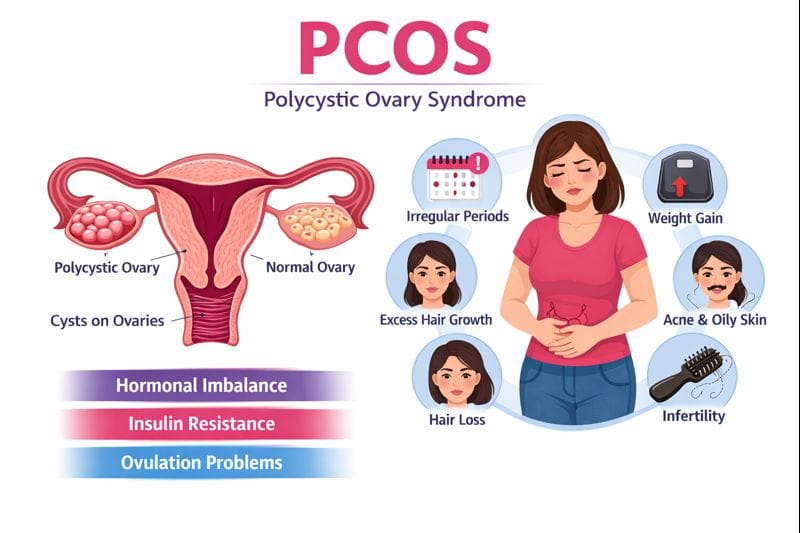
पीसीओएस का परिचय
आज के समय में पीसीओएस (पॉलीसिस्टिक ओवरी सिंड्रोम) महिलाओं में तेजी से बढ़ती हुई एक हार्मोनल समस्या बन चुकी है।
अध्ययनों के अनुसार, हर पाँच में से एक महिला अपने प्रजनन काल में कभी न कभी पीसीओएस से प्रभावित पाई जाती है।
लेकिन समस्या केवल पीसीओएस होना नहीं है —
सबसे बड़ी समस्या है देर से पहचान और गलत जानकारी।
पीसीओएस में शरीर का हार्मोनल संतुलन बिगड़ जाता है, विशेष रूप से:
इंसुलिन का स्तर बढ़ जाता है
पुरुष हार्मोन (एण्ड्रोजन) आवश्यकता से अधिक बनने लगते हैं
इसका सीधा असर:
मासिक धर्म
अंडोत्सर्जन
वजन
त्वचा और बाल
तथा गर्भधारण की क्षमता पर पड़ता है
अच्छी बात यह है कि —
- पीसीओएस कोई “लाइलाज बीमारी” नहीं है, बल्कि एक नियंत्रित की जा सकने वाली स्थिति है।
- सही समय पर पहचान और उचित इलाज से महिलाएँ स्वाभाविक रूप से भी और आईवीएफ की सहायता से भी माँ बन सकती हैं।
इस लेख में आप जानेंगे:
पीसीओएस क्या है और क्यों होता है
इसके लक्षण
प्रजनन क्षमता पर इसका प्रभाव चिकित्सकीय उपचार और घरेलू उपाय
तथा पीसीओएस में आईवीएफ कैसे मदद करता है
पीसीओएस क्या है?
पीसीओएस की परिभाषा
पीसीओएस एक हार्मोनल विकार है, जिसमें महिलाओं के शरीर में:
- पुरुष हार्मोन (टेस्टोस्टेरोन) का स्तर बढ़ जाता है
- अंडाशय में अंडे ठीक से विकसित नहीं हो पाते
- अंडोत्सर्जन अनियमित हो जाता है या बंद हो जाता है
इसी कारण अंडाशय में कई छोटे-छोटे दाने जैसे दिखाई देते हैं, जिन्हें आम लोग “सिस्ट” समझ लेते हैं, जबकि वास्तव में ये अधूरे विकसित अंडे होते हैं।
पीसीओएस के प्रकार
हर महिला में पीसीओएस एक जैसा नहीं होता। इसके मुख्य प्रकार हैं:
- इंसुलिन-प्रतिरोधी पीसीओएस
– सबसे अधिक पाया जाने वाला प्रकार
– वजन बढ़ना और मधुमेह का खतरा
2. अधिवृक्क ग्रंथि से जुड़ा पीसीओएस
– तनाव हार्मोन (कॉर्टिसोल) से संबंधित
– घबराहट और लगातार थकान
3. सूजन से जुड़ा पीसीओएस
– शरीर में लंबे समय तक सूजन
– जोड़ों में दर्द, पेट फूलना
4. गर्भनिरोधक गोलियों के बाद होने वाला पीसीओएस
– लंबे समय तक गर्भनिरोधक गोलियाँ लेने के बाद
पीसीओएस की पहचान कैसे होती है?
पीसीओएस की पहचान रॉटरडैम मापदंड के आधार पर की जाती है, जिसमें नीचे दिए गए तीन में से दो लक्षण होने चाहिए:
- मासिक धर्म का अनियमित होना
- पुरुष हार्मोन अधिक होना (लक्षण या रक्त जांच में)
- अल्ट्रासाउंड में बहु-सिस्टयुक्त अंडाशय
साथ ही ये जांचें की जाती हैं:
- एलएच और एफएसएच हार्मोन
- टेस्टोस्टेरोन
- एएमएच
- इंसुलिन और रक्त शर्करा की जांच
पीसीओएस होने के कारण
आनुवंशिक कारण
यदि परिवार में:
- पीसीओएस
- मधुमेह
- मोटापा
हो, तो पीसीओएस होने की संभावना बढ़ जाती है।
इंसुलिन प्रतिरोध
इंसुलिन प्रतिरोध पीसीओएस की जड़ माना जाता है।
जब इंसुलिन बढ़ता है:
- पुरुष हार्मोन बढ़ते हैं
- अंडोत्सर्जन रुक जाता है
- वजन तेजी से बढ़ने लगता है
हार्मोनल असंतुलन
- एलएच हार्मोन अधिक
- एफएसएच हार्मोन कम
- अंडे पूरी तरह विकसित नहीं हो पाते
जीवनशैली से जुड़े कारण
- अत्यधिक तनाव
- जंक फूड
- नींद की कमी
- प्लास्टिक से निकलने वाले रसायन
पीसीओएस के सामान्य लक्षण
- मासिक धर्म का अनियमित होना
- चेहरे या शरीर पर अधिक बाल
- मुहांसे और तैलीय त्वचा
- वजन बढ़ना
- सिर के बालों का पतला होना
- गर्भधारण में कठिनाई
- गर्दन या बगल में काले धब्बे (इंसुलिन प्रतिरोध का संकेत)
पीसीओएस और गर्भधारण का संबंध
पीसीओएस (PCOS) एक सामान्य हार्मोनल समस्या है जो महिलाओं की प्रजनन क्षमता को प्रभावित कर सकती है, लेकिन इसका मतलब यह बिल्कुल नहीं है कि आप माँ नहीं बन सकतीं। सही जानकारी, समय पर जांच और उचित देखभाल के साथ गर्भधारण पूरी तरह संभव है। पीसीओएस का प्रभाव मुख्य रूप से अंडोत्सर्जन, हार्मोन संतुलन और अंडों की गुणवत्ता पर पड़ता है, जिससे गर्भधारण की प्रक्रिया थोड़ी जटिल हो सकती है।
अंडोत्सर्जन पर प्रभाव
पीसीओएस में अंडोत्सर्जन (Ovulation) नियमित रूप से नहीं हो पाता, जो गर्भधारण में सबसे बड़ी बाधा बनता है।
हर महीने अंडा नहीं निकलता
पीरियड्स अनियमित हो जाते हैं
गर्भधारण का सही समय समझना मुश्किल हो जाता है
जब अंडोत्सर्जन अनियमित होता है, तो स्पर्म और अंडे का मिलन सही समय पर नहीं हो पाता, जिससे प्राकृतिक रूप से गर्भधारण की संभावना कम हो जाती है।
हार्मोन चक्र में गड़बड़ी
पीसीओएस में हार्मोनल असंतुलन एक प्रमुख कारण होता है।
शरीर में पुरुष हार्मोन (एंड्रोजन) का स्तर बढ़ जाता है
एलएच (LH) और एफएसएच (FSH) का संतुलन बिगड़ जाता है
अंडों का सही विकास नहीं हो पाता
इस असंतुलन के कारण अंडाशय में छोटे-छोटे सिस्ट बन जाते हैं और अंडा पूरी तरह परिपक्व नहीं हो पाता।
अंडों की गुणवत्ता
यह जरूरी नहीं है कि हर पीसीओएस महिला में अंडों की गुणवत्ता खराब हो। कई महिलाओं में अंडे सामान्य होते हैं, लेकिन:
इंसुलिन रेसिस्टेंस अंडों की गुणवत्ता को प्रभावित कर सकता है
हार्मोनल असंतुलन अंडों की परिपक्वता में बाधा डाल सकता है
इसलिए सही उपचार और जीवनशैली सुधार से अंडों की गुणवत्ता को बेहतर किया जा सकता है।
गर्भावस्था के जोखिम
पीसीओएस के साथ गर्भधारण संभव है, लेकिन कुछ मामलों में अतिरिक्त सावधानी की जरूरत होती है।
गर्भावस्था में मधुमेह (Gestational Diabetes) का खतरा
उच्च रक्तचाप (High BP)
गर्भपात की संभावना
हालांकि, नियमित डॉक्टर की निगरानी और सही देखभाल से इन जोखिमों को काफी हद तक नियंत्रित किया जा सकता है।
क्या पीसीओएस में स्वाभाविक गर्भधारण संभव है?
हाँ, बिल्कुल संभव है।
संतुलित आहार और नियमित व्यायाम
वजन को नियंत्रित रखना
समय पर दवाइयों और उपचार का सहारा
इन सभी उपायों से कई महिलाएँ बिना IVF जैसे उन्नत उपचार के भी स्वाभाविक रूप से गर्भधारण कर पाती हैं। सही मार्गदर्शन और धैर्य के साथ, पीसीओएस के बावजूद मातृत्व का सपना पूरा किया जा सकता है। पीसीओएस का लंबे समय तक प्रभाव
- टाइप 2 मधुमेह
- हृदय रोग
- मोटापा
- नींद से संबंधित समस्याएँ
- बांझपन
- गर्भाशय के कैंसर का खतरा
- चिंता और अवसाद
पीसीओडी में कंसीव कैसे करें?
पीसीओडी (PCOD) के साथ गर्भधारण थोड़ा चुनौतीपूर्ण हो सकता है, लेकिन सही दिशा और उपचार के साथ यह पूरी तरह संभव है। सबसे जरूरी बात यह समझना है कि पीसीओडी में समस्या “गर्भधारण” की नहीं, बल्कि “सही समय पर अंडोत्सर्जन” की होती है। इसलिए जब इस प्रक्रिया को सही तरीके से मैनेज किया जाता है, तो प्रेग्नेंसी की संभावना काफी बढ़ जाती है।
जीवनशैली में सुधार (Lifestyle Changes)
पीसीओडी मैनेजमेंट का पहला और सबसे प्रभावी कदम है जीवनशैली में बदलाव।
संतुलित और लो-कार्ब डाइट लें
नियमित व्यायाम (कम से कम 30 मिनट रोज)
वजन को नियंत्रित रखें
केवल 5–10% वजन कम करने से भी हार्मोन संतुलन बेहतर होता है और अंडोत्सर्जन नियमित हो सकता है।
अंडोत्सर्जन को ट्रैक करें
गर्भधारण के लिए सही समय जानना बेहद जरूरी है।
ओव्यूलेशन किट का उपयोग करें
पीरियड साइकिल को ट्रैक करें
डॉक्टर की सलाह से फॉलिकल मॉनिटरिंग करवाएं
इससे आपको यह समझने में मदद मिलती है कि किस समय गर्भधारण की संभावना सबसे अधिक है।
दवाइयों और उपचार का सहारा
अगर प्राकृतिक तरीके से ओव्यूलेशन नहीं हो रहा है, तो डॉक्टर दवाइयों की मदद लेते हैं।
ओव्यूलेशन इंडक्शन दवाइयाँ (जैसे Letrozole)
हार्मोन संतुलन के लिए उपचार
इंसुलिन रेसिस्टेंस को नियंत्रित करने की दवाइयाँ
ये उपचार अंडे के विकास और रिलीज़ को बेहतर बनाते हैं।
IUI और IVF जैसे उन्नत विकल्प
अगर शुरुआती उपचारों से सफलता नहीं मिलती, तो उन्नत तकनीकों का सहारा लिया जा सकता है।
IUI (Intrauterine Insemination): सही समय पर स्पर्म को सीधे गर्भाशय में डाला जाता है
IVF (In Vitro Fertilization): अंडे और स्पर्म को लैब में मिलाकर भ्रूण तैयार किया जाता है
ये तरीके पीसीओडी में गर्भधारण की संभावना को काफी बढ़ाते हैं।
तनाव कम करें और धैर्य रखें
तनाव भी हार्मोनल असंतुलन को बढ़ा सकता है।
योग और मेडिटेशन करें
पर्याप्त नींद लें
सकारात्मक सोच बनाए रखें
पीसीओएस और आईवीएफ: जब स्वाभाविक तरीका सफल न हो
पीसीओएस में गर्भधारण कठिन क्यों होता है?
- अंडोत्सर्जन अनियमित
- हार्मोन असंतुलन
- अंडे कम निकलना
- कभी-कभी अंडों की गुणवत्ता कम
आईवीएफ कैसे मदद करता है?
आईवीएफ में:
- अंडोत्सर्जन पर निर्भर नहीं रहना पड़ता
- अंडे सीधे अंडाशय से निकाले जाते हैं
- भ्रूण शरीर के बाहर तैयार किया जाता है
- नियंत्रित और सुरक्षित वातावरण मिलता है
पीसीओएस में आईवीएफ की सफलता अधिक क्यों होती है?
- अंडाशय की क्षमता सामान्य से अधिक होती है
- अधिक अंडे प्राप्त होते हैं
अधिक भ्रूण = गर्भधारण की अधिक संभावना
पीसीओएस के लिए सुरक्षित आईवीएफ तकनीकें
- कम मात्रा में हार्मोन दवा
- विशेष नियंत्रित चक्र
- सुरक्षित ट्रिगर इंजेक्शन
- सभी भ्रूण को सुरक्षित रखकर बाद में स्थानांतरण
आईवीएफ के दौरान क्या अपेक्षा करें?
- नियंत्रित हार्मोन उपचार
- 8 से 20 अंडे प्राप्त हो सकते हैं
- भ्रूण को पाँच दिन तक विकसित किया जाता है
- एक ही भ्रूण का स्थानांतरण
- विशेष हार्मोन सहयोग
आईवीएफ कब सोचना चाहिए?
- जब अंडोत्सर्जन की दवाएँ असफल हों
- जब आईयूआई असफल हो
- 32 वर्ष या उससे अधिक आयु
- गंभीर इंसुलिन प्रतिरोध
- पुरुष कारणों से बांझपन
पीसीओएस का चिकित्सकीय उपचार
जीवनशैली — सबसे पहला इलाज
सिर्फ दवाइयाँ पर्याप्त नहीं होतीं,
जीवनशैली में बदलाव अनिवार्य है।
8.2 दवाइयाँ
इंसुलिन नियंत्रित करने की दवाएँ
मासिक धर्म नियमित करने की गोलियाँ
पुरुष हार्मोन कम करने की दवाएँ
अंडोत्सर्जन बढ़ाने की दवाएँ
8.3 प्रजनन उपचार
आईयूआई
आईवीएफ (जब अन्य उपाय असफल हों)
8.4 लंबे समय तक निगरानी
नियमित रक्त जांच
हार्मोन स्तर की निगरानी
9. पीसीओएस के लिए प्राकृतिक जीवनशैली उपाय
कम ग्लाइसेमिक आहार
अधिक प्रोटीन और रेशा
सप्ताह में कम से कम 150 मिनट व्यायाम
योग और ध्यान
7–8 घंटे की नींद
चिकित्सक द्वारा सुझाए गए पूरक
लेकिन: IVF तभी ज़्यादा सफल होता है जब इलाज समय पर शुरू किया जाए।
अगर महिला की उम्र ज़्यादा हो जाए या लंबे समय तक इलाज टालती रहें, तो अंडों की क्वॉलिटी और IVF की सफलता दोनों घट सकती हैं।
2024 की एक बड़ी रिसर्च (Li et al.) में पाया गया कि जिन PCOD महिलाओं ने वजन और शुगर कंट्रोल करके समय रहते IVF कराया, उनमें प्रेग्नेंसी की दर साधारण महिलाओं से भी बेहतर थी।
“PCOD है तो घबराइए नहीं — IVF से माँ बनना संभव है।
लेकिन देर ना करें, क्योंकि समय ही सबसे बड़ा इलाज है।”
“क्या PCOD की हर महिला को IVF कराना ज़रूरी है ?”
“नहीं ! IVF हर किसी के लिए नहीं — जानिए कब ये ज़रूरी होता है।
हर महिला को IVF की ज़रूरत नहीं होती — यहाँ तक कि PCOD में भी नहीं।
IVF (टेस्ट ट्यूब बेबी तकनीक) का सुझाव डॉक्टर्स तब देते हैं जब बाकी इलाज काम नहीं करता। इलाज का एक स्टेप-बाय-स्टेप तरीका होता है :
- पहला कदम :
वज़न कम करना, डाइट सुधारना और एक्सरसाइज शुरू करना — ये चीज़ें अपने आप में अंडे बनवाने में मदद कर सकती हैं।
2. दूसरा कदम :
दवाइयों से अंडोत्सर्जन (ovulation) कराना — जैसे Letrozole या Clomiphene Citrate।
3. तीसरा कदम :
अगर 3–6 महीने तक ये दवाइयाँ असर नहीं करतीं, या उम्र ज़्यादा हो रही है, तब IVF पर विचार किया जाता है।
IVF कब ज़रूरी होता है ?
“PCOD और IVF : देरी ना करें, माँ बनने का मौका हाथ से ना जाने दें !”
- जब 2 साल से ज़्यादा समय से प्रेग्नेंसी नहीं हो रही।
- जब महिला की उम्र 35 साल से ज़्यादा हो।
- जब अंडे बन ही नहीं रहे या बहुत खराब क्वॉलिटी के बन रहे हैं।
- 2025 की स्टडी (Bentov et al.) में कहा गया कि PCOD महिलाओं के लिए IVF तब सही है जब इलाज को व्यक्ति के हिसाब से ढाला जाए — यानी पर्सनलाइज़ किया जाए।
“IVF कोई मजबूरी नहीं, ये एक समझदारी से लिया गया अगला कदम है — जब बाकी रास्ते काम न करें।
“हर महिला को IVF की ज़रूरत नहीं होती, पर सही समय पर किया जाए तो इसका असर ज़बरदस्त होता है।”
PCOD है तो IVF के लिए कितना इंतज़ार कर सकते हैं ?
“उम्र बढ़ी तो IVF की सफलता घटती है — सही समय ही सबसे बड़ी चाबी है !”
IVF कब करवाना चाहिए — ये हर महिला के लिए अलग होता है, लेकिन समय का बहुत बड़ा रोल है।
डॉक्टर तीन चीजें देखकर फैसला करते हैं:
- आपकी उम्र
- कितने समय से आप कोशिश कर रही हैं ?
- अंडों की क्वॉलिटी और संख्या (जिसे “ओवेरियन रिज़र्व” कहते हैं)
अगर आपकी उम्र 30 साल से कम है :
- और अगर अंडों की क्वॉलिटी अच्छी है, तो IVF से पहले 6–12 महीने तक दवाइयों और नेचुरल तरीकों से कोशिश की जा सकती है।
लेकिन अगर आपकी उम्र 35 साल से ज़्यादा है :
- तब IVF में देर करने से अंडों की क्वॉलिटी तेजी से गिरती है, जिससे IVF की सफलता में कमी आ सकती है।
- Wang et al., 2025 की स्टडी में पाया गया कि उम्र और हार्मोनल असंतुलन IVF के नतीजों को प्रभावित करते हैं — खासकर जब ताज़ा अंडों से ट्रांसफर किया जाता है।
“PCOD में IVF की टाइमिंग बहुत मायने रखती है।” जवानी में इलाज का वक्त मिल सकता है, लेकिन अगर उम्र बढ़ रही है — तो इंतज़ार माँ बनने की राह में रुकावट बन सकता है।”
“PCOD की जड़ सिर्फ हार्मोन नहीं — आपका वज़न भी है ! “
“अगर वजन ज़्यादा है, तो IVF भी पूरी तरह काम नहीं कर सकता ! !”
क्या आपको PCOD है और IVF के नतीजे बार-बार खराब आ रहे हैं ?
तो वजह सिर्फ हार्मोन नहीं — आपका वजन और पेट की चर्बी भी ज़िम्मेदार हो सकते हैं।
हाई BMI (Body Mass Index) और मोटापा PCOD की एक मुख्य वजह है — और यही वजन IVF की सफलता को भी बुरी तरह प्रभावित करता है।
- मोटापा हार्मोन का संतुलन बिगाड़ता है।
- अंडों की क्वॉलिटी घटती है।
- भ्रूण गर्भ में टिक नहीं पाता, और miscarriage का खतरा बढ़ता है।
- 2025 की Tao et al. की रिसर्च में पाया गया कि जिन महिलाओं का वजन ज़्यादा था, उनके अंडों के आसपास की कोशिकाओं (granulosa cells) में DNA स्तर पर बदलाव आ जाते हैं — जिससे IVF का नतीजा खराब हो सकता है, भले ही तकनीक सही हो।
“PCOD और IVF दोनों में वजन का कंट्रोल सबसे पहला और सबसे ज़रूरी कदम है।
“अगर आप माँ बनना चाहती हैं, तो पहले अपने शरीर का बोझ कम करें — ताकि खुशियाँ बढ़ सकें !”
“बार-बार गर्भपात हो रहा है ?”
- “PCOD में पुरुष हार्मोन ज़्यादा होना — आपके गर्भ को रोक नहीं पाता !”
- PCOD में कई बार महिलाओं के शरीर में “पुरुष हार्मोन” — जैसे टेस्टोस्टेरोन — ज़रूरत से ज़्यादा बनते हैं। इसे मेडिकल भाषा में कहते हैं “Hyperandrogenism”।
ये हार्मोन सिर्फ :
- चेहरे पर बाल, मुहाँसे और मोटापा बढ़ाते हैं।
- बल्कि गर्भ में पल रहे शिशु के लिए भी खतरा बन सकते हैं। रिसर्च में पाया गया कि जिन महिलाओं के शरीर में पुरुष हार्मोन ज़्यादा था उनमें :
- गर्भाशय की गर्दन (cervix) समय से पहले खुल जाती है।
- जिससे दूसरे ट्राइमेस्टर (3–6 महीने के बीच) में गर्भपात हो सकता है — चाहे वो IVF से ही क्यों न गर्भवती हुई हों।
- Wang et al., 2025 की स्टडी ने साफ बताया कि हाई एंड्रोजन लेवल्स IVF के बाद भी miscarriage का खतरा बढ़ा सकते हैं।
- PCOD में हार्मोन संतुलन सिर्फ गर्भधारण के लिए नहीं, गर्भ को टिकाए रखने के लिए भी ज़रूरी है।
- “अगर IVF के बाद भी गर्भपात हो रहा है, तो अपने पुरुष हार्मोन का टेस्ट ज़रूर करवाएं।”
“प्रेग्नन्सी बार-बार फेल हो रहा है, जबकि सब रिपोर्ट्स नॉर्मल हैं ?”
“हो सकता है असली वजह अंडों के आसपास का ‘fluid’ हो — जो आँखों से नहीं दिखता !
PCOD में IVF की सफलता सिर्फ अंडों और हार्मोन पर नहीं,
बल्कि अंडों के चारों तरफ के तरल पदार्थ (Follicular Fluid) पर भी निर्भर करती है।
इस फ्लूइड में कुछ छोटे-छोटे अणु होते हैं जिन्हें कहते हैं:
microRNAs (miRNAs)
inflammation markers (सूजन संकेतक)
ये अणु अंडे की ऊर्जा, क्वॉलिटी और भ्रूण बनने की क्षमता को सीधे प्रभावित करते हैं।
अगर इनका संतुलन बिगड़ा हो — जैसा कि PCOD में अक्सर होता है — तो भले ही अंडा दिखने में सही हो, उसका विकास रुक सकता है या IVF फेल हो सकता है।
एक विशेष microRNA जिसका नाम है miR-34a-5p, पाया गया है कि यह अंडे की ऊर्जा प्रक्रिया को बिगाड़ता है, जिससे IVF में सफल भ्रूण बनना मुश्किल हो सकता है।
“PCOD में IVF फेल होने की वजह कभी-कभी बहुत सूक्ष्म होती है — जो रिपोर्ट में नहीं आती।
नई साइंस बता रही है कि अंडों के आसपास का ‘fluid’ ही असली कहानी कहता है!”
“IVF में अंडे तो अच्छे हैं, फिर भी प्रेग्नेंसी क्यों नहीं हो रही ?”
“PCOD सिर्फ अंडों पर नहीं, आपकी गर्भाशय की ज़मीन (uterus lining) पर भी असर डालता है!”
- IVF में सिर्फ अंडों का अच्छा होना काफी नहीं होता —
गर्भाशय (uterus) को भी तैयार रहना ज़रूरी है। - PCOD में हार्मोन का असंतुलन सिर्फ अंडोत्सर्जन (ovulation) पर नहीं,
बल्कि uterus की lining और वहां की immune cells (रक्षा कोशिकाएं) पर भी असर डालता है। - एक स्टडी में पाया गया कि PCOD वाली महिलाओं के uterus में कुछ खास immune cells बदल जाते हैं
जिससे अच्छे अंडे और अच्छे भ्रूण के बावजूद implantation (भ्रूण का चिपकना) नहीं हो पाता
मतलब — भले ही IVF तकनीकी रूप से सफल हो,
अगर uterus की “मिट्टी” तैयार नहीं है, तो बीज पनपेगा नहीं।
“PCOD में IVF की सफलता का रहस्य सिर्फ अंडों में नहीं छुपा है —
बल्कि uterus की सेहत और वहां के इम्यून सिस्टम में भी है।
अगर बार-बार ट्रांसफर के बाद भी प्रेग्नेंसी नहीं हो रही, तो uterus की जांच ज़रूर करवाएं!”
“IVF में भ्रूण हर बार चिपक क्यों नहीं रहा ?
“शायद वजह है गर्भाशय की परत और इम्यून सिस्टम की गड़बड़ी — जो PCOD में आम है!”
PCOD सिर्फ अंडों को नहीं, बल्कि गर्भाशय की अंदरूनी परत (endometrium) को भी प्रभावित करता है।
IVF में भ्रूण को इसी परत पर चिपकना होता है — जिसे कहते हैं implantation.
लेकिन PCOD में:
- T-cells (इम्यून सिस्टम की कोशिकाएं) ठीक से काम नहीं करतीं
- शरीर progesterone हार्मोन को ठीक से रिस्पॉन्ड नहीं करता
- इन दोनों की वजह से गर्भाशय भ्रूण को अपनाने के लिए तैयार नहीं होता — और प्रेग्नेंसी नहीं ठहरती।
- 2025 की Guo et al. स्टडी में कहा गया कि IVF से पहले PCOD महिलाओं की endometrium का immune profile जांचना बहुत ज़रूरी है — ताकि सफलता के चांस बढ़ाए जा सकें।
“PCOD में IVF की सफलता का राज सिर्फ अंडे नहीं —
गर्भाशय की परत और इम्यून सिस्टम भी उतने ही ज़रूरी हैं।
अगर हर बार भ्रूण ट्रांसफर के बाद भी प्रेग्नेंसी नहीं हो रही — तो गर्भाशय की जांच जरूर करवाएं।”
“क्या IVF में तुरंत भ्रूण ट्रांसफर करवाना सही होता है?”
“PCOD में कभी-कभी ‘फ्रीज़ करके बाद में ट्रांसफर’ करना ही सफलता की चाबी बनता है!”
PCOD वाली महिलाओं के शरीर में हार्मोन पहले से ही असंतुलित होते हैं।
जब IVF के दौरान हार्मोनल इंजेक्शन दिए जाते हैं, तो यह लेवल और ज़्यादा बढ़ सकता है — जिससे एक गंभीर स्थिति पैदा हो सकती है जिसे कहते हैं OHSS (Ovarian Hyperstimulation Syndrome)।
इसी वजह से डॉक्टर कई बार IVF में अंडाणु तो निकाल लेते हैं और भ्रूण भी बना लेते हैं,
लेकिन उसे तुरंत गर्भाशय में ट्रांसफर नहीं करते।
इसके बजाय:
- भ्रूण को फ्रीज़ कर देते हैं
- और 1–2 महीने बाद, जब शरीर का हार्मोनल स्तर नॉर्मल हो जाए
तब उसे ट्रांसफर किया जाता है - Osmanlioglu et al., 2024 की स्टडी में यह सामने आया कि LH हार्मोन के स्तर को देखकर डॉक्टर यह तय कर सकते हैं कि ताज़ा ट्रांसफर करें या फ्रीज़ वाला
“PCOD में तुरंत भ्रूण ट्रांसफर करना ज़रूरी नहीं है —
फ्रीज़ किया गया भ्रूण बाद में ट्रांसफर करने से प्रेग्नेंसी के चांस ज़्यादा और जोखिम कम हो सकते हैं।
कभी-कभी रुक जाना ही IVF सफलता की असली शुरुआत होती है!”
“IVF से पहले क्या कोई और आसान तरीका है माँ बनने का?”
“अगर सही दवा और विटामिन लिए जाएँ, तो IVF की ज़रूरत ही नहीं पड़ सकती!”
हर PCOD महिला को IVF करवाने की ज़रूरत नहीं होती।
बहुत बार इलाज की शुरुआत में ही सही दवाइयाँ और सप्लिमेंट्स असर दिखा सकते हैं।
1. लेट्रोज़ोल (Letrozole)
आज की तारीख में PCOD में सबसे पहली और सबसे असरदार दवा मानी जाती है।
यह अंडों के बनने की प्रक्रिया (ovulation) को बेहतर करती है और Clomiphene Citrate से ज़्यादा असरदार भी है।
साथ ही इसके side effects भी कम हैं।
2. विटामिन D3
PCOD महिलाओं में विटामिन D की कमी बहुत आम है।
रिसर्च में देखा गया है कि विटामिन D अंडों की ग्रोथ और क्वॉलिटी सुधारने में मदद करता है — खासकर उन महिलाओं में जो इसकी कमी से जूझ रही हैं।
Mitwally & Casper, 2025 की स्टडी में बताया गया कि IVF से पहले oral दवाइयाँ और सप्लिमेंट्स कितने ज़रूरी और असरदार हो सकते हैं।
“अगर सही समय पर लेट्रोज़ोल और विटामिन D जैसी साधारण चीज़ें ली जाएं,
तो IVF की ज़रूरत टाली जा सकती है — या पूरी तरह बची भी जा सकती है।
इलाज का पहला कदम छोटा ज़रूर होता है, पर असर बड़ा डालता है!”
PCOS में बार-बार थकान, वज़न बढ़ना और क्रेविंग्स? वजह है “इंसुलिन रेसिस्टेंस”!
और इलाज दवाओं से नहीं — आपकी रोज़ की आदतों से शुरू होता है।
सुबह का पहला खाना या ड्रिंक बहुत असर डालता है आपके हार्मोन और ब्लड शुगर पर।
थकान, पेट की चर्बी और मीठा खाने की तलब?
हो सकता है ये PCOS के साथ जुड़ा इंसुलिन रेसिस्टेंस हो!
अगर आपको अक्सर ये समस्याएं होती हैं:
हर थोड़ी देर में मीठा खाने की ज़बरदस्त क्रेविंग
बिना वजह पेट और कमर के आसपास वज़न बढ़ना
खाना खाने के बाद भारीपन और थकान
तो आप अकेली नहीं हैं।
बहुत सी महिलाएं नहीं जानतीं कि ये लक्षण इंसुलिन रेसिस्टेंस की निशानी हैं — जो PCOS का एक बड़ा कारण है।
इससे हो सकते हैं:
- अनियमित पीरियड्स
- मुंहासे, तैलीय त्वचा
- बार-बार वज़न बढ़ना खुशखबरी यह है: आप इसे कंट्रोल कर सकती हैं!
रोज़ की कुछ छोटी-छोटी आदतें — खासकर सुबह की शुरुआत — आपके ब्लड शुगर और हार्मोन को संतुलित करने में बहुत मदद कर सकती हैं।
पीसीओएस के घरेलू उपाय
जानिए 5 आसान, नेचुरल और साइंस-प्रूव्ड उपाय जो आपके शरीर को फिर से बैलेंस कर सकते हैं:
1. मेथी पानी — इंसुलिन को करे एक्टिव!
कैसे मदद करता है:
- सुबह खाली पेट मेथी पानी पीने से ब्लड शुगर कम होता है और इंसुलिन बेहतर काम करता है।
- साइंस कहती है:
मेथी में मौजूद 4-hydroxyisoleucine इंसुलिन रिसेप्टर्स को एक्टिव करता है और इंसुलिन रेसिस्टेंस कम करता है। - PCOS में रोज़ सुबह इसका सेवन आपके हार्मोन को बैलेंस करने में मदद कर सकता है।
2. दालचीनी पानी — क्रेविंग्स को कहें अलविदा!
कैसे मदद करता है:
- ब्लड शुगर को स्टेबल रखता है
- मीठा खाने की तलब को कम करता है
- रिसर्च कहती है:
एक ग्लास दालचीनी पानी रोज़ पीने से फास्टिंग शुगर कम होती है और इंसुलिन सेंसिटिविटी बढ़ती है। - PCOS में चीनी की लालसा और थकान कम करने में असरदार।
3. आंवला – एक छोटी गोली, बड़ा असर!
कैसे मदद करता है:
- आंवला शरीर की सूजन कम करता है
- हॉर्मोन बैलेंस और इंसुलिन सेंसिटिविटी बढ़ाता है
- साइंस कहती है:
आंवले में भरपूर एंटीऑक्सीडेंट और एंटी-इंफ्लेमेटरी गुण होते हैं जो PCOS में बहुत लाभकारी हैं। - सुबह 1 ताज़ा आंवला या एक शॉट जूस आपके हॉर्मोन को रीसेट कर सकता है।
4. अलसी (फ्लैक्ससीड्स) – छोटे बीज, बड़ा फायदा!
कैसे मदद करता है:
- इंसुलिन कंट्रोल
- डाइजेशन बेहतर
- हार्मोन संतुलन (टेस्टोस्टेरोन भी)
- रिसर्च में बताया गया है:
अलसी में मौजूद ओमेगा-3 और लिग्नान्स महिलाओं के हॉर्मोन को बैलेंस करने में मदद करते हैं। - रोज़ 1 चम्मच भीगी अलसी से मेटाबॉलिज़्म और हॉर्मोन दोनों सुधर सकते हैं।
5. भीगे बादाम – स्ट्रेस और PMS को करें शांत!
कैसे मदद करता है:
- ब्लड शुगर कंट्रोल करता है
- PMS और स्ट्रेस से राहत देता है
- फर्टिलिटी में भी फायदेमंद
- रिसर्च कहती है:
भीगे बादाम में मैग्नीशियम और हेल्दी फैट्स होते हैं जो PCOS से जुड़ी थकान, मूड स्विंग्स और चिड़चिड़ापन में राहत देते हैं। - सुबह 5–6 भीगे हुए बादाम खाना एक पॉवरफुल शुरुआत हो सकती है।
पीसीओएस आहार योजना (संक्षेप)
- सुबह: प्रोटीन और रेशा
- दोपहर: कम ग्लाइसेमिक कार्बोहाइड्रेट
- शाम: मेवे या फल
- रात: हल्का और जल्दी भोजन
पीसीओएस से बचाव
- समय पर पहचान
- अत्यधिक डाइट से बचाव
- नियमित नींद
- तनाव नियंत्रण
आख़िर में एक जरूरी बात:
- PCOS सिर्फ अनियमित पीरियड्स की बात नहीं है — ये आपके शरीर की इंसुलिन, सूजन, स्ट्रेस और खाने की प्रोसेसिंग से जुड़ा है।
- सिर्फ सुबह की पहली चीज़ (खाना या ड्रिंक) को बदलने से आप अपने मेटाबॉलिज़्म और मूड दोनों में बड़ा बदलाव ला सकती हैं।
“शुरुआत छोटी करें, लेकिन रोज़ करें।
आपके हॉर्मोन आपको थैंक यू बोलेंगे!”
अगर आपको यह जानकारी उपयोगी लगी हो —
इसे शेयर करें, सेव करें, और किसी ज़रूरतमंद महिला तक पहुंचाएं!
Overview: PCOS and Infertility – What Patients Need to Know
Polycystic Ovary Syndrome (PCOS), also known as PCOD, is one of the most common hormonal disorders affecting women of reproductive age today. With changing lifestyles, increased stress, poor dietary habits, and rising obesity rates, PCOS cases have grown significantly over the past decade. Studies suggest that nearly 1 in 5 women may show symptoms of PCOS at some stage in their lives.
But the real problem is not just PCOS itself —the biggest problem is late diagnosis and widespread misinformation.
In PCOS, the body’s hormonal balance gets disturbed, especially:
- Insulin levels increase
- Male hormones (androgens) rise abnormally
PCOS does not just affect menstrual cycles—it can impact fertility, metabolism, mental health, and long-term well-being. Many women struggle silently with irregular periods, weight gain, acne, or difficulty conceiving, often unaware that PCOS is the underlying cause.
The good news is that PCOS is manageable. With early diagnosis, lifestyle modifications, medical treatment, home remedies, and advanced fertility options like IVF, women with PCOS can lead healthy lives and successfully achieve pregnancy. This blog explains PCOS in detail, including causes, symptoms, treatments, natural remedies, and how IVF helps women with PCOS conceive.
What Is PCOS? Understanding the Condition
PCOS is a hormonal and metabolic disorder characterized by an imbalance of reproductive hormones. This imbalance disrupts normal ovarian function, affecting ovulation and menstrual cycles.
In women with PCOS, the ovaries may produce higher levels of androgens (male hormones), which can prevent eggs from maturing and being released regularly. As a result, many small round structures are seen in the ovaries on ultrasound.
These are often misunderstood as “cysts or polycycts,” but in reality, they are immature eggs that failed to develop fully.
Types of PCOS
- Insulin-Resistant PCOS: Most common; associated with weight gain and diabetes risk
- Inflammatory PCOS: Linked to chronic inflammation
- Adrenal PCOS: Triggered by stress and high DHEA levels
- Post-Pill PCOS: Temporary hormone imbalance after stopping birth control
How Is PCOS Diagnosed?
PCOS is diagnosed using the Rotterdam Criteria, where any two of the following three must be present:
- Irregular or absent periods
- High androgen levels (symptoms or blood tests)
- Polycystic ovaries on ultrasound
Additional tests usually include:
- LH and FSH hormone levels
- Testosterone
- AMH
- Insulin and blood sugar profile
What are the causes of PCOS?
PCOS does not have a single cause. Instead, it develops due to a combination of genetic, hormonal, and lifestyle factors.
- Genetic Factors: Women with a family history of PCOS, diabetes, or hormonal disorders are at higher risk.
- Insulin Resistance: Insulin resistance is a major driver of PCOS. High insulin levels stimulate the ovaries to produce excess androgens, disrupting ovulation and causing weight gain.
- Hormonal Imbalance: An altered LH–FSH ratio leads to poor egg development and irregular ovulation.
- Lifestyle & Environmental Factors: Poor diet, lack of exercise, stress, sleep disturbances, and exposure to endocrine-disrupting chemicals can worsen PCOS symptoms.
What are the common symptoms of PCOS?
PCOS symptoms vary from woman to woman and may worsen over time if untreated.
- Irregular or Missed Periods
- Difficulty Getting Pregnant
- Weight Gain or Difficulty Losing Weight
- Excess Facial or Body Hair (Hirsutism)
- Acne and Oily Skin
- Hair Thinning or Hair Loss
- Dark Skin Patches (Acanthosis Nigricans)
- Mood Changes, Anxiety, or Depression
Not all women experience all symptoms, which is why PCOS often goes undiagnosed for years.
PCOD and Pregnancy: What’s the Connection?
PCOS is one of the leading causes of female infertility due to irregular ovulation.
In a normal cycle, one egg matures and is released. In PCOS, hormonal imbalance prevents eggs from maturing fully or being released regularly. This makes timing conception difficult. In simple terms,
- Eggs are not released every month
- Fertile days become unpredictable
- Disturbed Hormonal Cycle, i.e., High androgens → LH–FSH imbalance → poor egg development
Egg quality is not poor in every PCOS patient, but uncontrolled insulin levels can negatively affect egg health.
Other fertility-related challenges include:
- Poor egg quality in some cases
- Thickened ovarian capsule
- The hormonal environment is unsuitable for implantation.
Pregnancy Risks in PCOS
- Gestational diabetes
- Higher miscarriage risk
- High blood pressure during pregnancy
Can Women with PCOS Get Pregnant Naturally?
Yes, absolutely.
With lifestyle improvement and proper medications, many women conceive naturally. It is important to note that PCOS does not mean infertility is permanent. With lifestyle improvement, proper medications, and treatment, many women conceive naturally or with assisted fertility techniques (IVF).
Long-Term Health Effects of PCOS
If PCOS is ignored, it can increase the risk of:
- Type 2 diabetes
- Heart disease
- Obesity
- Sleep apnea
- Infertility
- Endometrial (uterine lining) cancer
- Anxiety and depression
IVF and PCOS: How Women with PCOS Can Still Conceive?
Why PCOS Makes Natural Conception Difficult?
- Irregular or absent ovulation
- Hormonal imbalance
- Delayed egg maturation
- Increased miscarriage risk
How IVF Helps Women with PCOS?
IVF bypasses the ovulation problem entirely. Eggs are retrieved directly from the ovaries, fertilized in a lab, and healthy embryos are transferred into the uterus.
Why IVF Success Rates Are Often High in PCOS?
- PCOS patients usually have good ovarian reserve (high AMH)
- More eggs retrieved during stimulation
- More embryos available for selection
- PCOS-Friendly IVF Protocols
- Low-dose stimulation
- Antagonist protocols
- Freeze-all strategy
- Single embryo transfer to reduce risks
When Is IVF Recommended for PCOS?
- Failed ovulation induction
- Failed IUI cycles
- Age above 32
- Severe insulin resistance
- Combined male infertility
With the right protocol and expert care, IVF offers excellent success rates for women with PCOS.
Medical Treatment Options for PCOS
1. Lifestyle Modification
The first and most effective treatment includes:
- Weight loss (5–10%)
- Balanced diet
- Regular exercise
- Medications
- Metformin: Improves insulin sensitivity
- Hormonal pills: Regulate periods
- Letrozole/Clomid: Induce ovulation
- Anti-androgens: Reduce acne and hair growth
2. Fertility Treatments
- Ovulation induction
- IUI
- IVF for resistant cases
3. Natural & Lifestyle Treatments for PCOS
- Low glycemic index diet
- High fiber and protein intake
- Strength training and cardio (At least 150 minutes of exercise per week)
- Stress management through yoga and meditation
- Quality sleep (7–8 hours)
- Supplements only if advised by a doctor
List of Essential Home Remedies for PCOS (Supportive Measures)
Here are six simple things to support your hormones and balance blood sugar:
1. Fenugreek (Methi) Water
What it does: Improves insulin sensitivity and lowers blood sugar.
Science says:
A clinical study published in the International Journal of Vitamin and Nutrition Research (2011) showed that fenugreek seeds improved insulin function in people with type 2 diabetes. Fenugreek contains compounds like 4-hydroxyisoleucine, which directly act on insulin receptors.
Reference:
Sharma, R. D., & Raghuram, T. C. (1990). Hypoglycemic effect of fenugreek seeds in non-insulin-dependent diabetic subjects. Nutrition Research.
Public-friendly takeaway:
Drinking fenugreek water on an empty stomach can help lower insulin resistance — a core issue in PCOS.
2. Cinnamon Water
What it does: Helps stabilize blood sugar and reduce sugar cravings.
Science says: A meta-analysis in Annals of Family Medicine (2013) showed cinnamon significantly reduced fasting blood glucose levels and improved insulin sensitivity.
Reference: Allen, R. W., et al. (2013). Cinnamon use in type 2 diabetes: An updated systematic review and meta-analysis. Annals of Family Medicine.
Public-friendly takeaway: A glass of cinnamon water daily may help reduce sugar crashes and cravings by keeping your blood sugar stable.
3. Amla (Indian Gooseberry)
What it does: Supports insulin sensitivity and hormone balance.
Science says: Studies in Phytotherapy Research highlight amla’s antioxidant and anti-inflammatory properties, which help reduce oxidative stress — a known factor in PCOS and insulin resistance. It also improves lipid profiles and blood sugar control.
Reference: Antony, B., Benny, M., & Kaimal, T. N. (2006). A pilot clinical study to evaluate the effect of Emblica officinalis extract on markers of systemic inflammation and dyslipidemia. Indian Journal of Clinical Biochemistry.
Public-friendly takeaway: One shot of amla juice or eating it fresh in the morning can give your hormones a natural reset and help control blood sugar.
4. Flaxseeds (Alsi)
What it does: Helps regulate insulin, digestion, and androgen levels.
Science says: A 2015 study published in the Journal of Dietary Supplements found that flaxseed supplementation in women with PCOS helped reduce testosterone levels, improved insulin sensitivity, and supported metabolic health.
Flaxseeds are high in lignans (phytoestrogens) and omega-3s, which support hormonal balance.
Reference: Goss, A. M., et al. (2014). Effects of flaxseed supplementation on hormonal levels in PCOS. Journal of Dietary Supplements.
Public-friendly takeaway way: One tablespoon of soaked flaxseeds daily may help calm hormone imbalances and support digestion and metabolism.
5. Soaked Almonds
What it does: Regulates blood sugar, reduces stress, and supports fertility.
Science says: A study in the Journal of the American College of Nutrition (2011) showed that almonds can help regulate post-meal blood glucose levels, and their magnesium content plays a vital role in reducing PMS and stress-related symptoms in PCOS.
Reference: Wien, M. A., et al. (2010). Almond consumption and insulin sensitivity in healthy adults. Journal of the American College of Nutrition.
Public-friendly takeaway: Eating 5–6 soaked almonds in the morning can support calm energy, reduce PMS, and stabilize your mood and metabolism.
PCOS Diet Plan (Brief)
- Morning: Protein + fiber
- Afternoon: Low glycemic carbohydrates
- Evening: Nuts or fruits
- Night: Light and early dinner
Avoid:
- Refined sugar
- Processed foods
- Sugary drinks
- Prevention: Managing PCOS Early
- Early diagnosis
- Regular health checkups
- Consistent lifestyle management
- Avoid crash diets
- Maintain hormonal balance
Key Evidence-Based Insights IVF and PCOD
1. IVF is Highly Effective for Women with PCOS
IVF results in comparable or higher pregnancy rates in PCOS patients compared to non-PCOS counterparts, but with increased risk of OHSS if not monitored.
In 2024, IVF outcomes are excellent for PCOS women, especially when personalized by body composition metrics like TyG-BMI.
Read study
2. Which PCOD patient should try IVF?
IVF is typically recommended only after failure of:
Weight loss + ovulation induction (Letrozole is preferred)
3–6 cycles of ovulation with oral agents
Laparoscopic ovarian drilling (in select patients)
Women with:
Long-standing infertility (>2 years)
Severe anovulation unresponsive to oral agents
Age >35 and reduced ovarian reserve
→ are primary IVF candidates.
Bentov et al., 2025 emphasized that PCOS is a major subgroup in modern IVF practice, requiring individualized stimulation protocols.
PDF Book Chapter
3. How Long Can PCOS Patients Wait Before IVF?
Younger women (<30) with good ovarian reserve can try 6–12 months of ovulation induction before IVF.
Delaying IVF beyond 35 years of age can compromise egg quality and reduce success.
Wang et al., 2025 showed hormonal/metabolic factors impact IVF outcomes, especially with fresh embryo transfers.
Full text
4. BMI, Hormones & Metabolism: Vital in IVF Planning
High BMI and metabolic syndrome can reduce IVF success and increase miscarriage risk in PCOS.
Tao et al., 2025 highlighted transcriptomic changes in granulosa cells in obese PCOS patients affecting egg quality.
Springer article
5. Hyperandrogenism (HA) Raises Miscarriage Risk
Excess male hormones can increase risk of cervical insufficiency and second-trimester miscarriage, even in IVF cycles.
Wang et al., 2025 showed HA as a predictive factor for miscarriage despite assisted conception.
Study Link
6. New Markers Like miRNAs and FF Inflammation Predict IVF Success
Emerging evidence points to follicular fluid markers and microRNA imbalances in PCOS affecting embryo quality and implantation.
Cui et al., 2024 explored miR-34a-5p in granulosa cells and its impact on metabolism.
7. Endometrial Dysfunction & Immune Imbalance in PCOS
Endometrial receptivity is often impaired in PCOS. T-cell dysfunction and progesterone resistance may be the cause.
Guo et al., 2025 emphasized immune profiling of PCOS endometrium during IVF to improve implantation.
8. Fresh vs. Frozen Embryo Transfer: Which is Better?
PCOS patients often benefit from frozen embryo transfers (FET) to avoid OHSS and allow hormonal normalization.
Osmanlioglu et al., 2024 showed that LH levels on trigger day can guide the decision between fresh vs. frozen transfers.
What About Alternative Approaches Before IVF?
Vitamin D has been shown to improve follicle health. Clomiphene Citrate and Letrozole are effective first-line ovulation agents. Mitwally & Casper (2025) reviewed the legacy and current role of oral ovulation agents.
If you have PCOS and often struggle with:
- Intense sugar cravings
- Unexplained weight gain (especially around your abdomen)
Feeling drained after meals - You’re not alone. Many women don’t realize that these symptoms point to insulin resistance — a key factor behind:
- Irregular cycles
- Acne
- Stubborn weight gain
The good news?
You can take control — and it all starts with small, daily habits, especially with what you eat first thing in the morning.
Final Thoughts (Backed by Science)
PCOS is not just about missed periods. It’s about how your body handles insulin, inflammation, stress, and food.
By simply adjusting your first meal or drink of the day, you can rewire your metabolism, boost your hormones, and improve your energy and mood.
Start small. Stay consistent. Your hormones will thank you.
How Shradha IVF can Help?
Shradha IVF positions itself as a one-stop solution for PCOS-related fertility challenges by offering complete, end-to-end care under one roof—from accurate diagnosis and hormonal evaluation to lifestyle guidance, ovulation induction, and advanced treatments like IUI and IVF. Instead of treating just the symptoms, the clinic focuses on managing the root causes of PCOS through personalized plans that combine medical expertise with nutrition and hormone balance support. With seamless access to diagnostics, fertility procedures, and continuous monitoring, patients don’t need to navigate multiple providers, making Shradha IVF a comprehensive partner for both managing PCOS and achieving a successful pregnancy journey.